
Tinubu’s Reforms: Presidency Lists 19 Projects Involving JPMorgan, Shell, ExxonMobil The Presidency has cited proposed investments and ongoing projects involving international financial institutions, oil majors, technology companies and industrial firms to defend President Bola Tinubu’s economic reforms against criticism that his policies are discouraging investors from Nigeria. President Tinubu’s Special Adviser on Information and Strategy,
Tinubu’s Reforms: Presidency Lists 19 Projects Involving JPMorgan, Shell, ExxonMobil
The Presidency has cited proposed investments and ongoing projects involving international financial institutions, oil majors, technology companies and industrial firms to defend President Bola Tinubu’s economic reforms against criticism that his policies are discouraging investors from Nigeria.
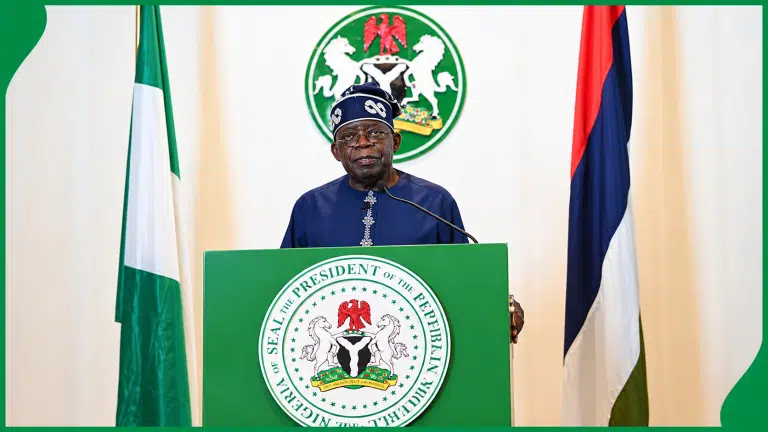
President Tinubu’s Special Adviser on Information and Strategy, Bayo Onanuga, listed 19 investments and projects across several sectors in a post on X on Saturday, October 24, 2026.
 blob:https://www.image2url.com/6b1201f1-93ee-44f9-bbeb-45816585e575
The projects cover banking, oil and gas, electricity, mining, manufacturing, telecommunications, data centres, ports and logistics. Among the companies mentioned were JPMorgan, Shell, ExxonMobil, Siemens Energy, TotalEnergies, MTN, Airtel, Equinix, APM Terminals and DP World.
Onanuga presented the projects as evidence that Nigeria continues to attract investor interest under Tinubu, who assumed office in May 2023. His intervention followed criticism of the administration’s economic policies by opposition figures.
“Read how President Tinubu is scaring away investors, according to the hirelings of the opposition, who have become deniers of massive national progress,” Onanuga wrote.
He accused the administration’s critics of overlooking what he described as progress in the country.
However, the projects cited by the Presidency are at different stages of development. While some involve completed facilities or announced financial commitments, others remain proposals, planned investments or projects awaiting final investment decisions.
JPMorgan, Absa and OPay Feature in Banking Investment Plans
In the financial services sector, the Presidency highlighted JPMorgan’s move to obtain a merchant banking licence in Nigeria, Absa’s consideration of expanding its operations and Standard Bank Group’s proposed investment in fintech company OPay.
According to the information provided, JPMorgan deposited ₦50 billion with the Central Bank of Nigeria as part of the regulatory process for its proposed merchant banking licence. The bank was reported to be targeting approval by the end of 2026 or early 2027.
A merchant banking licence would allow the institution to undertake permitted banking and financial activities within the scope of its regulatory authorisation. JPMorgan’s proposed entry would also add to international financial institutions seeking opportunities in Nigeria’s financial services market.
Absa, meanwhile, is considering converting its Nigerian representative office into a merchant bank. Such a move would represent a potential expansion of its presence in the country, although the report does not establish that a final decision has been made.
Standard Bank Group has also signed an agreement to invest up to $200 million in OPay. The transaction is expected to close around the fintech company’s planned initial public offering, subject to the necessary approvals.
The distinction is important: JPMorgan’s licence process, Absa’s consideration of expansion and Standard Bank’s proposed OPay investment represent different stages of commercial activity. They should not all be treated as completed investments.
TotalEnergies, ExxonMobil and Shell Lead Oil and Gas Plans
The oil and gas sector accounts for some of the largest projects cited by Onanuga, including developments involving TotalEnergies, AMNI, ExxonMobil and Shell.
TotalEnergies and AMNI reportedly took a final investment decision on the Ima gas project in September 2026. The project is targeting production of 350 million cubic feet of gas per day from 2028.
If delivered as planned, the development could add to Nigeria’s domestic gas supply and support industries that depend on reliable gas availability. Its eventual contribution would, however, depend on construction, infrastructure readiness and the achievement of the stated production target.
The Presidency also highlighted ExxonMobil’s reported commitment of $1.5 billion to deepwater fields between 2025 and 2027.
In addition, the company’s proposed Owowo development was listed as a potential investment worth between $7 billion and $8 billion.
Shell’s proposed Bonga South West deepwater project, estimated at $20 billion, was another major item on the list. A final investment decision was reported to be targeted for 2027.
These projects illustrate the scale of capital potentially available to Nigeria’s oil and gas industry. Deepwater developments typically require substantial upfront spending, specialised technology and long planning periods before production begins.
However, a proposed investment value is not the same as money already deployed. The Owowo and Bonga South West projects should therefore be distinguished from developments that have reached a final investment decision or entered production.
Siemens Energy Project Targets Electricity Infrastructure
The Presidency also pointed to the $2.3 billion Presidential Power Initiative involving Siemens Energy as evidence of investment activity in Nigeria’s electricity sector.
One of the projects under the initiative is a 480-megawatt substation in Abeokuta, Ogun State, which was expected to be completed by the end of 2026, according to the supplied report.
The broader initiative is intended to improve Nigeria’s electricity transmission and distribution infrastructure, areas that have long constrained the country’s ability to provide reliable power to households and businesses.
For manufacturers, data-centre operators and other electricity-intensive businesses, dependable power supply is a major factor in operating costs and investment decisions.
Nevertheless, the reported completion target for the Abeokuta substation should not be interpreted as confirmation that the facility has already been completed or that its full capacity is available to the national grid.
The project’s practical impact will depend on the completion of associated infrastructure, integration with the electricity network and the ability of the wider power system to deliver electricity reliably.
Lithium Processing, Fertiliser and Steel Projects
The mining and manufacturing projects on the Presidency’s list include a $250 million lithium processing plant in Nasarawa State developed by Chinese firms Jiuling and Canmax.
The facility was reported to have opened in July 2026. If operating at its intended capacity, lithium processing could support Nigeria’s efforts to move beyond the export of raw minerals towards domestic processing and higher-value industrial activity.
The project also reflects growing international interest in minerals associated with battery production and energy-storage technologies. However, the economic benefits will depend on actual production, local sourcing, employment, environmental compliance and the extent of value added within Nigeria.
Another project cited was Indorama Fertiliser III, a $265 million fertiliser plant completed by Daewoo E&C.
Additional domestic fertiliser production could support agricultural supply chains by improving the availability of a key farm input. Its wider effect would depend on production levels, distribution costs and the affordability of the product to farmers.
The Presidency also listed a proposed solar-powered steel plant by African Industries Group in Niger State, as well as a memorandum of understanding signed by 3TREES involving an initial investment of $100 million.
The steel proposal and the 3TREES agreement require separate consideration from a completed factory. A memorandum of understanding signals an agreement or intention to explore a project, but does not by itself establish that the entire investment has been funded or construction completed.
MTN, Airtel and Global Technology Firms Expand Data Infrastructure
Nigeria’s telecommunications and technology sectors also featured prominently in the list, particularly investments in data centres and satellite internet services.
MTN launched the first phase of its Dabengwa data centre in July 2025, according to the supplied report.
Airtel is planning a $120 million data centre with a capacity of 38 megawatts at Eko Atlantic in Lagos. The proposed facility would add to the infrastructure needed to support cloud computing, digital services and the growing volume of data generated by businesses and consumers.
Equinix’s LG3 data centre, valued at $22 million, was listed with a first-quarter 2026 opening schedule. The supplied material does not confirm whether the facility opened as planned.
The Presidency also cited Starlink’s reported 98,642 subscribers in Nigeria in the second quarter of 2026, placing the satellite internet provider second among internet service providers under the figures referenced.
Amazon Leo was included following reports that it had obtained an operating licence to roll out services in Nigeria. The material provided does not establish the timing or extent of any commercial rollout.
Data centres are increasingly important to digital economies because they provide the physical infrastructure used to store, process and distribute data. Their expansion can support financial technology, telecommunications, artificial intelligence and enterprise computing.
However, such facilities also require dependable electricity, cooling systems, fibre connectivity and substantial capital expenditure. Their long-term contribution will depend on operational capacity, customer demand and the cost of providing services.
APM Terminals, DP World and Abu Dhabi Ports Target Logistics
The Presidency’s list also included investments and agreements involving major international port and logistics operators.
APM Terminals reportedly announced a $600 million investment pledge in May 2026. The supplied information does not specify the precise allocation of the funds or how much has been disbursed.
DP World signed preliminary agreements in October 2026 concerning a proposed Ogun Deep Sea Port and a special economic zone.
Another project involved a $200 million partnership between Abu Dhabi Ports and the Lekki corridor, announced in May 2025.
These initiatives point to continued interest in Nigeria’s maritime and logistics infrastructure. Port development and more efficient cargo handling can help reduce delays, improve supply chains and support trade.
A deep-sea port and an associated economic zone could also attract manufacturing, warehousing and distribution businesses if the projects secure financing, obtain the necessary approvals and provide commercially competitive services.
However, preliminary agreements and investment pledges are not equivalent to completed port infrastructure. The projects’ status, financing arrangements, construction schedules and expected capacities would need to be confirmed before their benefits can be assessed.
What the Investment List Says About Tinubu’s Economic Reforms
Tinubu’s administration has defended its economic programme on the grounds that policy changes are intended to improve market efficiency, reduce distortions and create conditions for investment.
Since taking office in May 2023, the administration has pursued major changes, including the removal of the petrol subsidy and reforms to the foreign exchange market.
These policies have been accompanied by significant economic pressures for households and businesses, including higher living costs and increased operating expenses. Critics have questioned the pace of implementation, the distribution of the costs and the extent to which economic gains have reached ordinary Nigerians.
The Presidency’s investment list is an attempt to counter the argument that the reforms have driven investors away. The presence of established international companies and large proposed projects can indicate that Nigeria remains a market of interest.
But the list alone cannot establish that the reforms caused the investment decisions. Investors consider a range of factors, including market size, expected returns, access to foreign exchange, infrastructure, regulatory certainty, security and the availability of skilled workers.
Some projects may also have been under consideration before particular policy changes were introduced. Establishing a direct link between the reforms and individual investments would require evidence about when the decisions were made and why the companies chose Nigeria.
Announced Investments Are Not the Same as Money Invested
A central issue in assessing the Presidency’s claims is the difference between an investment announcement and actual capital deployment.
A completed factory, an operating data centre and a project that has received a final investment decision provide different levels of evidence of progress from a proposal, a preliminary agreement or a company considering expansion.
The reported $20 billion Bonga South West project, for example, has a different status from the completed Indorama fertiliser facility. Similarly, the proposed Owowo development and the planned Airtel data centre should not be described as completed projects without confirmation.
A full assessment would require details of the funds actually disbursed, the proportion of projects completed, the number of jobs created, the production or service capacity delivered and the amount of additional investment brought into the country.
It would also be necessary to compare the projects with broader indicators, including official foreign direct investment figures, capital importation data, employment trends and the performance of Nigeria’s major productive sectors.
What Nigerians Should Watch Next
The key question is whether the investments and projects highlighted by the Presidency translate into measurable economic benefits.
For the oil and gas industry, important indicators include final investment decisions, construction progress and eventual production. In electricity, the relevant measures include completed infrastructure and improvements in reliable power delivery.
For manufacturing and mining, attention should focus on actual production, domestic value addition and employment. In technology, the opening of data centres and the expansion of services would provide clearer evidence of progress than investment announcements alone.
For ports and logistics, the critical milestones include financing, regulatory approvals, construction and operational readiness.
The Presidency’s list provides a range of examples of investor interest and planned commercial activity in Nigeria. Whether these developments amount to a sustained improvement in the investment climate will depend on implementation, financing, project delivery and the wider economic environment.



















Leave a Comment
Your email address will not be published. Required fields are marked with *