
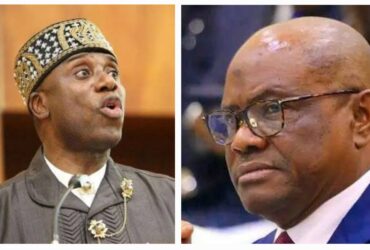
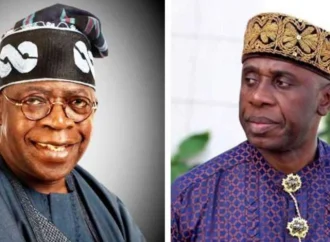
I Don’t Engage In Childish Insults, Amaechi Rejects Verbal Feud With Wike Ex-Rivers State Governor, Rotimi Amaechi, has firmly declined to engage in a war of words with the current (FCT), Nyesom Wike. In a recent interview with Arise Television, Amaechi dismissed Wike’s personal jibes as immature, saying he would not descend to what he
I Don’t Engage In Childish Insults, Amaechi Rejects Verbal Feud With Wike
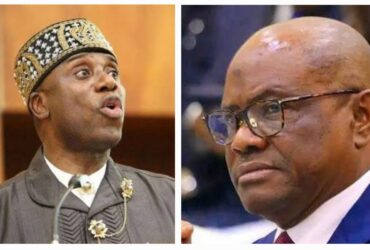
Ex-Rivers State Governor, Rotimi Amaechi, has firmly declined to engage in a war of words with the current (FCT), Nyesom Wike. In a recent interview with Arise Television, Amaechi dismissed Wike’s personal jibes as immature, saying he would not descend to what he termed “childish disputes.”
The verbal exchange between the two heavyweight politicians comes in the wake of remarks made by Wike, who accused Amaechi of using his 60th birthday speech to mislead Nigerians by suggesting he was hungry. According to Wike, the former governor’s hunger is not for food but for power—a thinly veiled jab at Amaechi’s political aspirations and past affiliations.
Federal Government Grounds Over 60 Private Jets Over Unpaid Duties, Moves To Enforce Compliance
 blob:https://www.image2url.com/6b1201f1-93ee-44f9-bbeb-45816585e575
Wike’s Verbal Barrage: A Hunger for Power?
Wike did not mince words during a public address, claiming that Amaechi’s claim of hunger was disingenuous. “He was Speaker from 1999 to 2007, Governor from 2007 to 2015, and Minister from 2015 to 2023. He never spoke about hunger during those years,” Wike said. He further asserted that Amaechi is “only hungry for power” and ridiculed his inability to secure electoral victories in favor of his party during his tenure as campaign director-general for the All Progressives Congress (APC).
In an attempt to frame Amaechi’s comment as part of a political ploy, Wike accused the former governor of aligning with opposition leader Atiku Abubakar in a bid to reclaim relevance. “They are regrouping,” Wike declared. “He cannot stay out of power.”
Amaechi Responds: “I Will Not Engage in Childish Disputes”
In a composed yet pointed response, Amaechi refused to match Wike’s tone, stating unequivocally that he would not indulge in political mudslinging. “I was once his boss, whether he likes it or not. I hired him. I could have said no,” Amaechi said during his interview. “I say this because I don’t want to engage in childish disputes.”
Amaechi, who served as Wike’s political mentor before their fallout, reminded viewers that he played a pivotal role in shaping Wike’s early political journey. According to him, Wike’s appointment as Chief of Staff during his governorship was strategic and intended to allow closer supervision.
Behind the Appointment: Why Wike Was Not Made Commissioner
Amaechi shed light on a key moment in their political history—his decision to appoint Wike as Chief of Staff instead of Commissioner for Finance. He recalled that former Attorney-General of the Federation, Mohammed Adoke, once flew to Port Harcourt to lobby for Wike’s appointment to the finance role. Amaechi refused.
“I said no, he has to work under me. I want him as Chief of Staff so I can supervise him,” Amaechi explained. The comment underlines Amaechi’s perception of Wike as someone who required oversight, even in the early stages of his political career.
He continued, “You know, he made himself Chief of Staff. He made himself Governor. He made himself Minister. He made himself Local Government Chairman,” insinuating that Wike’s political elevation was more the product of manipulation than merit.
The War of Words: More Than Personal
Though the dispute may appear personal, it reflects broader political tensions within Rivers State and the national political landscape. Both men have held significant roles in Nigeria’s recent political history and represent different power blocs that have evolved over the years—from allies to rivals.
Amaechi’s pointed jab about a decline in societal values and political decorum further highlighted his concerns. “There’s no more respect for family names. People just do and say anything,” he lamented, suggesting that Wike’s style of leadership and public commentary reflects a decline in political civility.
A Legacy Rivalry Continues
The relationship between Amaechi and Wike has long been fraught with tension. Once political allies, their split became public in the lead-up to the 2015 elections and has since transformed into one of the most well-known rivalries in Nigerian politics. With both men still active in national discourse, their actions and words continue to shape political narratives, especially within the South-South region.
Amaechi’s decision not to match Wike insult for insult may win him favor among those who favor restraint and elder statesmanship in politics. However, Wike’s confrontational style continues to resonate with his supporters, who view him as a fearless leader unafraid to speak blunt truths.
As the political landscape heats up ahead of future electoral cycles, the Amaechi-Wike dynamic is likely to remain a potent force—whether in open debate or behind-the-scenes maneuvering.

















Leave a Comment
Your email address will not be published. Required fields are marked with *