
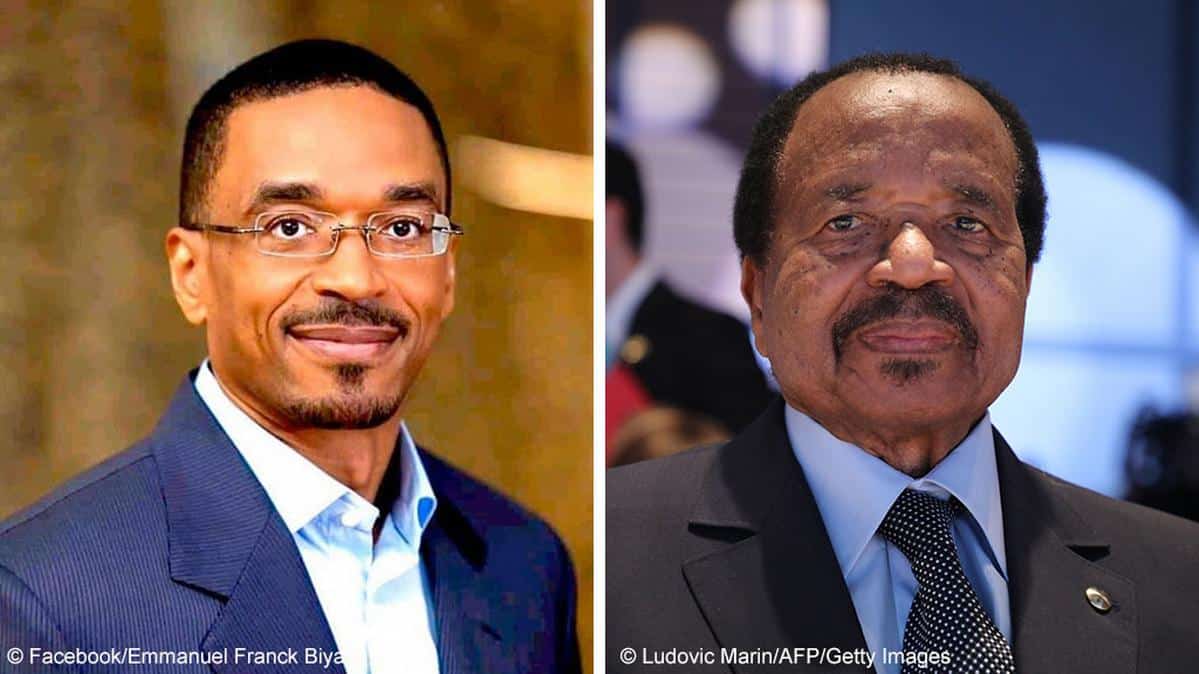
Cameroon’s long-serving President, Paul Biya, has appointed his son, Franck Emmanuel Biya, as Vice President of the Republic and Head of the Armed Forces, in a sweeping decision that places him at the core of the country’s political and military leadership. The appointment, confirmed in an official presidential decree dated April 4, 2026, also designates
Cameroon’s long-serving President, Paul Biya, has appointed his son, Franck Emmanuel Biya, as Vice President of the Republic and Head of the Armed Forces, in a sweeping decision that places him at the core of the country’s political and military leadership.
The appointment, confirmed in an official presidential decree dated April 4, 2026, also designates Franck Biya as Minister Delegate at the Ministry of Defence, effectively consolidating his authority across key pillars of state power.
Oyo 2027: Makinde Set To Choose Successor
According to the decree, the president’s son now occupies multiple high-level positions simultaneously:
 blob:https://www.image2url.com/6b1201f1-93ee-44f9-bbeb-45816585e575
“Mr Franck Emmanuel Biya is appointed Vice President of the Republic of Cameroon,” the document stated.
“Mr Franck Emmanuel Biya is appointed Head of the Armed Forces.”
“The Vice President… is also appointed Minister Delegate at the Ministry of Defence.”
The presidency justified the move as being in line with constitutional provisions and defence requirements, noting that the appointments were made based on “service needs” and would be formally published in the Official Gazette.
The development comes just months after the 92-year-old Biya was sworn in for an eighth term following a disputed presidential election that drew both domestic and international scrutiny.
Official results showed Biya winning 54 percent of the vote, defeating opposition candidate Issa Tchiroma Bakary, who secured 35 percent. However, the opposition rejected the outcome, alleging widespread electoral fraud—claims the government firmly denied.
The election aftermath triggered protests across parts of the country, with reports of clashes and heavy security presence. While Biya described the process as “satisfactory,” critics pointed to concerns over democratic transparency and the handling of dissent.
Analysts say the appointment of Franck Biya to such powerful roles is likely to intensify fears of dynastic succession in Cameroon, where the president has ruled since 1982.
By positioning his son at the helm of both political and military structures, observers believe Biya may be laying the groundwork for a controlled transfer of power within his family.
Critics argue that the move risks undermining democratic institutions, while supporters within government circles may frame it as a strategic decision aimed at ensuring stability and continuity.
The decision is expected to attract reactions beyond Cameroon, particularly among African political observers and international partners concerned about governance, constitutionalism, and military control.
With power now concentrated in the hands of a single questions are likely to arise about checks and balances within the Cameroonian system.
Attention will now turn to how Cameroon’s political opposition, civil society, and international community respond to the appointment.
Whether the move strengthens stability or deepens political tension remains to be seen, but it undeniably marks a significant shift in the country’s power structure.











Leave a Comment
Your email address will not be published. Required fields are marked with *