
El-Rufai Warns of INEC Interference in Plans for New Opposition Party Ahead of 2027 Former Kaduna State Governor, Nasir El-Rufai, has raised serious concerns about the impartiality of the Independent National Electoral Commission (INEC) under the current administration, casting doubt on its willingness to register a new political party for the growing opposition coalition
El-Rufai Warns of INEC Interference in Plans for New Opposition Party Ahead of 2027
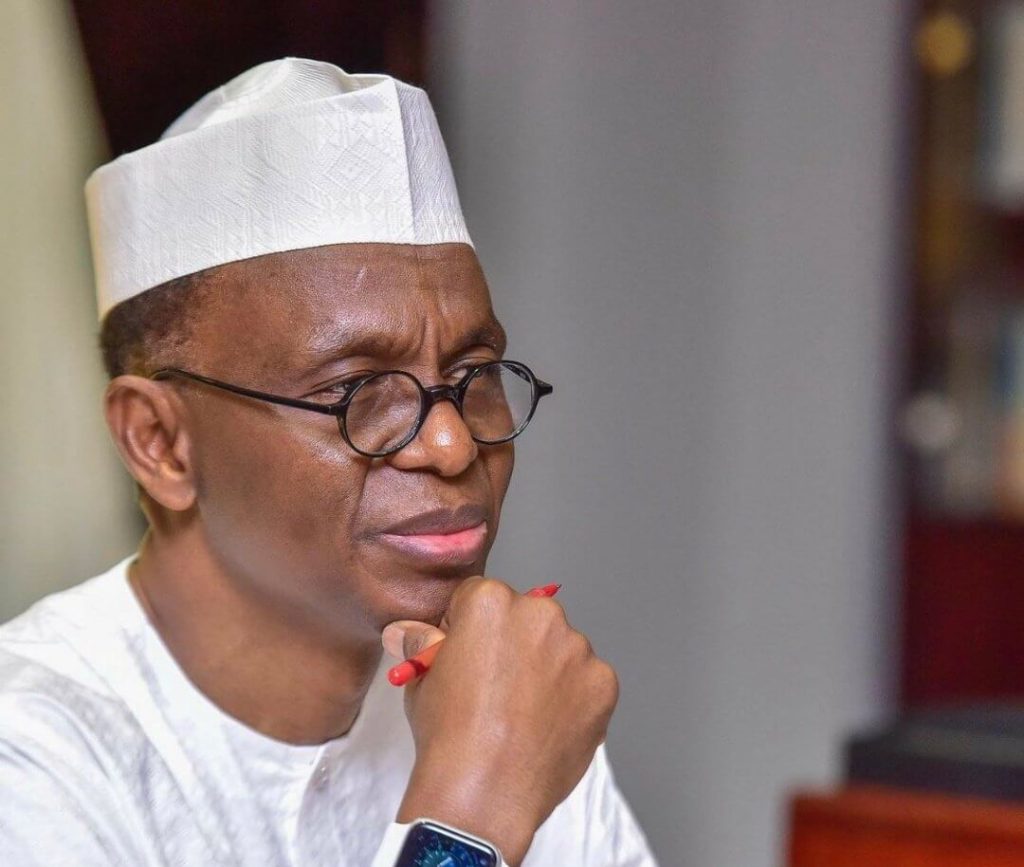
Former Kaduna State Governor, Nasir El-Rufai, has raised serious concerns about the impartiality of the Independent National Electoral Commission (INEC) under the current administration, casting doubt on its willingness to register a new political party for the growing opposition coalition ahead of the 2027 general elections.
 blob:https://www.image2url.com/6b1201f1-93ee-44f9-bbeb-45816585e575
Speaking in a candid interview on Arise TV, El-Rufai expressed deep skepticism over the integrity of the present INEC leadership and accused the Bola Tinubu-led government of being unlikely to accommodate any legitimate challenge to its grip on power.
“Many of us do not believe that under the current leadership of INEC, a new party will be registered because Dr. Mahmoud Yakubu is not Jega, and President Tinubu is not Jonathan. Those were the people in charge when the APC was registered,” he said, drawing a sharp contrast with the environment that allowed the APC to emerge in 2013 under the Goodluck Jonathan administration and INEC chairman Attahiru Jega.
Despite this skepticism, El-Rufai revealed that the coalition—comprised of high-profile opposition figures such as Atiku Abubakar, Peter Obi, and Rabiu Kwankwaso—remains committed to challenging the system, even if only to expose the electoral body’s lack of independence.
El-Rufai Disowns Tinubu, Joins Opposition Coalition To ‘Rescue Nigeria’
Strategy Built on Flexibility and Defiance
The coalition’s approach, according to El-Rufai, is rooted in a dual-track strategy: either align with an existing party or pursue registration of a new one. “Many were pessimistic about the prospects of registering a new party. But we said, let’s try it anyway. Let’s show that INEC is not independent. Let’s show that this government is interfering to ensure there is no opposition,” El-Rufai stated.
He confirmed that the bloc is weighing two options seriously: reviving an existing political platform like the Social Democratic Party (SDP) or the African Democratic Congress (ADC), or forming a fresh party tentatively named the African Democratic Assembly (ADA).
This cautious yet determined approach reflects the opposition’s desire to be adaptable while preempting any sabotage from within the system. “We are pursuing both paths,” El-Rufai emphasized. “And if both become available, then the leadership will sit down, consult, and take their views to the plenary, and a decision will be taken.”
Endorsement of the Social Democratic Party
Among the options on the table, El-Rufai has thrown his support behind the SDP, citing its historical significance and national appeal as advantages. “I strongly believe that the SDP is the best platform for the coalition,” he said. “It has a history, it has a legacy, it has sentimental value, and everything about it is almost perfect—the name, the logo, everything. I’m advocating for that amongst my colleagues.”
Although now a member of the SDP, El-Rufai was quick to clarify that the final decision would not rest on individual preference. “It will be a collective decision… I will do whatever I can to ensure that we unite under one platform,” he said.
He stressed that the coalition is not a merger of parties but a movement led by individuals with significant political influence in their regions. “I am not there representing SDP. I am there as an individual with some political weight, no matter how small, in my state or in the Northwest,” he noted.
Collective Defection in Sight
El-Rufai also revealed that once a consensus is reached on the preferred platform, all members of the coalition—regardless of their current party affiliations—would defect en masse. “We all agreed that if we are able to come to a consensus about the political party to go into, we will leave our parties and join with all our followers,” he stated.
This unified front aims to consolidate the opposition and provide a single, formidable alternative to the APC ahead of the 2027 polls.
Mounting Pressure on INEC and the Presidency
El-Rufai’s comments have further amplified existing concerns about democratic space and political freedom under the current administration. His claims suggest a broader strategy by the ruling party to prevent credible opposition, using institutional tools to restrict participation.
By highlighting the perceived decline in INEC’s credibility since the days of Attahiru Jega, El-Rufai aims to rally both public and international attention to what he deems an unfolding crisis in Nigeria’s democracy.
The dual strategy—pursuing both the registration of a new party and leveraging the identity of a legacy party like the SDP—positions the coalition as tactically astute and ready for any obstacles thrown its way.
Outlook Ahead of 2027
With influential figures from across Nigeria’s geopolitical zones in dialogue, the opposition coalition is quietly building what could be the strongest political challenge to the APC since 2015. However, the path ahead is fraught with potential legal, administrative, and political hurdles, not least of which is gaining INEC’s approval.
As Nigeria inches closer to another critical election cycle, El-Rufai’s candid warnings and strategic revelations underscore a broader battle for the soul of the country’s democratic future.
















Leave a Comment
Your email address will not be published. Required fields are marked with *