
FEC Approves ₦787.14 Billion and $651.7 Million for Roads, Dams, and Irrigation to Boost Economic Resilience The Federal Executive Council (FEC), in a decisive move toward strengthening Nigeria’s infrastructure and agricultural systems, has approved projects valued at ₦787.14 billion and $651.7 million. The massive investment covers road construction, dam rehabilitation, irrigation development, and ecological management—efforts
FEC Approves ₦787.14 Billion and $651.7 Million for Roads, Dams, and Irrigation to Boost Economic Resilience
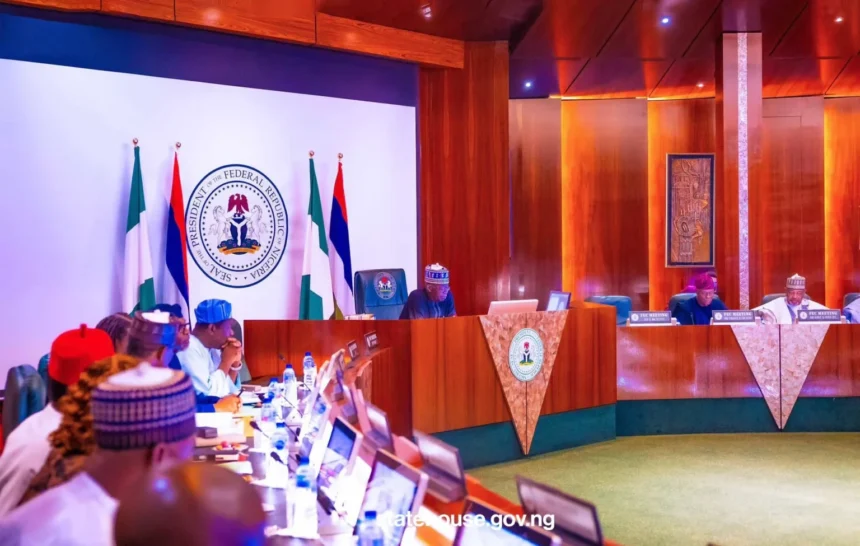
The Federal Executive Council (FEC), in a decisive move toward strengthening Nigeria’s infrastructure and agricultural systems, has approved projects valued at ₦787.14 billion and $651.7 million. The massive investment covers road construction, dam rehabilitation, irrigation development, and ecological management—efforts aimed at spurring economic development, enhancing food production, and addressing environmental risks.
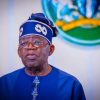
The approvals came after a marathon FEC meeting held on Monday at the Presidential Villa, Abuja, presided over by President Bola Ahmed Tinubu. Ministers briefed the press on the wide-reaching decisions, which are part of the administration’s Renewed Hope Agenda.

Infrastructure Gets a Massive Boost Across 13 States
Minister of Works, Dave Umahi, announced that the Council approved significant revisions and new contracts for critical road infrastructure across 13 states. These projects, some of which were inherited from previous administrations, are designed to open up transport corridors, improve logistics, and create jobs.
A notable highlight is the rescoping of the Akure-Eta-Ogbese-Iju-Ekiti to Ikere-Ado-Ekiti dual carriageway, revised at a cost of ₦19.4 billion for 15km of the total 18.4km stretch.
In a long-awaited development, the Sokoto-Zamfara-Katsina-Kaduna highway, previously stalled, has been segmented with work to commence on an 82.4km section, featuring six new bridges, still within the original ₦105 billion budget.
In Borno State, the 105km Maiduguri-Monguno road has been divided into phases, with the initial 30km awarded at ₦21 billion. Other key road approvals include:
- Abakaliki-Afikpo Flyover, Ebonyi – ₦25 billion
- Ikoga and Atan-Alapoti-Ado-Odo Roads, Ogun – ₦37.05 billion
- Enugu-Onitsha Dual Carriageway (Tax Credit via MTN) – ₦150 billion for 77km
- Benin-Shagamu-Ore Road (96km segment) – ₦187 billion
These projects are expected to ease transportation bottlenecks, attract investment, and support the regional economies.
China Exim Bank Funds 7th Axial Road to Support Lekki Port
Another major highlight is the $651.7 million loan facility from the China Exim Bank for the construction of the 50km 7th Axial Road, which connects the Lekki Deep Seaport to the Dangote Industrial Complex. The route will include 5km of bridgework and is expected to alleviate the congestion at Apapa Port, serving as a key cargo evacuation corridor.
Minister Umahi also gave an update on the much-discussed Lagos-Calabar Coastal Highway. He stated that over 70% of Section One is now complete, with 30km ready for commissioning. Additionally, 10km of Section Two is nearly finished, and 10km of the Sokoto-Badagry corridor is scheduled for delivery by May 25.
He revealed that recent reviews by international development lenders such as the Dutch Bank and the Development Bank of Southern Africa not only validated the procurement process but remarked that the projects were “undervalued,” indicating strong fiscal discipline.
Dams and Irrigation Projects to Empower 30,000 Farmers
In a separate briefing, Dr. Emanso Umobong, Permanent Secretary of the Cabinet Affairs Office, disclosed that FEC also approved critical water infrastructure projects to drive food production and ensure rural development. These include:
- Tiga Dam rehabilitation in Kano – ₦11.83 billion
- Shalagua Gorge Dam expansion – ₦7.47 billion
- Kafinciri Irrigation Scheme – ₦7.4 billion
“These projects are integral to President Tinubu’s Renewed Hope Agenda, which prioritises food security, rural prosperity, and climate resilience,” Umobong said.
According to her, the projects will benefit over 30,000 farming households, impacting more than 50,000 acres of farmland and enabling up to three farming cycles annually. The interventions are also projected to generate over 300,000 jobs through direct and indirect employment.
On environmental protection, Umobong noted that FEC approved ecological projects targeting erosion control, watershed restoration, and flood mitigation in 16 local government areas of Kano State. These areas are highly vulnerable to seasonal flooding and land degradation.
In Borno State, the Council also sanctioned emergency rehabilitation of the Alau Dam, which was responsible for devastating floods in 2023. “The Alau Dam intervention is critical to avert future disasters and ensure improved water management in the region,” she explained.
These ecological initiatives are in response to the growing impacts of climate change and are aimed at reinforcing community resilience, securing livelihoods, and protecting infrastructure investments.
The comprehensive approval package reflects a balanced focus on infrastructure, agriculture, environment, and economic empowerment. From highways that boost inter-state connectivity to dams that will drive year-round farming, the Federal Government is taking strategic steps to unlock Nigeria’s full development potential.
With the infusion of capital and international backing, particularly the support from China Exim Bank, the Tinubu-led administration is signaling a strong intent to accelerate Nigeria’s journey toward economic stability and food sufficiency.
As the implementation phase begins, attention will now shift to execution, transparency, and impact — the pillars that will ultimately determine whether these bold decisions translate into real-world progress for millions of Nigerians.















Leave a Comment
Your email address will not be published. Required fields are marked with *