
Governor Seyi Makinde Endorses Sharia Panels in Oyo State, Emphasizes Religious Harmony Oyo State Governor, Seyi Makinde, has assured the Muslim community in the state that he is not opposed to the operation of Sharia panels, stating that individuals who wish to use them for dispute resolution are free to do so. He made this
Governor Seyi Makinde Endorses Sharia Panels in Oyo State, Emphasizes Religious Harmony
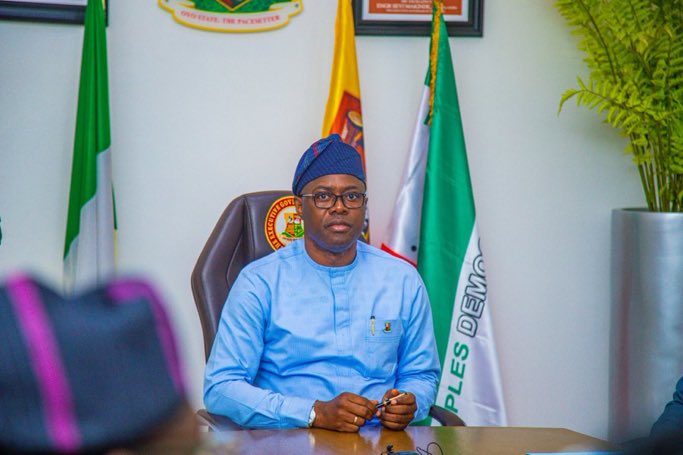
Oyo State Governor, Seyi Makinde, has assured the Muslim community in the state that he is not opposed to the operation of Sharia panels, stating that individuals who wish to use them for dispute resolution are free to do so. He made this declaration on Wednesday during the 2025 Iftar programme organized by the state government at the Government House, Agodi, Ibadan.
Makinde also clarified that his administration has no intention of challenging the constitutionality of the Sharia panels in court, emphasizing that his priority is to ensure religious harmony and unity among all residents of Oyo State.
 blob:https://www.image2url.com/6b1201f1-93ee-44f9-bbeb-45816585e575
Sharia Law In Southwest Nigeria: 8 Thing You Need To Know
Makinde Backs Alternative Dispute Resolution
The discussion on the Sharia panel in Oyo State gained attention after Dr. Rafiu Bello, Chairman of the Sharia Committee of Oyo Land, announced that a panel had been established in Oyo town and had already begun operations.
While initial reports suggested that Governor Makinde might seek legal interpretation on the matter, his media aide, Dr. Sulaimon Olanrewaju, clarified the governor’s stance. Makinde reaffirmed that the Sharia panel would function as an alternative dispute resolution mechanism, complementing the formal legal system rather than replacing it.
“I read in the newspaper that I would go to court for interpretation on the Sharia panel, which is ongoing in Oyo. That is not my position,” Makinde said.
He further explained that not all disputes need to be taken to court, just as family elders settle disagreements within households. The Sharia panel, he noted, could ease the burden on the state’s judicial system by handling cases through mutual agreements.
“Whoever wants to patronize it and feels it is an alternative dispute mechanism, it is okay. It will help the government and ensure that the number of cases going to our judges is reduced.”
He, however, stressed that the Constitution remains the supreme authority, and that any issue requiring enforcement or legal clarification must still be handled by the courts.
Commitment to Religious Harmony Amid Political Speculations
Governor Makinde used the occasion to warn against attempts to use religion as a political tool ahead of the next election. He assured residents that his administration would not allow any group to sow seeds of discord in Oyo State.
“We have all lived together peacefully, and as we move towards the next election, there will be elements that only think about the next election.”
Makinde noted that unlike previous administrations that prioritized short-term political gains, his government was focused on long-term development. He cited major infrastructural projects, such as the reconstruction of decades-old roads, as evidence of his commitment to progress rather than political manipulation.
“As we move towards the next election, let us be vigilant. People will come with all sorts. But I know that your prayers will see us through. Oyo State would never go back to the era of ‘do or die’ politics.”
Makinde Appreciates Muslim Community’s Support
During the event, Governor Makinde expressed gratitude to the Muslim community in Oyo State for their prayers, support, and cooperation, which he credited for the progress made under his administration. He also thanked the state legislature, judiciary, and security agencies for their collaborative efforts in maintaining peace and stability.
The Chief Imam of the Oyo State Government House Mosque, Adebayo Rufai, delivered the Iftar lecture, commending Makinde for his dedication, steadfastness, and generosity, especially in providing food during Ramadan. He prayed for divine rewards for the governor.
Recognition of Governor’s Contributions to the Muslim Community
Several prominent Muslim leaders in Oyo State praised Governor Makinde for his support of the Muslim Ummah and his inclusive leadership style.
- Alhaji Abidemi Siyanbade, Secretary of the Oyo State Muslim Community, and Professor Rasheed Aderinoye appreciated the governor’s allocation of land for the reconstruction of the late Rashidi Adesokan Mosque, which was affected by the ongoing Premier Hotel reconstruction project.
- Bayo Oyero, chairman of the Iftar occasion, thanked Makinde for organizing the sixth consecutive Iftar programme since the beginning of his administration.
Dignitaries in Attendance
The Iftar event was attended by several high-profile political and religious figures, including:
- Oba Rashidi Ladoja, former governor of Oyo State and Otun Olubadan of Ibadanland.
- Taofeek Arapaja, former deputy governor and PDP Deputy National Chairman (South).
- Hamid Gbadamosi, former deputy governor of Oyo State.
- Adebo Ogundoyin, Speaker of the Oyo State House of Assembly, represented by Deputy Speaker Mohammed Fadeyi.
- Abass Adigun, member representing Ibadan North-East/Ibadan South-East Federal Constituency.
- Justice Iyabo Yerima, Chief Judge of Oyo State, represented by Justice R.B. Akintola.
- Justice Tajudeen Abdulganiyu, President of the Customary Court of Appeal.
- Olubunmi Oni, Head of Service of Oyo State.
In his vote of thanks, Deputy Governor Bayo Lawal praised Governor Makinde’s leadership qualities and commended other arms of government for their cooperation and support.
Governor Seyi Makinde’s endorsement of the Sharia panels in Oyo State highlights his commitment to religious tolerance and peaceful coexistence. By acknowledging the panel’s role as an alternative dispute resolution mechanism, Makinde seeks to promote unity while upholding the Constitution.
As the 2027 elections approach, his administration remains focused on development projects rather than political distractions. However, with ongoing debates about the role of Sharia courts in Nigeria’s legal system, the issue may continue to be a point of discussion in Oyo State’s political landscape.















Leave a Comment
Your email address will not be published. Required fields are marked with *