
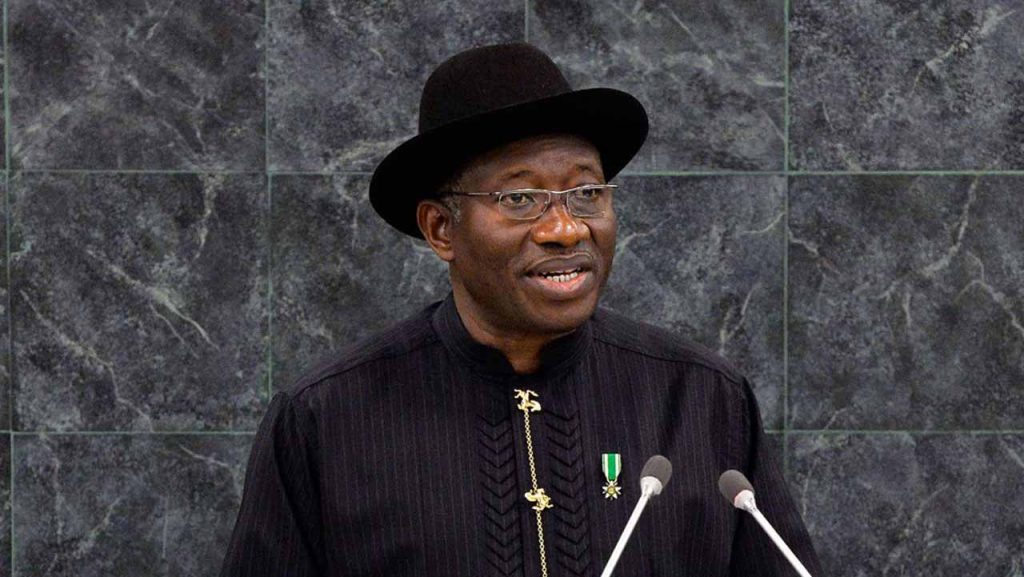
Former Nigerian President, Goodluck Jonathan, has proposed a major overhaul of Nigeria’s electoral dispute resolution system, advocating for the establishment of a Constitutional Court dedicated solely to election-related cases. The recommendation comes amid ongoing concerns about delays and inconsistencies in the country’s judicial handling of political disputes. Jonathan made this call in Abuja during
Former Nigerian President, Goodluck Jonathan, has proposed a major overhaul of Nigeria’s electoral dispute resolution system, advocating for the establishment of a Constitutional Court dedicated solely to election-related cases. The recommendation comes amid ongoing concerns about delays and inconsistencies in the country’s judicial handling of political disputes.
Jonathan made this call in Abuja during the 70th birthday celebration and book launch of Senator Gbenga Daniel, representing Ogun East under the All Progressives Congress (APC). The event drew prominent political figures and dignitaries, highlighting its national significance.
 blob:https://www.image2url.com/6b1201f1-93ee-44f9-bbeb-45816585e575
In his remarks, Jonathan criticized the existing multi-layered judicial process for election petitions, describing it as cumbersome and inefficient. Currently, governorship election disputes pass through election tribunals, the Court of Appeal, and ultimately the Supreme Court, a structure he believes places unnecessary strain on both the judiciary and political actors.
Governors, Lawmakers Clash Over APC Automatic Tickets For 2027
According to Jonathan, a streamlined system anchored by a single Constitutional Court would significantly reduce litigation time and enhance the credibility of electoral outcomes. He argued that consolidating election-related cases under one specialized body would eliminate duplication and conflicting judgments.
Reflecting on his time in office, Jonathan revealed that the idea of a unified tribunal was already under consideration during his administration. He emphasized that having one authoritative court handle all political litigation would improve efficiency and strengthen public trust in the democratic process.
The former president also recounted a controversial case from the 2011 elections to illustrate flaws in the current system. In that instance, a gubernatorial candidate lost due to a technicality involving the color of ink used during voting. Ballots marked with black or green ink instead of the legally required red were invalidated, leading to the annulment of votes despite their clear intent.
Jonathan noted that while subsequent legal amendments allowed governorship election cases to reach the Supreme Court, they failed to address the prolonged and complex litigation process. He maintained that structural reform, rather than incremental adjustments, is necessary for meaningful progress.
Drawing comparisons with Francophone African nations, Jonathan highlighted how constitutional courts in those countries efficiently handle electoral disputes. He urged Nigeria to adopt a similar model, stressing that it would provide clarity and finality in political cases.
Beyond structural reforms, Jonathan called on the judiciary to demonstrate greater firmness and impartiality. Using a football analogy, he likened judges to referees, stating that the integrity of the game depends on strict enforcement of rules. According to him, any perceived leniency or inconsistency could encourage misconduct within the political arena.
During the event, Jonathan also paid tribute to Senator Gbenga Daniel, praising his leadership qualities and intellectual approach to governance. He described Daniel as a pragmatic and constructive figure who brings an engineering mindset into politics.
Jonathan further commended Daniel for documenting his life experiences, noting that personal narratives help correct misinformation and provide valuable insights for future generations. He expressed hope of eventually publishing his own account to offer a more accurate perspective on his time in public service.
The gathering was attended by several high-profile figures, including President Bola Tinubu, represented by Finance Minister Wale Edun, as well as former President Olusegun Obasanjo, traditional rulers, and other political stakeholders.
Jonathan’s proposal is expected to spark renewed debate within the National Assembly and among legal experts, as Nigeria continues to seek reforms that will strengthen its democratic institutions and electoral credibility.














Leave a Comment
Your email address will not be published. Required fields are marked with *