
Nigeria’s Cocoa Exports to US Surge to $142m in 2025 Nigeria’s cocoa bean exports to the United States increased more than sixfold in 2025, rising from $21.7 million in 2024 to $142 million, according to the US Mission in Nigeria. The figures represent an increase of approximately 554 per cent in one year, highlighting growing
Nigeria’s Cocoa Exports to US Surge to $142m in 2025
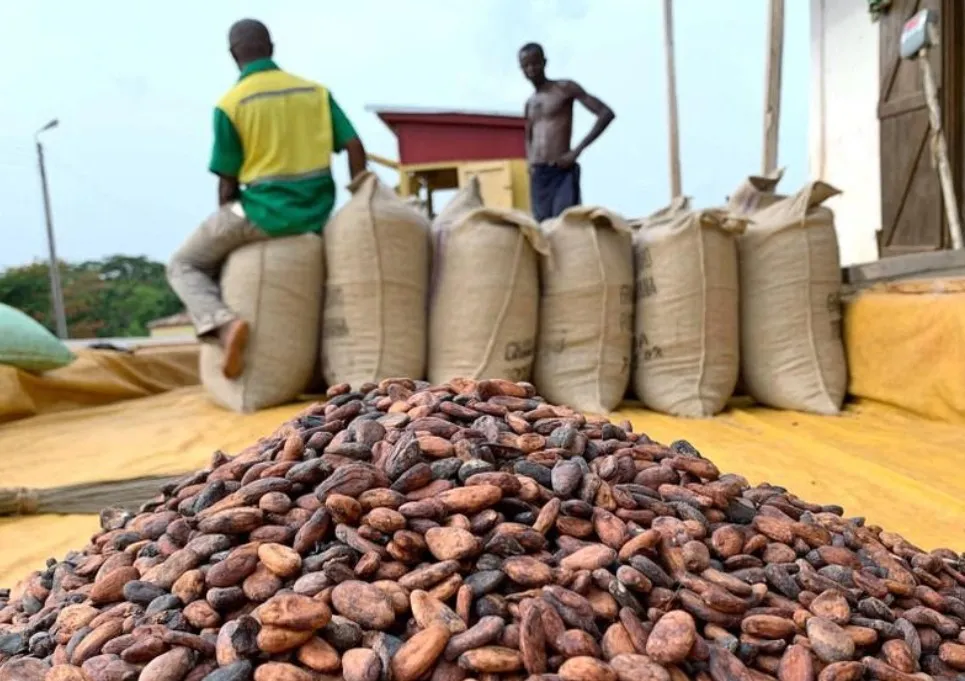
Nigeria’s cocoa bean exports to the United States increased more than sixfold in 2025, rising from $21.7 million in 2024 to $142 million, according to the US Mission in Nigeria.
The figures represent an increase of approximately 554 per cent in one year, highlighting growing demand for Nigerian cocoa in the American market and the commodity’s potential to strengthen the country’s non-oil export earnings.
Governor Adeleke Approves Of New Members Into The Presidential Campaign Council
 blob:https://www.image2url.com/6b1201f1-93ee-44f9-bbeb-45816585e575
The US Mission disclosed the figures in a post on its official Facebook page on Tuesday, describing demand for Nigerian cocoa as booming.
“U.S. demand for Nigerian cocoa is booming. Cocoa bean exports to the United States jumped from $21.7 million in 2024 to $142 million in 2025,” the mission stated.
It also highlighted the two-way nature of agricultural trade between both countries, noting that wheat accounted for 67 per cent of US agricultural exports to Nigeria.
The development comes amid efforts to revive Nigeria’s cocoa industry, improve productivity and expand domestic processing to retain more economic value within the country.
Cocoa Industry Faces Major Challenges
Despite the increase in export earnings, Nigeria’s cocoa sector continues to face structural challenges, including ageing plantations, declining productivity, limited access to finance and inadequate agricultural inputs.
Many cocoa trees in the country are reportedly between 20 and 40 years old, while the average cocoa farmer is about 60 years old. These challenges have contributed to concerns about declining yields and limited participation by younger farmers.
Smallholder farmers also struggle with high borrowing costs, inadequate access to fertilisers and pesticides, poor-quality seedlings and limited affordable financing.
Nigeria’s limited domestic processing capacity remains another major obstacle. More than 80 per cent of the country’s cocoa has historically been exported in raw form, restricting opportunities for local manufacturing, industrial development and job creation.
However, local companies, including Johnvents, are investing in cocoa processing and the production of chocolate and other cocoa-derived products.
In another development, EIB Global, the international development arm of the European Investment Bank Group, and First City Monument Bank announced €85 million in financing to support private-sector businesses across Nigeria’s agricultural value chains, with at least 70 per cent expected to target cocoa and dairy.
Stakeholders have also advocated establishing a National Cocoa Management Board to strengthen quality control, standardisation and the distribution of agricultural inputs.
Cocoa Remains a Major Non-Oil Export
Data from the National Bureau of Statistics show that cocoa remains a significant contributor to Nigeria’s agricultural export earnings.
In the first quarter of 2026, Nigeria exported agricultural products worth ₦1.17 trillion, with cocoa beans accounting for ₦596.90 billion.
Cocoa and its derivatives also accounted for 41.11 per cent of Nigeria’s non-oil export value in the first half of 2025.
However, the United States remains one of several international markets for Nigerian cocoa. In the first quarter of 2025, it accounted for approximately 6.1 per cent of the country’s cocoa exports, placing it behind leading destinations, including the Netherlands.
The increase in cocoa exports to the US comes amid changing international trade conditions. Although Nigeria’s overall exports to the US declined in the first nine months of 2025, cocoa was among the commodities subsequently exempted from the US 10 per cent reciprocal tariff because it is not produced domestically in significant quantities.
Nevertheless, global cocoa prices fell sharply during 2025, while Nigeria’s cocoa production was projected to decline by 11 per cent in the 2025/2026 season, raising questions about the sustainability of export growth.
Farmers Seek Better Prices and Increased Production
The National Secretary of the Cocoa Farmers Association of Nigeria, Agbo Bassey, has called on the government to organise farmers into cooperatives to enable them to sell their produce in bulk and negotiate better prices.
Speaking to PREMIUM TIMES, Bassey also advocated investments in fermentation and drying centres to improve cocoa bean quality and help farmers earn higher returns.
He urged the government to provide reliable market information, replace ageing cocoa trees with improved seedlings and expand access to affordable credit and agricultural inputs.
Bassey further stressed the importance of traceability systems to help Nigerian farmers meet international market requirements and access premium buyers.
He also called for increased domestic processing and diversification of export destinations to reduce dependence on a limited number of markets.
Nigeria Trails Major Cocoa Producers
Nigeria was once the world’s second-largest cocoa producer, and the commodity played a significant role in the country’s economy during the 1950s and 1960s.
However, the growing dominance of crude oil, urbanisation, population growth and insufficient investment in agriculture contributed to a long-term decline in the sector.
Data from the Food and Agriculture Organisation of the United Nations show that Nigeria’s average annual cocoa production fell from approximately 420,000 tonnes in the 1960s to 170,000 tonnes in 1999.
Although production subsequently recovered, Nigeria continues to trail regional competitors Côte d’Ivoire and Ghana, which produce substantially larger volumes of cocoa annually.
The surge in exports to the United States presents an opportunity for Nigeria to increase foreign exchange earnings and strengthen its agricultural sector. However, sustaining the growth will depend on improved farm productivity, better prices for farmers, increased investment in plantations and expanded domestic processing.



















Leave a Comment
Your email address will not be published. Required fields are marked with *