
Northern Nigeria Receives Over Half of 2024–2025 Capital Budget, Budget Office DG Reveals The Director-General of the Budget Office of the Federation, Tanimu Yakubu, has refuted growing claims of marginalization of northern Nigeria in President Bola Ahmed Tinubu’s administration. Speaking in Abuja, Yakubu revealed that over 50% of the federal capital budget for 2024 and
Northern Nigeria Receives Over Half of 2024–2025 Capital Budget, Budget Office DG Reveals

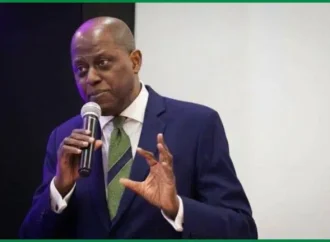
The Director-General of the Budget Office of the Federation, Tanimu Yakubu, has refuted growing claims of marginalization of northern Nigeria in President Bola Ahmed Tinubu’s administration. Speaking in Abuja, Yakubu revealed that over 50% of the federal capital budget for 2024 and 2025 is allocated to infrastructure and development projects across the northern region.
This clarification follows public criticism by notable northern political figures, including former Kano State Governor Rabiu Musa Kwankwaso, ex-Secretary to the Government of the Federation Babachir Lawal, and Bashir Dalhatu, Chairman of the Board of Trustees of the Arewa Consultative Forum (ACF). They have accused the Tinubu administration of neglecting the North in its national development agenda, particularly in the area of capital-intensive infrastructure.
 blob:https://www.image2url.com/6b1201f1-93ee-44f9-bbeb-45816585e575
However, Yakubu described these claims as politically driven and factually inaccurate. “Contrary to politically motivated narratives, northern Nigeria is not on the margins—it is at the heart of federal investment priorities,” he stated.
He added that under President Tinubu’s leadership, capital allocations were structured to support balanced national development, unity, and shared economic growth. Yakubu emphasized that once all major national infrastructure and water basin investments are factored in, the majority of the federal capital budget indeed benefits the North.
PDP Urges Visa Ban On Oyetola, Fagbemi Over Alleged Role In Osun LG Allocation Crisis
Landmark Projects Anchor Regional Development
Backing up his assertion with specifics, Yakubu highlighted several flagship projects currently underway in the North. Chief among them is the ₦12.1 trillion Sokoto–Badagry Superhighway—a cross-regional project spanning 1,068 kilometers. According to Yakubu, the federal government has already approved ₦3.63 trillion for the project’s initial phases in Sokoto and Kebbi States.
Another key initiative is the Abuja–Kano expressway dualisation, a major trunk infrastructure project that links Nigeria’s capital with the economic hub of northern Nigeria. Additional investments include the Kano–Maradi standard gauge railway, which connects northern Nigeria with neighboring Niger Republic, and the Zungeru–Kano power transmission line aimed at improving electricity distribution in the region.
Yakubu also noted significant upgrades underway at regional airports, including the expansion of runways and terminals in Kaduna, Maiduguri, and Katsina. These upgrades are designed to enhance connectivity, safety, and regional trade, aligning with the federal government’s broader push to boost domestic transportation networks.
Boosting Agriculture and Water Infrastructure
In line with the Tinubu administration’s push to revive agriculture and agro-export across the country, the government is also focusing on logistics hubs in the North. Yakubu mentioned the construction of inland dry ports in Funtua (Katsina State) and Bauchi, which are expected to serve as major aggregation points for agricultural commodities destined for export markets.
He further detailed the government’s heavy investment in water resources, specifically through support to river basin development authorities. These include the Sokoto-Rima and Upper Benue basins, where federal funding is channeled into irrigation schemes, flood control, and rural water supply.
These water-based projects, Yakubu noted, are vital for food security, rural economic livelihoods, and climate resilience in the region—particularly in arid and semi-arid zones facing environmental stress.
Security Funding Gets a Boost
Yakubu acknowledged the deep-rooted insecurity plaguing parts of the North, stating that the federal government has increased budgetary allocations to address these challenges. He explained that more funding is being directed toward security infrastructure, intelligence gathering, and personnel capacity in volatile regions.
This, he said, demonstrates the Tinubu administration’s commitment not just to infrastructure, but to the safety and stability of all citizens, especially in high-risk areas of northern Nigeria.
A Response to Regional Concerns
While the political debate continues, Yakubu’s statement appears to be a direct response to rising discontent among some northern elites who feel the current administration has not done enough to address the region’s developmental needs. However, by laying out the data and highlighting specific allocations, the Budget Office is attempting to reshape that narrative.
“Resource allocation is not just about political optics, it’s about measurable impact. We are investing where it matters most for national unity and economic transformation,” Yakubu concluded.
His remarks could play a role in calming political tensions in the North, especially as the nation approaches critical election cycles in 2026 and 2027. The Budget Office’s transparency about federal spending priorities may also encourage greater civic oversight and participation in how national resources are distributed and utilized.













Leave a Comment
Your email address will not be published. Required fields are marked with *