
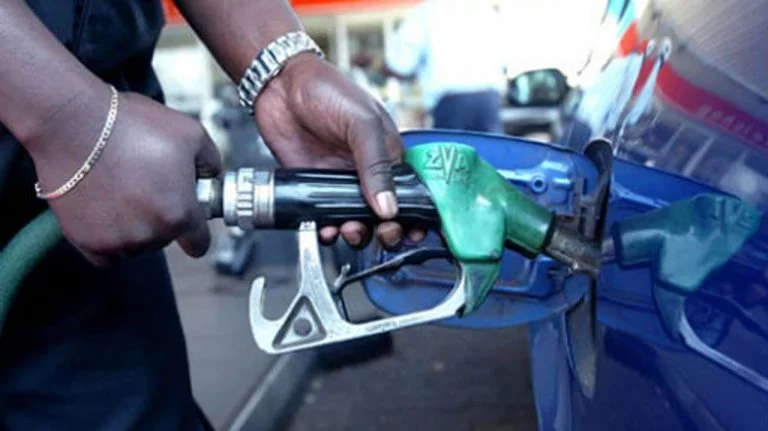
PETROAN warns Nigerians could begin buying petrol in US dollars if the Federal Government fails to restore the naira-for-crude deal with Dangote Refinery. Petroleum products retailers have warned that Nigerians may soon have to pay for petrol in US dollars if the Federal Government does not urgently restore the naira-for-crude arrangement with Dangote Refinery. The
PETROAN warns Nigerians could begin buying petrol in US dollars if the Federal Government fails to restore the naira-for-crude deal with Dangote Refinery.
Petroleum products retailers have warned that Nigerians may soon have to pay for petrol in US dollars if the Federal Government does not urgently restore the naira-for-crude arrangement with Dangote Refinery.
The warning was issued by the National President of the Petroleum Products Retail Outlets Owners Association of Nigeria (PETROAN), Billy Gillis-Harry, following Dangote Refinery’s decision to resume the sale of refined petroleum products in US dollars.
 blob:https://www.image2url.com/6b1201f1-93ee-44f9-bbeb-45816585e575
The development has sparked fresh concerns about fuel pricing, foreign exchange pressure and the possibility of another increase in the cost of petrol and diesel across the country.
Court Grants ₦2 Billion Bail To Miyetti Allah National President Bello Bodejo
Speaking over the weekend, Gillis-Harry urged the Federal Government to conclude ongoing discussions with Dangote Refinery and restore the naira-for-crude policy to protect Nigerians from further economic hardship.
According to him, allowing petroleum transactions to be fully dollarised could significantly worsen the burden on consumers already battling rising living costs.
“Nigerians may start buying petrol in US dollars if the Federal Government does not intervene in the naira-for-crude deal with Dangote Refinery. We hope the downstream oil sector will not be dollarised to that extent,” he said.
He stressed that swift government intervention would help cushion the impact of rising global energy prices on the local market.
Dangote Refinery Suspends Naira-for-Crude Arrangement
The warning follows Dangote Refinery’s recent decision to resume selling refined petroleum products in US dollars, effectively suspending the naira-for-crude arrangement.
Under the policy, marketers and petroleum product off-takers purchased fuel from the 700,000-barrels-per-day refinery using the naira rather than foreign currency.
The arrangement was introduced to reduce demand for foreign exchange, ease pressure on the naira and stabilise domestic fuel prices.
Although the Federal Government has not officially announced its position on the refinery’s latest decision, reports indicate that discussions are ongoing to restore the policy.
Industry Stakeholders Push for Policy Restoration
Industry operators have continued to advocate for the return of the naira-for-crude initiative, arguing that it remains one of the most effective measures for reducing foreign exchange demand and maintaining stability in Nigeria’s downstream petroleum sector.
PETROAN warned that a prolonged suspension of the arrangement could expose marketers to higher foreign exchange costs, which would ultimately be transferred to consumers through increased pump prices.
The association maintained that restoring the policy would help shield Nigerians from additional inflationary pressures and improve pricing certainty within the petroleum industry.
Petrol and Diesel Prices Continue to Rise
The warning comes as depot owners and petroleum marketers recently adjusted the ex-depot and retail prices of petrol and diesel upward.
Across Abuja and neighbouring areas, petrol currently sells for between ₦1,155 and ₦1,220 per litre, while diesel is sold at between ₦1,700 and ₦1,800 per litre.
Market stakeholders are now awaiting the outcome of discussions between the Federal Government and Dangote Refinery, with many hoping the naira-for-crude arrangement will be restored to prevent further increases in fuel prices.
Analysts believe the outcome of the negotiations could significantly influence fuel costs, exchange rate stability and the broader outlook for Nigeria’s downstream oil sector in the coming months.






















Leave a Comment
Your email address will not be published. Required fields are marked with *