
Presidency Points Fingers at Governors Over Nigeria’s Escalating Insecurity As the crisis of insecurity deepens across Nigeria, particularly in states like Plateau, Benue, and Enugu, the Presidency has shifted the spotlight toward state governors, accusing them of underfunding security agencies despite receiving significant security allocations. During a televised interview on TVC’s Beyond the Headlines on
Presidency Points Fingers at Governors Over Nigeria’s Escalating Insecurity
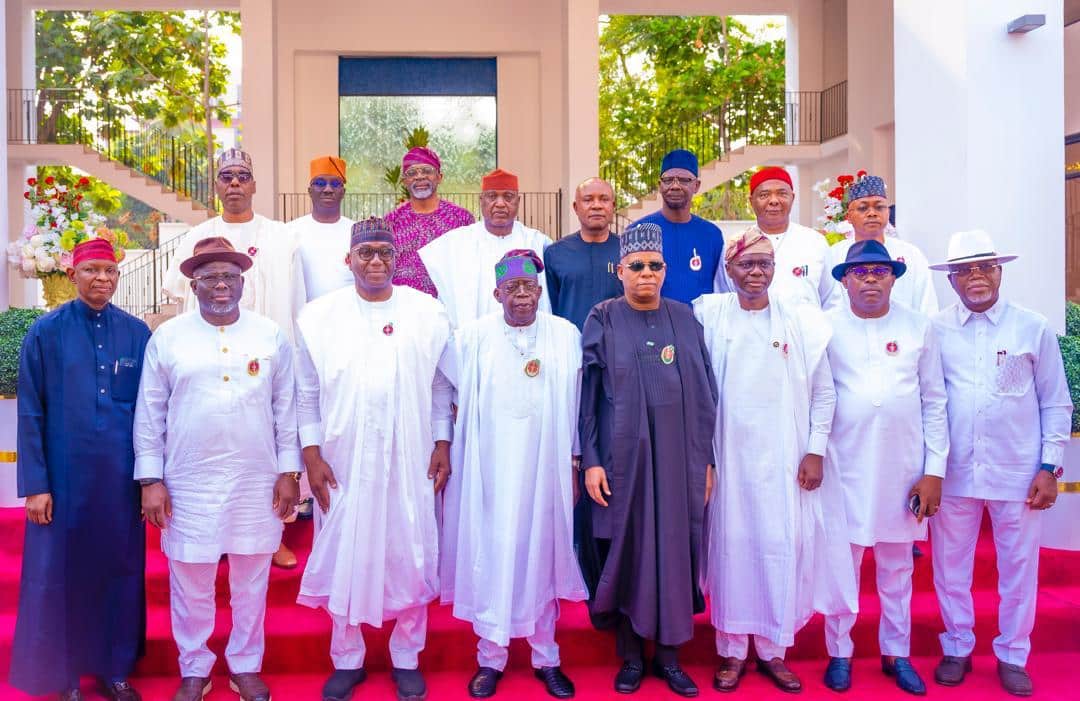
As the crisis of insecurity deepens across Nigeria, particularly in states like Plateau, Benue, and Enugu, the Presidency has shifted the spotlight toward state governors, accusing them of underfunding security agencies despite receiving significant security allocations.
During a televised interview on TVC’s Beyond the Headlines on Monday evening, Daniel Bwala, Special Adviser to President Bola Ahmed Tinubu on Policy Communication, criticized governors for their financial negligence. Bwala alleged that many state leaders disburse only ₦20 million monthly to key security bodies—the State Security Service (SSS), the police, and the army—despite collecting between ₦1 billion and ₦3 billion in monthly security votes.
 blob:https://www.image2url.com/6b1201f1-93ee-44f9-bbeb-45816585e575
Tinubu Returns to Tackle Escalating Killings in Benue, Plateau, To Meet NSA Ribadu, Service Chiefs
Blame on Budgeting: Bwala Calls Out Security Underfunding
Bwala bluntly questioned the state-level priorities in the face of Nigeria’s worsening security. “What we are finding, very sadly, is that there are some states where the governors give ₦20 million to the SSS, ₦20 million to the police, and ₦20 million to the army… and you hear their security vote is between ₦1 billion and ₦3 billion. Where are we going?” Bwala asked, expressing deep concern over the allocation gap.
The accusation adds a new dimension to the national conversation on security, placing part of the burden squarely on the shoulders of state governments. Bwala argued that despite having the authority and funding, many governors have failed to create effective, localized strategies to support federal security operations in their regions.
State Police Debate and Governance Gaps
Bwala also weighed in on the growing calls for state police, labeling the demand as a symptom of broader governance failures. “There are people who still believe, within the present framework of the security architecture of the state, that we can deal with insecurity if we understand what it takes to do that,” he noted.
Highlighting that governors have the constitutional power to set up quasi-security outfits, Bwala insisted that they also possess the financial means to equip federal forces with modern tools like drones, surveillance tech, and mobility support. He lamented that while criminals now deploy advanced technology, many governors are not making comparable investments in their own security architecture.
He pointed out, “A governor with ₦2 billion or ₦3 billion in monthly security votes can invest in drones, vehicles, and surveillance cameras… but many are not doing that.”
Financial Reality of State Policing
While not entirely dismissing the idea of state police, Bwala cautioned against embracing it as a silver bullet solution. He highlighted the economic impracticality of launching a new police force when several states are already struggling to pay existing workers. “By the time you create a state police now, a governor who says he’s struggling to pay salaries, you want to create another police system for him?” he asked.
In conclusion, Bwala urged governors to first maximize their current resources and responsibilities rather than shifting the blame or waiting for structural changes. He asserted, “We don’t have to wait for state police before we can safeguard lives.”
The Presidency’s strong stance serves as a wake-up call for state leaders, suggesting that enhanced local accountability and resource utilization could be immediate steps toward quelling the bloodshed across Nigeria.













Leave a Comment
Your email address will not be published. Required fields are marked with *