
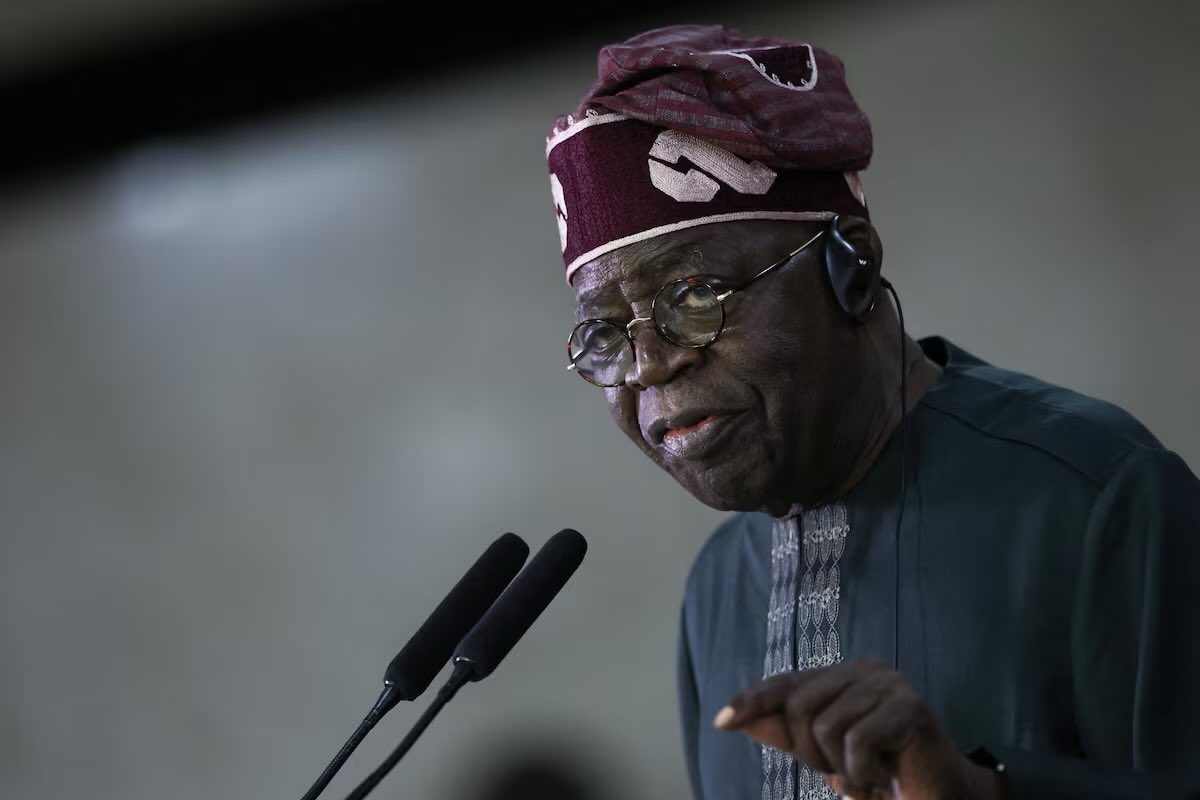
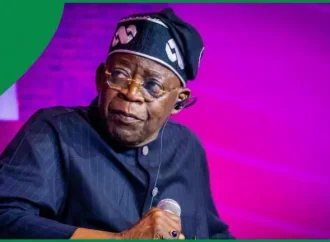
Bola Tinubu has disclosed that Nigeria is projected to spend about $11.6bn servicing its debt obligations in 2026, representing nearly half of the country’s expected revenue for the year. The President made the statement while addressing concerns over Nigeria’s fiscal outlook, rising debt profile, and the pressure debt servicing continues to place on government finances.
Bola Tinubu has disclosed that Nigeria is projected to spend about $11.6bn servicing its debt obligations in 2026, representing nearly half of the country’s expected revenue for the year.
The President made the statement while addressing concerns over Nigeria’s fiscal outlook, rising debt profile, and the pressure debt servicing continues to place on government finances.
According to Tinubu, the scale of debt repayments highlights the difficult economic realities confronting the country and reinforces the need for ongoing fiscal reforms, revenue expansion, and tighter financial management.
 blob:https://www.image2url.com/6b1201f1-93ee-44f9-bbeb-45816585e575
Dangote Refinery Supplied 79% Of Nigeria’s Petrol In April — NMDPRA Data
Nigeria’s rising debt burden has become one of the central concerns surrounding the country’s economic management in recent years.
Analysts note that a large portion of government revenue is increasingly being consumed by debt servicing obligations, limiting the amount available for infrastructure, healthcare, education, and social investments.
The projected $11.6bn debt servicing cost for 2026 comes amid continued borrowing by the Federal Government to finance budget deficits, support reforms, and fund critical projects.
Recent figures from the Debt Management Office showed that Nigeria’s total public debt has continued to rise due to both domestic and external borrowing.
Pressure on Revenue Generation
Economic experts have repeatedly warned that Nigeria’s major fiscal problem is not only the size of its debt but also weak revenue generation.
Despite being Africa’s largest oil producer, the country continues to struggle with low tax revenue, oil theft, production challenges, and foreign exchange volatility.
The government has recently introduced several reforms aimed at improving public revenue, including subsidy removal, tax reforms, improved oil revenue remittances, and broader efforts to attract investment.
Officials argue that these measures are necessary to stabilise public finances and reduce dependence on borrowing over the long term.
Economists Warn Over Sustainability
Several economists have expressed concern that high debt servicing costs could further strain Nigeria’s economy if revenue growth does not improve significantly.
Analysts say that when a country spends a substantial share of its earnings repaying debt, it weakens fiscal flexibility and increases vulnerability to economic shocks.
There are also concerns that continued external borrowing could expose Nigeria to exchange rate risks and rising repayment pressures in the future.
However, some experts maintain that borrowing itself is not necessarily harmful if the funds are invested in productive sectors capable of generating economic growth and future revenue.
Government Defends Reform Agenda
The Tinubu administration has consistently defended its economic reforms, arguing that painful short-term adjustments are necessary to achieve long-term stability.
Officials insist that efforts are being made to improve oil production, strengthen tax collection, boost non-oil exports, and attract foreign investment to improve revenue capacity.
The government also maintains that ongoing reforms in the petroleum sector and public finance management are aimed at reducing fiscal leakages and improving accountability.
As Nigeria approaches the 2026 fiscal year, debt sustainability is expected to remain a key issue in economic and political discussions, particularly as the government balances reform measures with rising public expectations.













Leave a Comment
Your email address will not be published. Required fields are marked with *