
Who Succeeds INEC Chair? Rising Debate Over Tinubu’s Power and the Politics of Appointment As Professor Mahmood Yakubu’s tenure as Chairman of the Independent National Electoral Commission (INEC) nears its constitutional end in October 2025, intense national debate has erupted over who should succeed him—and more critically, how the next chair should be chosen. The
Who Succeeds INEC Chair? Rising Debate Over Tinubu’s Power and the Politics of Appointment
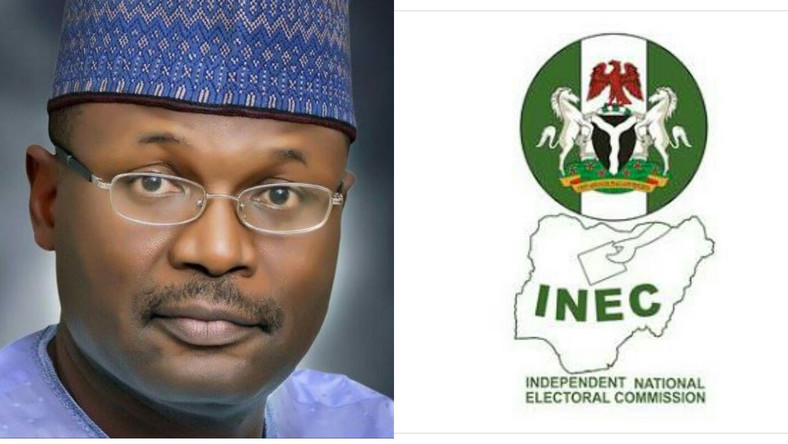
As Professor Mahmood Yakubu’s tenure as Chairman of the Independent National Electoral Commission (INEC) nears its constitutional end in October 2025, intense national debate has erupted over who should succeed him—and more critically, how the next chair should be chosen. The controversy underscores a major paradox of Nigeria’s democracy: the President, who is a participant in elections, also holds the power to appoint the nation’s chief electoral umpire.
This constitutional provision has once again come under scrutiny, with political actors, civil society leaders, legal experts, and regional stakeholders raising alarms over perceived risks to electoral neutrality, fairness, and public trust ahead of the 2027 general elections.
 blob:https://www.image2url.com/6b1201f1-93ee-44f9-bbeb-45816585e575
Nationwide Outrage As Nigerians Reject Pro-GMO Campaign On National Radio
Ogbonna: Presidential Power to Appoint INEC Chair is Nigeria’s Greatest Democratic Paradox
Dr. Alex Ogbonna, former National Publicity Secretary of Ohanaeze Ndigbo, encapsulated the dilemma when he described the president’s power to nominate the INEC chairman as one of Nigeria’s most troubling contradictions. “Our President is a Jagaban in all respects. The geopolitical zone does not matter to him. What matters is loyalty and values,” Ogbonna stated, expressing skepticism that any impartial process would guide the next appointment.
He added that Nigeria’s democracy remains structurally flawed because the executive who benefits from elections gets to appoint the official responsible for conducting them. “It’s a major Nigerian paradox,” he said.
Regional Equity Demands vs. Integrity Debate
Calls for equitable regional representation have gained traction, particularly from the North-Central geopolitical zone, which has yet to produce an INEC chairman. Dr. Bitrus Pogu, President of the Middle Belt Forum, argued passionately for the zone. “Let’s appoint a neutral person. The North-Central has never had this role. It’s time to give them a chance,” he said. He also advocated for a Christian candidate—not to promote religion but to balance the national equation.
Similarly, retired General John Sura of the PDP proposed looking beyond academia, suggesting civil society figures, retired justices, or even former military officers with a record of integrity. “We need someone tested and honest. Let’s break the cycle of compromised leadership,” he asserted.
Others, like senior lawyer Monday Ubani, SAN, believe the South-South or South-East deserve a turn. “The North-East and South-West have had their share. Now it’s time for fairness. Let’s look to the South-South for balance,” Ubani argued, stressing the need for someone with “high integrity, fairness, and zeal for genuine democracy.”
Some Say Zoning Irrelevant – Integrity Matters More
Yet, not all agree that geography should matter. Professor Sola Adeyeye, a former senator, emphasized that “all INEC needs is a man or woman with integrity.” He argued that regional origin is secondary to character, incorruptibility, and patriotism.
Echoing that view, Hon. Abubakar Bello, former Speaker of Kogi State House of Assembly, said: “The zone is not too important. The character and mindset of the nominee are what really matter.”
From the North, Anthony Sani of the Arewa Consultative Forum called on Nigerians not to demonize institutions but instead work toward strengthening them. “The new INEC boss must be someone with patriotic courage, honesty, and principles,” he said, suggesting that appointing someone from the South could foster unity.
Legal Experts and Academics Push for Systemic Reform
Beyond the politics of zoning, constitutional reform advocates have reignited their call for structural change. Legal practitioner Shipi Rabo described the current system as flawed. “Why should a sitting president appoint the INEC chair? That power should go to the National Judicial Council,” he said, calling for in-house promotion, such as elevating an experienced national commissioner.
In a similar vein, Dr. Abdullahi Yalwa of Abubakar Tatari Ali Polytechnic insisted that the president should prioritize competence over politics. “Pick a nationalist, someone with integrity, digital awareness, and honour. And yes, Igbo candidates should be seriously considered,” he suggested.
Religious Option Gains Traction
Interestingly, a chieftain of the APC, Muhammad Aminu Tukur, proposed a completely different angle: appointing a clergyman. “I’d prefer a religious scholar of repute—a bishop or sheikh. Political zone doesn’t matter. Let’s try someone who fears God,” he declared, a sentiment that resonates with citizens frustrated by the moral decay in public offices.
Nigeria’s INEC Future at a Crossroads
As the October 2025 deadline draws closer, President Bola Tinubu is faced with a pivotal decision that could shape the credibility of the 2027 elections and, by extension, Nigeria’s democratic future. While the law permits him to nominate Yakubu’s successor, the choice—and how it’s made—will speak volumes about his commitment to national unity, fairness, and institutional independence.
In a deeply polarized country where electoral outcomes often trigger instability, the public is demanding more than a competent nominee—they are demanding a system that ensures credibility, inspires trust, and upholds the principles of democracy. Whether through constitutional reform or a bold, balanced appointment, Nigeria now stands at the threshold of either strengthening or weakening one of its most vital institutions.













Leave a Comment
Your email address will not be published. Required fields are marked with *