
Alaafin’s Palace Clarifies Ooni Visit Controversy Amid Unity Calls in Yorubaland In the wake of growing public debate over a perceived snub, the palace of the Alaafin of Oyo, Oba Abimbola Owoade, has offered a detailed explanation regarding the monarch’s recent visit to Osun State and his omission of a courtesy call to the Ooni
Alaafin’s Palace Clarifies Ooni Visit Controversy Amid Unity Calls in Yorubaland
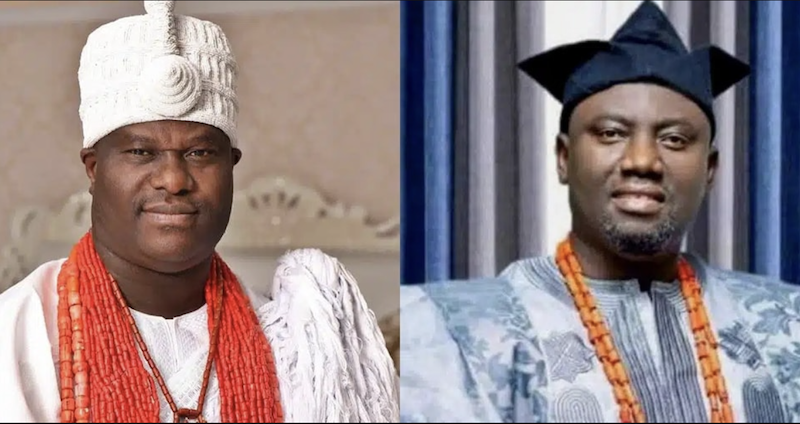
In the wake of growing public debate over a perceived snub, the palace of the Alaafin of Oyo, Oba Abimbola Owoade, has offered a detailed explanation regarding the monarch’s recent visit to Osun State and his omission of a courtesy call to the Ooni of Ife, Oba Adeyeye Ogunwusi. Addressing concerns that this development pointed to a rift between the two revered Yoruba monarchs, the Alaafin’s palace emphasized that the decision was circumstantial and not a slight.
According to Kolade Oladele, Personal Assistant to the Alaafin, the original itinerary for the Osun visit prioritized the Ooni’s palace as the first point of call. However, the protocol team was informed that Oba Ogunwusi was out of the country, prompting a change in the Alaafin’s tour schedule. The first official visit was subsequently made to the Oluwo of Iwo, Oba Abdulrasheed Akanbi.
 blob:https://www.image2url.com/6b1201f1-93ee-44f9-bbeb-45816585e575
Governor Umo Eno’s Defection Sparks Political Realignments As APC Gains Momentum
“We didn’t ignore the Ooni,” Oladele told Saturday PUNCH. “Our protocol officer contacted the Ooni’s palace but was told Baba (Ooni) was not around. That was why we proceeded to visit the Oluwo instead.”
The visit to the Oluwo sparked speculation, especially after Oba Akanbi publicly proclaimed the Alaafin as the foremost traditional ruler in Yorubaland. The declaration reignited debates over the hierarchical supremacy among Yoruba monarchs, particularly between the Alaafin and the Ooni—two thrones with deep historical roots and influence.
However, Oladele was quick to dismiss the idea of any rivalry. “There is no rift between the Alaafin and the Ooni. Baba is focused on the unity and progress of the Yoruba race. That’s his priority,” he said. He also disclosed that Oba Owoade would soon visit the Ooni and Osun State Governor, Ademola Adeleke, to express appreciation for their hospitality and support.
Oladele’s assurance was echoed by the Olowu of Kuta, Oba Adekunle Oyelude, who confirmed that he was aware of the Alaafin’s intention to first visit the Ooni before the Oluwo. “I was privy to the arrangement. Alaafin didn’t sideline the Ooni. He truly wanted to visit him, but Baba wasn’t at home,” he stated. “There is no conflict; both monarchs will continue to work for Yoruba unity.”
Contradicting Accounts Stir More Questions
Despite reassurances from Oyo, the Ooni’s palace offered a different narrative. Moses Olafare, Director of Media and Public Affairs at the Ooni’s palace, contested the Alaafin’s version of events. He stated that there was no formal communication from the Alaafin’s camp—neither via letter nor phone—regarding a proposed visit.
“We were not officially notified,” Olafare explained. “All we heard was from one of our security personnel, who mentioned that someone called to inquire if the Ooni was around. But that cannot be considered an official communication.”
He also pointed out that the Ooni’s absence was widely known before his trip abroad, and a properly routed communication would have ensured clarity. “There was no reason to believe that a visit was being planned. If it was, we should have received a formal notification,” he added.
The conflicting accounts have only intensified speculation among followers of Yoruba royal traditions, where protocol and symbolism often carry profound implications. The historic roles of the Alaafin of Oyo and the Ooni of Ife as spiritual and political leaders within the Yoruba socio-political system make every move between the two highly scrutinized.
Royal Protocols and the Path to Reconciliation
Despite the differing accounts, efforts appear to be underway to reaffirm unity among Yoruba traditional institutions. The promise of an appreciation visit by the Alaafin to the Ooni and Governor Adeleke suggests a move to put the incident behind them.
Observers note that the misunderstanding, while delicate, may offer an opportunity for Yoruba monarchs to reinforce solidarity and collective purpose. At a time when cultural and regional cohesion is increasingly vital, visible unity among traditional rulers sends a strong message of stability.
In a region steeped in heritage and proud of its traditional hierarchy, the delicate balancing of royal relationships plays a vital role in maintaining order and cultural integrity. Both the Alaafin and the Ooni occupy revered positions, and their collaboration is seen as essential for the continued advancement of Yoruba interests both within and beyond Nigeria.
While clarifications have been made from both sides, the upcoming visit may serve as a critical gesture of reconciliation. As Oladele succinctly put it, “Alaafin isn’t fighting anybody.”
The Yoruba people, deeply respectful of their cultural institutions, will be watching closely. Unity among their traditional rulers, particularly between the Alaafin and the Ooni, remains a powerful symbol of collective identity—a reminder that, despite protocol errors or political interpretations, fraternity must remain the guiding principle.




















Leave a Comment
Your email address will not be published. Required fields are marked with *