
APC Nears Two-Thirds Senate Majority as More Lawmakers Defect from PDP The ruling All Progressives Congress (APC) has moved within striking distance of securing a two-thirds majority in the Nigerian Senate, following the defection of four opposition senators on Wednesday. This development signals a major power shift in the National Assembly and has raised
APC Nears Two-Thirds Senate Majority as More Lawmakers Defect from PDP

The ruling All Progressives Congress (APC) has moved within striking distance of securing a two-thirds majority in the Nigerian Senate, following the defection of four opposition senators on Wednesday. This development signals a major power shift in the National Assembly and has raised serious concerns about the future of democratic checks and balances in the country.

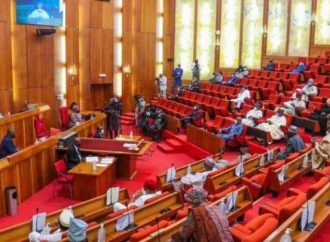
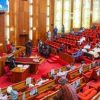
The defectors, all from the Peoples Democratic Party (PDP), include Senators Sampson Ekong (Akwa Ibom South), Aniekan Bassey (Akwa Ibom North-East), Francis Fadahunsi (Osun East), and Olubiyi Fadeyi (Osun Central). Their defection letters were read during plenary by Senate President Godswill Akpabio.
With their exit from the PDP, the APC’s strength in the 109-member Senate now stands at 70—just two seats shy of the 72 required for a two-thirds majority. The PDP now controls 28 seats, the Labour Party (LP) holds five, the Social Democratic Party (SDP) has two, while the New Nigeria Peoples Party (NNPP) and the All Progressives Grand Alliance (APGA) each hold one seat. Two Senate seats remain vacant pending by-elections.
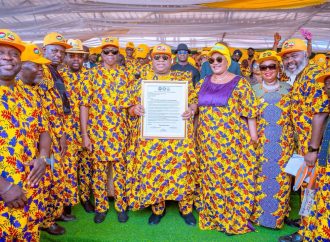
Nentawe Yilwatda Emerges As APC National Chairman As Party Repositions For 2027
House of Representatives Also Tilting Further Right
The House of Representatives is experiencing a similar trend. On Wednesday, three more PDP lawmakers defected to the APC: Taofeek Ajilesoro and Omirin Emmanuel Olusanya (both from Osun State), and Marcus Onobun from Edo State. These defections followed that of Mark Esset (Akwa Ibom) earlier in the week.
The APC now holds 224 seats in the 360-member green chamber, far ahead of the PDP’s 86. The Labour Party commands 26 seats, the NNPP holds 16, APGA has six, while the SDP and the African Democratic Congress (ADC) have two and one, respectively. Five House seats are currently vacant due to deaths and one resignation.
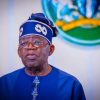
This expansion of APC control in both legislative chambers is being interpreted as part of a larger strategic push by the ruling party ahead of the 2027 general elections. President Bola Tinubu’s administration appears intent on consolidating power, further weakening an already fractured opposition.
Political Analyst Warns of Democratic Backslide
Reacting to the unfolding political landscape, Professor Gbade Ojo, a political scientist and former Chief of Staff in Oyo State, raised alarm over the implications of the APC’s increasing dominance.
“What we are witnessing is the continuous expansion of the ruling APC. While that may appear to signify political strength on the surface, the implications for democracy are deeply concerning,” Ojo warned.
He described the near two-thirds majority as a potential “subtle dictatorship,” explaining that when one party wields unchecked power in both the executive and legislative branches, democratic safeguards quickly erode.
“The legislature becomes a ‘Yes Ma, Yes Sir’ institution. Lawmakers will compromise. The executive can push through borrowing plans—even after removing fuel subsidies, as is currently the case—and the legislature will not act as a check. That is a dangerous trend for our fragile democracy,” he said.
Blame on Weak Opposition and Ideological Void
Ojo also blamed the decline of the opposition on internal dysfunction. He described the PDP and other opposition parties as victims of their own lack of discipline and strategic foresight.
“The opposition has failed to put its house in order. The absence of internal democracy and lack of discipline are their biggest undoing,” he said.
He further criticized the ideological vacuum in Nigerian politics, where party affiliations are often transactional rather than principled.
“In an ideal democracy, no two parties should be ideologically identical. But in Nigeria, there is complete ideological fluidity. Everyone is simply fighting for survival, not based on principles or values,” Ojo remarked.
He warned that unless the opposition rebuilds its base and redefines its political identity, Nigeria may drift dangerously toward one-party dominance. “Our prayer is that this democracy does not relapse into dictatorship. As the saying goes: power corrupts, and absolute power corrupts absolutely,” he added.
The Road Ahead: Realignment or Rupture?
The political reshuffling in the National Assembly has clearly tilted the balance of power in favor of the APC. Should the ruling party secure two more Senate seats, it would gain the power to amend laws, approve executive requests, and fast-track constitutional changes with minimal resistance.
With two vacant Senate seats and five in the House, the results of forthcoming by-elections could prove decisive. But as things stand, the APC appears poised for legislative supremacy—unless a unified and reinvigorated opposition can halt the momentum.
As the 2027 elections draw closer, political watchers and civil society groups will be keeping a close eye on how these dynamics evolve, and whether Nigeria’s democracy can survive the storm of one-party dominance.














Leave a Comment
Your email address will not be published. Required fields are marked with *