
Bugaje Insists: “I Can Confirm That Obasanjo Looked For Third Term” The long-standing controversy surrounding former President Olusegun Obasanjo’s alleged third-term ambition resurfaced this week after political activist and civil society leader, Usman Bugaje, openly contradicted the former president’s latest denial. Appearing on Arise Television’s Morning Show on Monday, Bugaje insisted that Obasanjo not only
Bugaje Insists: “I Can Confirm That Obasanjo Looked For Third Term”

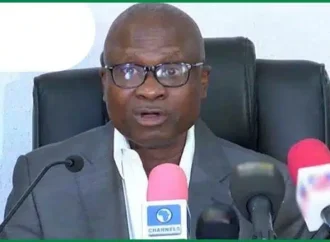
The long-standing controversy surrounding former President Olusegun Obasanjo’s alleged third-term ambition resurfaced this week after political activist and civil society leader, Usman Bugaje, openly contradicted the former president’s latest denial. Appearing on Arise Television’s Morning Show on Monday, Bugaje insisted that Obasanjo not only sought to prolong his stay in power but also deployed every means at his disposal to secure a third term in office.
This came in response to remarks made by Obasanjo last week at a democracy dialogue in Ghana, organized by the Goodluck Jonathan Foundation, where the ex-president dismissed speculations about his alleged attempt to manipulate Nigeria’s political process in his favor.
 blob:https://www.image2url.com/6b1201f1-93ee-44f9-bbeb-45816585e575
“I’m not a fool. If I wanted a third term, I know how to go about it. And there is no Nigerian dead or alive that would say I called him and told him I wanted a third term,” Obasanjo declared.
But Bugaje, who served in the National Assembly during Obasanjo’s administration, countered this narrative, describing it as “an attempt to rewrite history.”
The Olojo Festival In Ile-Ife: A Celebration Of Dawn, Heritage, And Unity, 10th–15th centuries
Bugaje’s Strong Accusations
In his Arise TV interview, Bugaje said unequivocally:
“I can confirm to you that Obasanjo looked for third term. He did everything that he could within his power to get third term; he failed to do so.”
He argued that Obasanjo’s defense—that he never personally called anyone to request a third term—was misleading. For Bugaje, the absence of such direct evidence did not erase the reality that lawmakers were under intense pressure to alter the constitution to allow Obasanjo to extend his presidency.
Bugaje explained that legislators at the time were witnesses to Obasanjo’s maneuvers, claiming that the push for constitutional amendment was widely known within the National Assembly. According to him, the pressure went beyond lobbying and entered the territory of intimidation and inducement.
“All of us in the National Assembly at that time knew beyond any doubt that he worked day and night, and many of us were threatened by his own agents,” Bugaje said.
Lawmakers Under Pressure
The activist recounted how some lawmakers endured harassment during the period, citing examples of intimidation and bribery attempts. He mentioned Senator Victor Lar, then leader of the Northern caucus of the House of Representatives, who allegedly faced such intense pressure that he had to hide in different locations before a crucial meeting was held to coordinate opposition to the third-term plan.
According to Bugaje, the tactics involved both carrots and sticks: lawmakers were offered cash incentives to support constitutional amendments, while others who resisted were allegedly threatened with political and personal repercussions.
“Those people who actually distributed the money and threatened us are alive. Those who received the money are alive. Those who refused to receive the money are alive. There is sufficient evidence… this is a matter that is incontrovertible, there is no way he can deny it,” Bugaje insisted.
His remarks suggest that, although Obasanjo may not have openly declared his ambition, there was an organized machinery working toward the same goal—one, Bugaje argues, that could not have operated without the former president’s approval.
The Third-Term Controversy
The third-term controversy remains one of the most debated issues in Nigeria’s democratic history. Between 2005 and 2006, the Obasanjo administration allegedly sponsored constitutional amendments that would have allowed him to run for a third term beyond 2007.
While Obasanjo’s supporters at the time argued that he needed more time to consolidate reforms and stabilize Nigeria’s democracy, critics warned that any extension of his tenure would undermine constitutional order and set a dangerous precedent for African leadership.
The alleged plan was eventually defeated in the Senate in 2006 when a constitutional amendment bill was dramatically thrown out after a tense debate. Many Nigerians hailed the decision as a watershed moment for democracy, ensuring the country remained committed to term limits.
Since then, Obasanjo has consistently denied any personal involvement in the third-term project, insisting that his exit in 2007 was in line with the constitution and his personal conviction. However, many political figures from that era, including former legislators, continue to insist otherwise.
Reactions and Implications
Bugaje’s latest comments have reignited debate on Obasanjo’s legacy. While Obasanjo is widely credited with stabilizing Nigeria’s economy, paying off external debts, and introducing reforms in telecommunications and banking, the third-term saga continues to shadow his achievements.
For critics like Bugaje, Obasanjo’s denials appear to be an attempt to erase an uncomfortable chapter of history. “There is no way he can deny it,” Bugaje emphasized, highlighting that the actors involved—lawmakers, agents, and witnesses—remain alive and could testify.
Political analysts believe the renewed conversation may reflect broader concerns about leadership, accountability, and historical memory in Nigeria. With new administrations grappling with governance challenges, the debate about Obasanjo’s alleged third-term bid serves as a reminder of the fragile balance between ambition and democratic principles.
The third-term controversy underscores the importance of Nigeria’s constitutional term limits, which have since become a cornerstone of the country’s democratic framework. Bugaje’s insistence that Obasanjo actively pursued a third term raises questions not only about the past but also about the future of Nigeria’s democracy.
As Bugaje concluded in his interview, the issue is not about whether Obasanjo personally picked up a phone or declared his ambition in public—it is about whether the machinery of power was deployed to subvert constitutional order. To him, the evidence remains clear and compelling.
While Obasanjo continues to deny the allegations, the debate remains alive nearly two decades later, suggesting that Nigeria has yet to fully reconcile with that controversial episode in its democratic journey.












Leave a Comment
Your email address will not be published. Required fields are marked with *