
EFCC Arrests Former NNPCL CFO Umar Ajiya Over Alleged $7.2 Billion Refinery Fraud In a sweeping anti-corruption move, the Economic and Financial Crimes Commission (EFCC) has arrested former Chief Financial Officer (CFO) of the Nigerian National Petroleum Corporation Limited (NNPCL), Umar Isa Ajiya, over his alleged involvement in a staggering $7.2 billion fraud related
EFCC Arrests Former NNPCL CFO Umar Ajiya Over Alleged $7.2 Billion Refinery Fraud
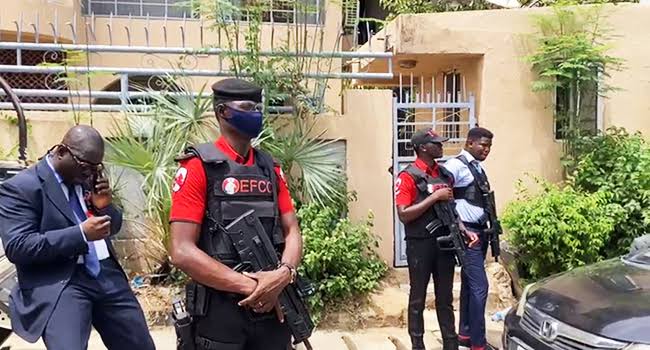
In a sweeping anti-corruption move, the Economic and Financial Crimes Commission (EFCC) has arrested former Chief Financial Officer (CFO) of the Nigerian National Petroleum Corporation Limited (NNPCL), Umar Isa Ajiya, over his alleged involvement in a staggering $7.2 billion fraud related to the rehabilitation of Nigeria’s three key oil refineries.
 blob:https://www.image2url.com/6b1201f1-93ee-44f9-bbeb-45816585e575
According to multiple sources, including senior officials within the EFCC, Ajiya is being investigated for mismanagement and possible diversion of funds allocated for the long-overdue turnaround maintenance of the Kaduna, Warri, and Port Harcourt refineries. These facilities have suffered years of decay, operating far below capacity despite repeated government assurances of their rehabilitation.
A senior EFCC official, speaking to Punch on condition of anonymity, stated: “Our operatives have arrested a former Chief Financial Officer of the NNPCL, Umar Ajiya Isa, in connection with an alleged $7.2 billion fraud related to the rehabilitation of the Kaduna, Warri, and Port Harcourt refineries.”
El-Rufai Warns Of INEC Interference In Plans For New Opposition Party Ahead Of 2027
Breakdown of Funds Under Investigation
Investigators are focusing on a total expenditure of $2.95 billion that was allegedly disbursed for the rehabilitation projects across the three refineries, broken down as follows:
- $1,559,239,084.36 for the Port Harcourt Refinery
- $740,669,600 for the Kaduna Refinery
- $656,963,938 for the Warri Refinery
The remaining amount is reportedly part of associated transactions and suspicious payments linked to contractors and consultants involved in the failed or incomplete projects.
“As CFO, Ajiya oversaw the release of funds for the turnaround maintenance. He is being investigated for alleged abuse of office, corruption, diversion of public funds, and receiving kickbacks from contractors,” the source added.
More High-Profile Arrests Looming
The arrest of Umar Ajiya appears to be just the beginning of a broader investigation. The EFCC has extended its probe to include several other high-ranking officials of the NNPCL and its subsidiaries who played critical roles in the execution and supervision of the rehabilitation works.
The officials under investigation include:
- Tunde Bakare, Managing Director of Warri Refinery
- Ahmed Adamu Dikko, former Managing Director of Port Harcourt Refinery
- Ibrahim Monday Onoja, another former MD of the Port Harcourt Refinery
- Jimoh Olasunkanmi, former MD of Warri Refinery, who is also reportedly in EFCC custody
“These officials are all being investigated for their roles in the disbursement and use of funds for the rehabilitation projects,” another EFCC source confirmed. The commission suspects that many of the funds earmarked for the refinery turnaround maintenance were either diverted or unaccounted for, despite the huge financial outlay.
Public Outrage and Historical Context
The news of the arrest has reignited public outrage over Nigeria’s chronic failure to restore its local refining capacity, despite decades of financial investments. Nigeria, Africa’s largest oil producer, continues to import most of its refined petroleum products, placing immense pressure on the economy and weakening the naira.
Successive governments have pledged billions of dollars toward the refurbishment of the country’s refineries, with little to show for it. The three facilities, with a combined installed refining capacity of over 445,000 barrels per day, have remained largely idle or operating at less than 10% capacity.
The EFCC’s move is being welcomed by anti-corruption activists and civil society organizations who have long called for accountability in the petroleum sector, widely seen as one of the most opaque and corruption-ridden areas of Nigeria’s economy.
EFCC’s Renewed Anti-Corruption Push
This arrest comes as part of the EFCC’s renewed focus on high-level financial crimes, particularly within government institutions and state-owned enterprises. Chairman of the commission, Ola Olukoyede, has in recent months promised to reassert the EFCC’s commitment to transparency and justice, with an emphasis on prosecuting individuals who misappropriate public funds.
Analysts believe that the commission is under increasing pressure to deliver meaningful results amid growing economic hardship, rising inflation, and public distrust in the integrity of government institutions.
The EFCC is expected to charge Ajiya and other implicated officials to court once preliminary investigations are concluded. A source close to the case hinted that forensic audits and contractor records are being scrutinized to trace financial flows, contracts awarded, and the actual work done on the refineries.
What Lies Ahead
The spotlight is now firmly on the NNPCL and its previous leadership. If the EFCC succeeds in securing convictions, it could signal a watershed moment for anti-corruption efforts in Nigeria’s oil sector.
For now, Nigerians await answers: How was nearly $3 billion spent without tangible results? Who benefited? And will justice finally be served?


















Leave a Comment
Your email address will not be published. Required fields are marked with *