
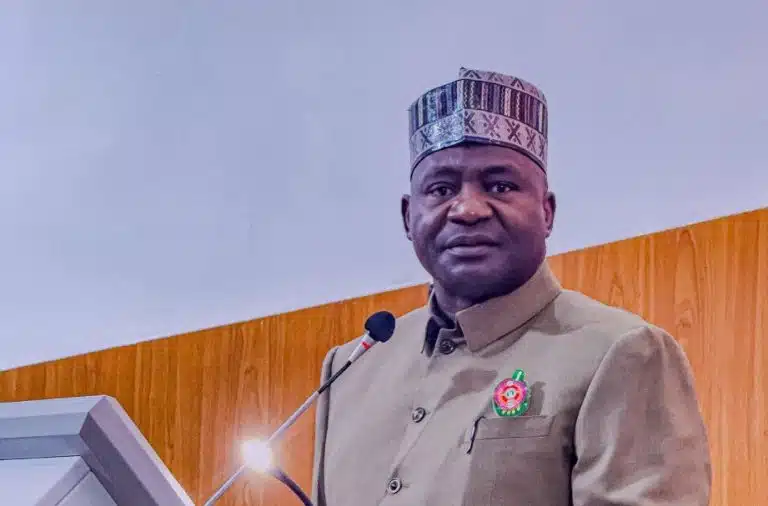
The Federal Government is considering a new strategy that could significantly reshape the relationship between the media and the nation’s security agencies. The proposal, which would allow selected journalists to accompany military personnel during certain operations, is aimed at improving the quality of security reporting while providing the public with a clearer understanding of the
The Federal Government is considering a new strategy that could significantly reshape the relationship between the media and the nation’s security agencies. The proposal, which would allow selected journalists to accompany military personnel during certain operations, is aimed at improving the quality of security reporting while providing the public with a clearer understanding of the realities faced by security forces across the country.
The initiative was disclosed by the Minister of Defence, Gen. Christopher Musa (retd.), during the National Security Summit organised by the Nigeria Union of Journalists (NUJ) in Abuja. Represented by his Special Adviser, Rear Admiral Olusanya Bankole, the minister explained that the move forms part of broader efforts to strengthen cooperation between the media and security institutions.
IGP Disu Redeploys Placid, Appoints New Police Spokesperson
 blob:https://www.image2url.com/6b1201f1-93ee-44f9-bbeb-45816585e575
According to the Defence Ministry, modern security challenges require more than military action alone. Public understanding, accurate information, and responsible communication have become essential components in addressing threats such as insurgency, banditry, kidnapping, and other forms of violent crime affecting different parts of Nigeria.
A central objective of the proposed arrangement is to promote transparency in military operations. By allowing journalists to witness selected activities firsthand, authorities believe media professionals will be better positioned to provide factual, balanced, and detailed reports on security developments.
The minister noted that information plays a critical role in shaping public perception, especially during periods of conflict and instability. He emphasized that journalists are no longer mere observers but important stakeholders whose work can influence national unity, public confidence, and social stability.
Officials believe that closer collaboration between reporters and military units could help reduce misinformation and speculation surrounding security operations. Such access would also enable journalists to gain deeper insight into operational realities, challenges faced by troops, and the complexity of security missions conducted across various regions.
The proposal reflects a growing recognition that security communication is just as important as physical security measures. Authorities argue that citizens are more likely to support government efforts when they have access to credible and accurate information regarding ongoing operations.
The Defence Ministry further stressed that success in the fight against insecurity should not be measured solely by battlefield achievements. Building trust between security institutions and the public is equally important. Through improved communication channels, the government hopes to strengthen confidence in the country’s security architecture.
Industry observers have described the initiative as a potentially transformative step if implemented effectively. Similar media-embedding arrangements have been used in other countries to provide journalists with direct access to military activities while maintaining operational security.
However, experts also note that clear guidelines would be necessary to balance transparency with the need to protect sensitive information and ensure the safety of both journalists and military personnel.
Nigeria continues to face multiple security challenges that have affected communities, businesses, and public institutions. Against this backdrop, the government believes stronger engagement with the media could contribute to better-informed citizens and a more coordinated national response to security threats.
As discussions on the proposal continue, stakeholders within the media and security sectors are expected to examine practical frameworks that would make the initiative effective while preserving professional standards and operational integrity. If adopted, the policy could mark a new chapter in media-military relations and enhance public understanding of the country’s ongoing security efforts.















Leave a Comment
Your email address will not be published. Required fields are marked with *