
FG Yet to Implement Any Agreement With ASUU – Union President The long-standing crisis in Nigeria’s education sector resurfaced this week as the President of the Academic Staff Union of Universities (ASUU), Prof. Chris Piwuna, accused the Federal Government of failing to implement any of the agreements reached with the union after several rounds of
FG Yet to Implement Any Agreement With ASUU – Union President

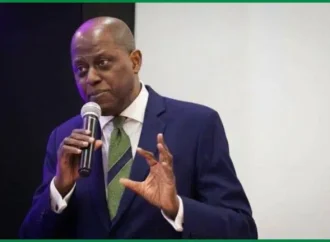
The long-standing crisis in Nigeria’s education sector resurfaced this week as the President of the Academic Staff Union of Universities (ASUU), Prof. Chris Piwuna, accused the Federal Government of failing to implement any of the agreements reached with the union after several rounds of dialogue. Speaking during an interview on Trust TV on Wednesday, Piwuna lamented that although ASUU has consistently engaged in negotiations with government representatives, the process has repeatedly stalled at the level of implementation.
He explained that the union has demonstrated commitment to dialogue, often travelling across the country to attend meetings in Abuja, but the government has not taken practical steps to honour its side of the bargain.
 blob:https://www.image2url.com/6b1201f1-93ee-44f9-bbeb-45816585e575
“We have always made ourselves available to government. Anytime they call us, we come from Calabar, Port Harcourt, Jos and other places to meet in Abuja. Dialogue has always been our first option. But there’s no part of the agreement that has been enforced. We have agreed with the government team on each of the items – funding, conditions of service, academic freedom, university autonomy, and review of some laws among others. What is left is for the government team to take action,” he said.
Agreements Reached but Not Implemented
According to the ASUU president, collective bargaining has produced documents that both parties endorsed, but the Federal Government has consistently failed to move beyond the negotiation table.
“There is no disagreement between us and the government side on each of these items. What remains is for them to return to their principals – the Ministry of Education and the Federal Government – and say, ‘look, these are the things we’ve agreed with ASUU. Do you accept it?’ That is where we are stuck,” Piwuna stressed.
The union leader highlighted key areas of concern including university funding, improved conditions of service for lecturers, the protection of academic freedom, and respect for university autonomy. He argued that until these agreements are implemented, Nigeria’s higher education system will continue to suffer.
Brain Drain and Poor Conditions of Service
Piwuna, who is also a medical doctor, drew attention to the growing exodus of Nigerian lecturers and medical consultants due to poor working conditions and inadequate remuneration. He revealed that in the Jos University Teaching Hospital where he works, at least 20 consultants have left within the past two years.
“As a head of department, hardly three months pass without my signing a reference letter for a doctor relocating abroad. It’s the same for lecturers. If everybody is leaving because of salary, why can’t you improve the salary and retain the staff? In Uganda today, you will not find fewer than 20 Nigerian lecturers, sometimes in one university,” he lamented.
This mass migration, he noted, poses a grave danger to Nigeria’s educational and healthcare systems as experienced professionals abandon the country for better opportunities abroad.
Decline in University Standards
The ASUU president also raised concerns about the poor global ranking of Nigerian universities, which he linked to underfunding, poor infrastructure, and inadequate conditions of service.
“Out of 333 universities in Nigeria, fewer than five are in the top 1,000 in Africa. Our pay is low, facilities are not upgraded, and conditions of service are poor. Go to any public university and ask female lecturers if they are comfortable using the restrooms. Many would rather drive home before returning to campus,” Piwuna stated.
He argued that the deplorable state of public universities not only discourages staff but also undermines the quality of teaching and research, further reducing Nigeria’s competitiveness in the global education space.
Strikes as a Last Resort
Prof. Piwuna clarified that university lecturers are not enthusiastic about strikes, contrary to popular perception. He said the union only resorts to industrial action when all other options fail.
“Lecturers are not happy with strikes. Our students are our children. Our wives and relatives are in the system. We are all affected. But unless government addresses these issues, instability in the system will continue,” he warned.
He reiterated that strikes are disruptive to both students and lecturers, but the government’s refusal to implement agreed reforms leaves the union with no alternative means of pressing its demands.
Appeal for Stakeholder Support
Beyond its internal struggle, ASUU called for support from wider society in order to push for reforms that would improve Nigeria’s higher education sector. Piwuna stressed that the union’s agitation should not be misunderstood as a selfish fight, but rather as a national effort to safeguard the future of education.
“This is not about ASUU. ASUU is only fighting for a better system. It is about our future and about our country,” he said.
The Way Forward
Analysts note that the recurrent disputes between ASUU and the Federal Government highlight the urgent need for a sustainable framework for university funding and staff welfare. Without concrete steps to address the union’s demands, Nigeria risks continued brain drain, worsening educational standards, and frequent disruptions to the academic calendar.
For many Nigerians, the lingering deadlock is a test of political will. While ASUU maintains its stance on implementation, the Federal Government faces pressure to honour past commitments to restore stability in the university system.
As Piwuna’s remarks underscore, the cost of inaction goes beyond ASUU—it undermines the future of Nigeria’s youth and the country’s ability to compete on a global stage.
















Leave a Comment
Your email address will not be published. Required fields are marked with *