
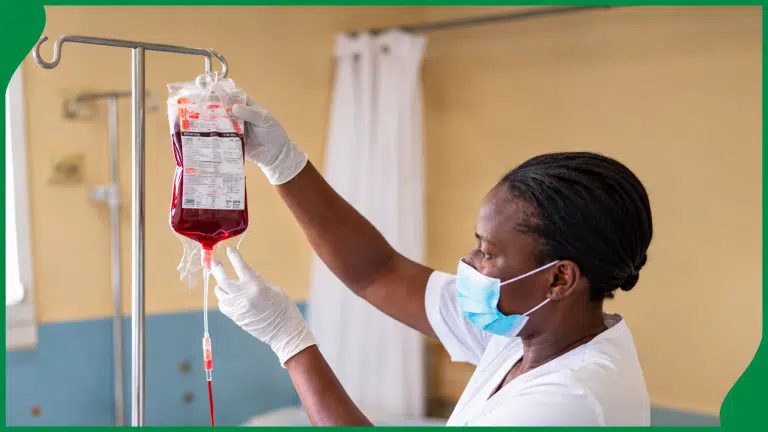
Jehovah’s Witnesses have announced a significant change to their long-standing position on blood, allowing individual members to decide whether to accept four major blood components based on personal conscience. The revised position was announced by the Governing Body of Jehovah’s Witnesses in a statement issued by the organisation’s World Headquarters in Warwick, New York, on
Jehovah’s Witnesses have announced a significant change to their long-standing position on blood, allowing individual members to decide whether to accept four major blood components based on personal conscience.
The revised position was announced by the Governing Body of Jehovah’s Witnesses in a statement issued by the organisation’s World Headquarters in Warwick, New York, on Friday, September 18, 2026.
NMDPRA Breaks Silence On Rising Petrol Prices, Cites PIA
 blob:https://www.image2url.com/6b1201f1-93ee-44f9-bbeb-45816585e575
Under the new guidance, members can personally decide whether to accept red blood cells, white blood cells, plasma or platelets from another person’s blood.
The development marks a change in how the religious organisation approaches these specific components, while maintaining its established position against whole-blood transfusions.
The announcement is expected to be relevant to members facing medical procedures in which blood components may be considered as part of treatment.
According to the organisation, the decision to accept the four components is now a matter of individual conscience rather than a choice determined by a uniform religious rule.
Jehovah’s Witnesses Blood Policy: What Has Changed?
In its statement, the Governing Body said members may make personal decisions concerning the acceptance of red cells, white cells, plasma and platelets.
The organisation also indicated that members may decide whether to donate blood specifically for the purpose of having components or fractions prepared for another person’s use.
The revised guidance places responsibility for these decisions on individual members, who are expected to consider their personal religious convictions.
Jehovah’s Witnesses explained that the Bible does not specifically address decisions involving the four major blood components, which is why the matter is being treated as one of personal conscience.
The change does not mean that the organisation has abandoned its broader religious position on blood. Instead, it distinguishes between whole-blood transfusions and decisions involving particular components.
Whole-Blood Transfusion Ban Remains
Despite the adjustment, Jehovah’s Witnesses reaffirmed that their long-standing refusal of whole-blood transfusions remains unchanged.
The organisation said its position is based on its interpretation of the biblical instruction to “abstain from blood,” referenced in Acts 15:20.
The statement made clear that the new guidance should not be interpreted as a general reversal of the group’s teachings on blood transfusions.
Rather, the revised position concerns the four specified components and the freedom of individual members to make decisions about them.
This distinction is central to understanding the announcement: members have been given greater discretion over certain blood-related medical choices, but the organisation’s position on whole blood remains in place.
Paul Gillies Explains the Organisation’s Position
Paul Gillies, international spokesman for Jehovah’s Witnesses at the group’s World Headquarters, said the organisation continues to regard blood as sacred.
Gillies explained that the religious group considers life and blood precious gifts from God, while recognising that decisions involving individual blood components are matters of personal conscience.
He said such medical decisions are between each Witness and their God, Jehovah.
Gillies also clarified that local congregations would not interfere in members’ personal choices concerning the four blood components.
According to the spokesman, the organisation would continue to respect and support members as they make decisions based on their individual conscience.
The clarification means that congregations are not expected to direct or enforce a uniform choice regarding whether a member accepts the specified components.
Previous Adjustments and Medical Treatment
The organisation said the latest change follows earlier adjustments involving blood fractions and the use of a person’s own blood during medical procedures.
Jehovah’s Witnesses also stated that members seek medical treatment rather than practise faith healing, provided the treatment aligns with their wishes, values and religious beliefs.
The new guidance therefore addresses a specific aspect of medical decision-making within the faith, rather than changing the organisation’s overall approach to healthcare.
Jehovah’s Witnesses have more than nine million members across over 200 countries and territories, according to the organisation.
The announcement places individual conscience at the centre of decisions involving red cells, white cells, plasma and platelets, while preserving the group’s existing position on whole-blood transfusions.
For members and healthcare professionals, the distinction between the components and whole blood will remain important when discussing treatment options and documenting a patient’s informed choices.




















Leave a Comment
Your email address will not be published. Required fields are marked with *