
NEC Meeting: State Policing Takes Center Stage Amid Rising Insecurity As Shettima Presides The National Economic Council (NEC) meeting taking place today in Abuja is expected to be dominated by one of the most contentious security debates in Nigeria’s history—the push to institutionalise state policing. The meeting, presided over by Vice President Kashim Shettima, kicked
NEC Meeting: State Policing Takes Center Stage Amid Rising Insecurity As Shettima Presides
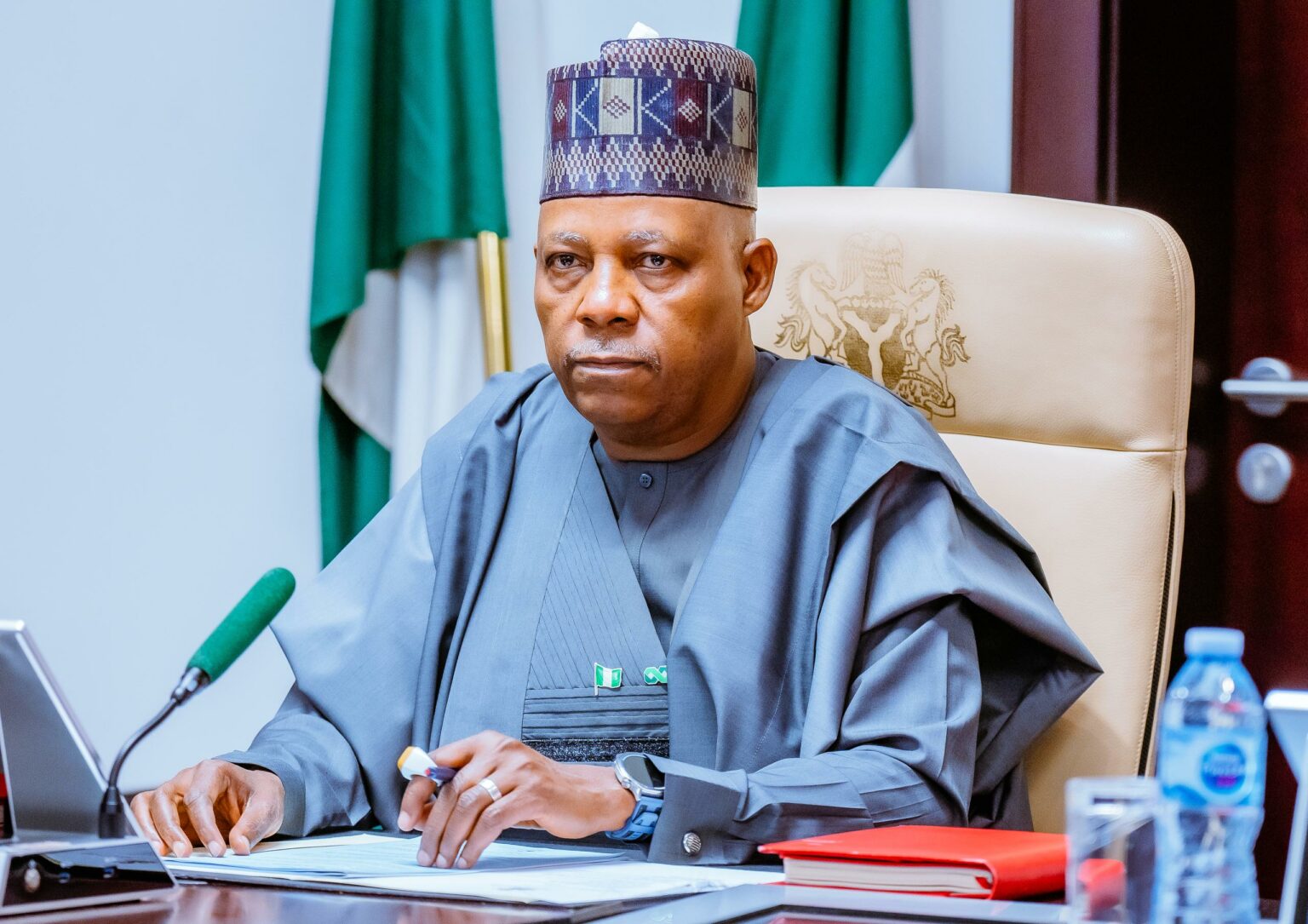 The National Economic Council (NEC) meeting taking place today in Abuja is expected to be dominated by one of the most contentious security debates in Nigeria’s history—the push to institutionalise state policing. The meeting, presided over by Vice President Kashim Shettima, kicked off around 11:30 a.m. at the Council Chambers of the State House with prayers led by Delta State Governor Sheriff Oborevwori, before participants moved into a closed-door session.
This session is the first since President Bola Ahmed Tinubu renewed his call for decentralised policing, describing it as a necessity in tackling the country’s worsening security challenges.
Rivers Assembly Resumes Plenary After Six-Month Emergency Rule Ends
 blob:https://www.image2url.com/6b1201f1-93ee-44f9-bbeb-45816585e575
Renewed Push for Decentralised Policing
The President had recently met with a delegation of eminent citizens from Katsina State, during which he reiterated his determination to reform Nigeria’s security architecture. “I am reviewing all the aspects of security; I have to create a state police,” Tinubu stated at the State House, igniting renewed debate across the country.
State policing has long been a divisive issue in Nigeria’s governance discourse. Proponents argue that devolving policing powers to states would bring law enforcement closer to the people, ensure quicker response to crises, reduce the burden on overstretched federal forces, and improve intelligence gathering at the grassroots level.
On the other hand, critics warn that the creation of state police could be weaponised by governors, potentially transforming security outfits into political instruments for harassment and suppression of opposition.
NEC’s Role and Expanded Mandate
The NEC, established as a constitutional advisory body, is chaired by the Vice President and comprises all 36 state governors, the governor of the Central Bank of Nigeria (CBN), and several key federal ministers. Though primarily designed to coordinate economic policy, the council’s agenda often extends to broader governance concerns, including pressing national security matters.
By placing state policing on the NEC agenda, the Tinubu administration is signaling its determination to secure consensus on an issue that has for years stalled in the National Assembly despite growing calls for decentralisation. Previous constitutional amendment efforts to enable state policing have collapsed, largely due to fears of abuse and lack of political alignment among lawmakers.
Rising Insecurity Intensifies Calls for Reform
Nigeria is facing escalating security threats on multiple fronts. Banditry, kidnapping, herder-farmer clashes, and insurgency continue to ravage many regions, stretching the capacity of the federal police and armed forces. In some states, vigilante groups and local security outfits—such as Amotekun in the South-West and Ebubeagu in the South-East—have been created as stop-gap solutions, though without full constitutional recognition.
Security experts argue that institutionalising state policing could provide the legal and structural backing these regional outfits require to function effectively. It would also allow governors, who are officially designated as chief security officers of their states, to have greater control over tools to combat insecurity.
Political Concerns and Historical Resistance
Despite the merits, resistance to state policing remains strong. Detractors highlight the potential risks of political interference, where governors might deploy police forces to stifle dissent, manipulate elections, or intimidate opposition voices. Concerns over funding, training standards, and coordination between state and federal security structures also persist.
Historically, attempts to reform Nigeria’s policing framework have been bogged down by these fears. Multiple constitutional review processes have featured debates on the issue, but consensus has never been reached, reflecting deep political and regional divides.
Today’s NEC session is therefore viewed as pivotal. With Vice President Shettima presiding, the council will have to navigate competing perspectives from the governors, some of whom are strong advocates of state policing, while others remain skeptical.
Observers expect heated discussions on how decentralised policing could be structured to prevent abuse while addressing legitimate security needs. Issues of accountability, recruitment, training, funding, and oversight are likely to dominate the deliberations.
If the NEC reaches a broad agreement, it could set the stage for renewed legislative efforts to amend the constitution and formally establish state police. Such a move would mark one of the most significant reforms of Nigeria’s security system in decades.
Nigeria stands at a crucial juncture. Insecurity continues to undermine economic growth, discourage investment, and erode citizens’ confidence in government. President Tinubu’s insistence on state policing underscores the urgency of reform, but the challenge lies in striking a balance between decentralisation and accountability.
For the NEC, today’s meeting is more than a routine gathering; it represents an opportunity to craft a united front on an issue that could reshape Nigeria’s federal structure and security landscape. Whether consensus emerges or divisions deepen, the outcome will resonate far beyond the walls of the Council Chambers.
In the coming weeks, Nigerians will be watching closely to see if Tinubu’s administration can convert renewed political will into actionable reforms. For a nation weary of insecurity, the stakes could not be higher.



















Leave a Comment
Your email address will not be published. Required fields are marked with *