
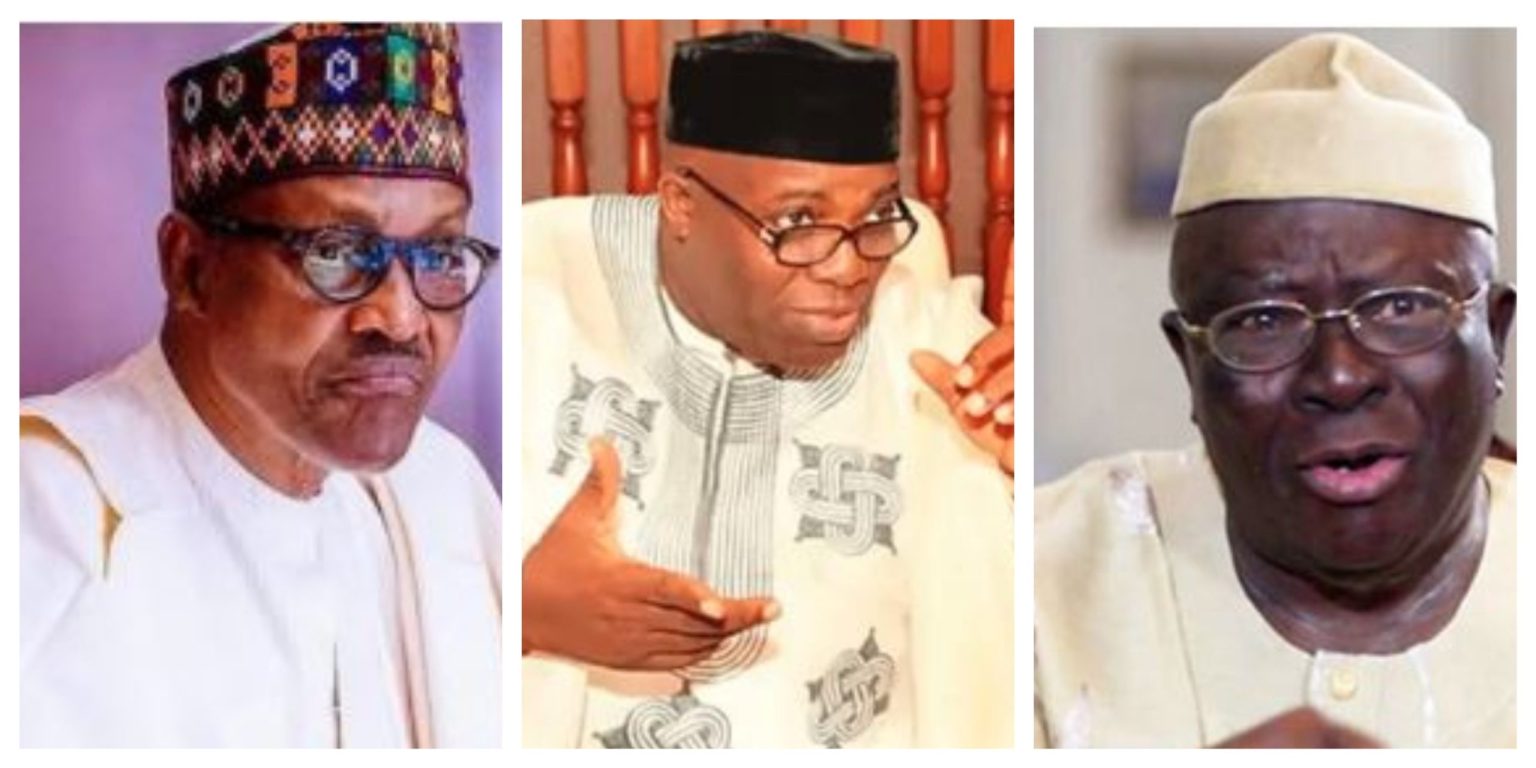
The year 2025 began with high political expectations in Nigeria, marked by intense debates, alignments, and preparations for future elections. However, beyond the political maneuvering, the year was also overshadowed by the tragic deaths of several influential politicians whose passing left a deep imprint on the nation. From elder statesmen to serving public office
The year 2025 began with high political expectations in Nigeria, marked by intense debates, alignments, and preparations for future elections. However, beyond the political maneuvering, the year was also overshadowed by the tragic deaths of several influential politicians whose passing left a deep imprint on the nation. From elder statesmen to serving public office holders, these losses sparked nationwide mourning and reflection on their contributions to Nigeria’s political history.
Throughout the year, Nigerians witnessed the deaths of prominent figures at different moments, some early in the year and others toward its close. Each passing triggered tributes from political leaders, citizens, and institutions, highlighting the enduring impact of their legacies. Below are some of the most notable political deaths that shook the country in 2025.
 blob:https://www.image2url.com/6b1201f1-93ee-44f9-bbeb-45816585e575
Peter Obi Rules Out Vice-Presidential Role, Confirms 2027 Presidential Ambition
Tragic Political Losses That Defined 2025
Muhammadu Buhari
Nigeria’s immediate past President, Muhammadu Buhari, died on July 13, 2025, in London, United Kingdom, at the age of 82. Buhari reportedly passed away after a brief illness in a London hospital. His death marked the end of an era, given his long involvement in Nigeria’s political and military history. He was laid to rest on July 15, 2025, in his hometown of Daura, Katsina State. The burial ceremony was attended by several local and international dignitaries, including sitting and former presidents.
Doyin Okupe
Former Director-General of Peter Obi’s 2023 Presidential Campaign, Doyin Okupe, died on March 7, 2025, in Lagos State at the age of 72. A seasoned political communicator, Okupe had served as presidential spokesperson to former Presidents Olusegun Obasanjo and Goodluck Jonathan. He reportedly died after a prolonged illness and was buried on March 28, 2025, in his hometown of Iperu-Remo, Ikenne Local Government Area of Ogun State.
Chief Edwin Clark
Renowned elder statesman and former Federal Commissioner for Information, Chief Edwin Clark, passed away on February 17, 2025, at the age of 98. He reportedly died after a brief illness at a private hospital in Abuja, following breathing difficulties the previous night. Clark was a respected voice in national discourse and a strong advocate for the Niger Delta. He was laid to rest on May 13, 2025, in Kiagbodo, Delta State.
Pa Ayo Adebanjo
Foremost nationalist and leader of the Pan-Yoruba socio-cultural group, Afenifere, Chief Ayo Adebanjo, died on February 14, 2025, at his residence in Lekki, Lagos State. He was 96 years old. Adebanjo was widely regarded as a principled advocate for democracy and restructuring. His burial took place on May 3, 2025, in his hometown of Isanya Ogbo, near Ijebu-Ode, Ogun State.
Lawrence Ewhrudjakpo
The political space was stunned in December following the sudden death of Bayelsa State Deputy Governor, Lawrence Ewhrudjakpo. He reportedly died on December 11 after slumping while working in his office. In response, Governor Douye Diri ordered an autopsy to determine the cause of death and declared three days of state mourning, with flags flown at half-mast across the state.
Cornelius Olatunji Adebayo
Former senator and ex-governor of Kwara State, Cornelius Olatunji Adebayo, died on June 25, 2025, at the age of 84. Adebayo served as governor during the Second Republic and later as Minister of Communications and Transportation under President Olusegun Obasanjo between 2003 and 2006. He was buried in his hometown in Isin Local Government Area of Kwara State.
The deaths of these leaders not only brought grief but also prompted national reflection on service, leadership, and legacy. Their absence was felt across political divides, underscoring how deeply they shaped Nigeria’s political journey in different ways.














Leave a Comment
Your email address will not be published. Required fields are marked with *