
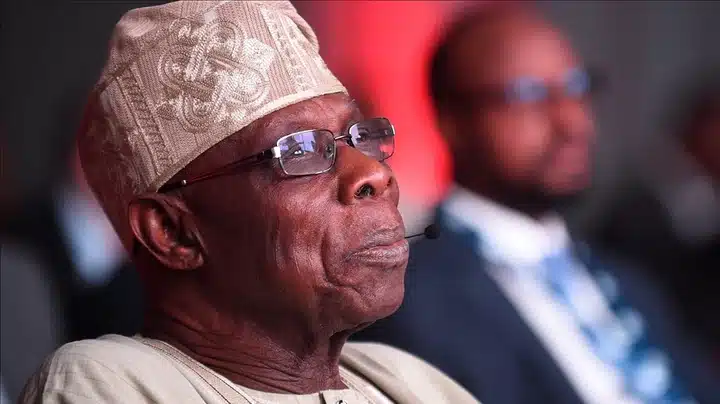
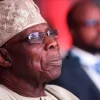
Former President Olusegun Obasanjo has blamed Nigeria’s persistent economic challenges partly on the country’s failure to fully exploit its agricultural resources. Obasanjo argued that Nigeria possesses the basic resources needed to produce food, generate wealth and support economic development, including arable land, water, rainfall and a large population. The former president made the remarks while
Former President Olusegun Obasanjo has blamed Nigeria’s persistent economic challenges partly on the country’s failure to fully exploit its agricultural resources.
Obasanjo argued that Nigeria possesses the basic resources needed to produce food, generate wealth and support economic development, including arable land, water, rainfall and a large population.
The former president made the remarks while speaking during an interview on C-Suite Cafe, hosted by Ikem Okuhu.
 blob:https://www.image2url.com/6b1201f1-93ee-44f9-bbeb-45816585e575
₦6 Billion Controversy: Rivers Assembly Opens Probe Into PAMO University Funding
According to Obasanjo, Nigeria’s dependence on imported goods despite its abundant natural resources remains one of the factors limiting the country’s economic progress.
He questioned why a country with considerable agricultural potential should continue to struggle with poverty and food production.
“Give me one reason why Nigeria should be poor,” Obasanjo said, pointing to the availability of land, water, rainfall and human resources across the country.
The former president stressed that Nigeria has the capacity to produce many of the agricultural products it currently imports if the right policies and incentives are sustained.
He illustrated his argument with an experience from his time as chairman of the African Union, when he travelled to Guinea-Bissau alongside John Kufuor, who was then chairman of the Economic Community of West African States.
O — Obasanjo Recalls Guinea-Bissau Experience
Obasanjo recalled observing significant agricultural activity as he and Kufuor approached Guinea-Bissau.
He said they saw bananas and other fruits growing naturally in the country, which he viewed as evidence of the region’s agricultural potential.
However, he said the contrast became more obvious when they arrived at their hotel and were served imported apples and grapes despite seeing locally grown fruits along the way.
For Obasanjo, the experience demonstrated a wider problem across Africa, where countries with significant agricultural resources sometimes rely on imported food instead of developing domestic production.
“That’s part of the reason why we are poor,” he said, arguing that African nations must make better use of the resources available to them.
The former president also reflected on Nigeria’s agricultural policies, particularly the country’s decision to restrict rice imports in 1979.
According to him, the objective of the policy was to encourage domestic rice production and move the country towards greater self-sufficiency.
Obasanjo recalled that agricultural officials had inspected rice farms before the military government left office and reported that Nigeria was making progress towards producing enough rice for domestic consumption.
He, however, said subsequent administrations reversed the approach by lifting restrictions on rice imports.
According to the former president, the change undermined local farmers who were trying to expand production because they suddenly had to compete with imported rice.
“When our successors came, one of the first things they did was to lift importation of rice,” Obasanjo said, arguing that the policy encouraged imports rather than domestic production.
He said farmers subsequently struggled to sell their own rice because of the availability of imported alternatives.
Obasanjo’s comments come amid continued discussions over Nigeria’s food security, agricultural productivity and dependence on imports.
His position is that Nigeria’s natural advantages should form the foundation of a stronger domestic production system, rather than allowing the country’s agricultural potential to remain underutilised.
The former president’s remarks also underline the importance of consistent agricultural policies, as frequent changes in import restrictions and government incentives can affect farmers’ ability to plan investments and expand production.
For Obasanjo, Nigeria’s challenge is not simply a shortage of resources but the failure to effectively transform those resources into sustained economic opportunities.
















Leave a Comment
Your email address will not be published. Required fields are marked with *