
Opposition Titans Unite Under ADC to Challenge Tinubu in 2027 Abuja, Nigeria – In a significant realignment of Nigeria’s political landscape, several top opposition leaders have formally adopted the African Democratic Congress (ADC) as their unified platform to contest President Bola Ahmed Tinubu’s anticipated bid for re-election in 2027. The dramatic development followed a closed-door
Opposition Titans Unite Under ADC to Challenge Tinubu in 2027
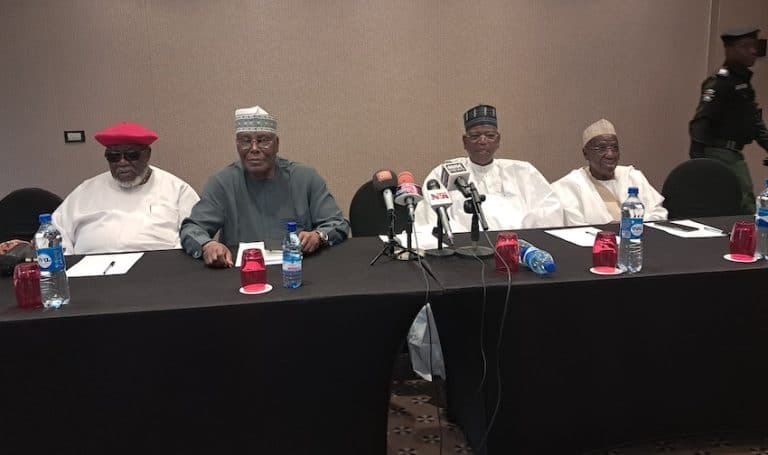
Abuja, Nigeria – In a significant realignment of Nigeria’s political landscape, several top opposition leaders have formally adopted the African Democratic Congress (ADC) as their unified platform to contest President Bola Ahmed Tinubu’s anticipated bid for re-election in 2027. The dramatic development followed a closed-door meeting on Tuesday night that brought together heavyweight political figures from across the country.
At the heart of this coalition is a move to rejuvenate ideological politics and restore integrity to Nigeria’s democratic processes. The high-level gathering culminated in the nomination of former Senate President David Mark as the ADC’s protem national chairman, while former Osun State Governor Rauf Aregbesola was named protem national secretary.
 blob:https://www.image2url.com/6b1201f1-93ee-44f9-bbeb-45816585e575
ADC Becomes Rallying Point for Opposition Revival
The meeting marked a rare moment of cross-party unity, drawing an impressive list of political veterans and influential voices. Among those present were former Vice President Atiku Abubakar; ex-Minister of Transportation and former Rivers Governor Rotimi Amaechi; 2023 Labour Party presidential candidate Peter Obi; former APC National Chairman John Oyegun; and ex-Attorney General of the Federation Abubakar Malami.
Others in attendance included former Kaduna Governor Nasir El-Rufai, former Cross River Governor Liyel Imoke, ex-House Speaker and former Sokoto Governor Aminu Tambuwal, and renowned technocrat Kashim Imam. The gathering was widely seen as a strategic response to growing disillusionment with existing political parties, particularly the ruling All Progressives Congress (APC) and the opposition People’s Democratic Party (PDP), both of which have been accused of lacking ideological substance.
In his acceptance speech, Rauf Aregbesola passionately outlined the coalition’s vision for a new political era. He described his role not as a ceremonial appointment but as a mandate to revamp political culture in Nigeria.
“It is with deep humility, a profound sense of duty, and unwavering hope for our people, nation, race, and party that I accept the appointment,” Aregbesola said. “A political party should not be a tool for personal ambition or a vehicle for opportunism. It should be a living institution grounded in values and accountable to the people.”
Osun NULGE Seeks Legal Exit From APC Chairmen Dispute Amid Appeal Court Ruling
Call for Ideological Rebirth and Inclusive Governance
Aregbesola criticized the current political status quo, warning that many parties operate without ideological depth, existing solely for power struggles among elites. He emphasized that this new coalition under the ADC must embody transparency, discipline, and people-centered governance.
Drawing inspiration from South Africa’s African National Congress (ANC), he stated: “The ANC is not perfect, but it stands for something… It has character. It has soul.”
In a detailed policy direction, Aregbesola promised that the ADC would foster internal democracy, ensure inclusivity across gender and social status, and build autonomous wings to give real voice to underrepresented groups such as educators, professionals, persons with disabilities, and rural farmers.
He called on party members to hold leadership accountable, encouraging robust internal debate and insisting that the party must be defined by clarity of purpose and service to the people.
“This is the beginning of a new journey. Hold me accountable. Challenge me when I stray. And stand with me as we rebuild not just our party, but our democracy,” he declared.
INEC Hurdles and Alternative Party Bid
It will be recalled that the coalition previously sought to create an entirely new party under the name “All Democratic Alliance (ADA),” submitting a formal application to the Independent National Electoral Commission (INEC) in June 2025. The ADA proposal came complete with a detailed constitution, policy manifesto, and a symbolic maize-themed logo representing growth and prosperity.
However, former Kaduna Governor El-Rufai, one of the leading figures in the movement, cast doubt on the application’s success. He cited alleged partisanship within INEC, suggesting that the commission under its current leadership might block the registration due to political interference.
In response, coalition leaders pivoted strategically toward adopting the ADC—an already existing party with nationwide registration—offering them a ready platform without the legal complications of forming a new entity from scratch.
With this shift, the ADC is poised to become the face of opposition politics in Nigeria, housing a diverse array of political ideologies and regional interests under a shared vision: to challenge what they perceive as a deteriorating democratic order under Tinubu’s APC.
As preparations intensify for the 2027 general elections, all eyes will now turn to how this new coalition navigates the complexities of party integration, public mobilization, and policy definition. But one thing is clear: the ADC, once a marginal political party, has now become a serious contender in the national arena.













Leave a Comment
Your email address will not be published. Required fields are marked with *