
Port Harcourt Refinery Shutdown Enters Second Month Amid Growing Outrage, Diesel Price Hikes, and EFCC Probe The Port Harcourt Refining Company (PHRC), which was once hailed as a symbol of Nigeria’s self-sufficiency in petroleum production, has now become the epicenter of controversy and frustration. More than a month after it was shut down for maintenance,
Port Harcourt Refinery Shutdown Enters Second Month Amid Growing Outrage, Diesel Price Hikes, and EFCC Probe
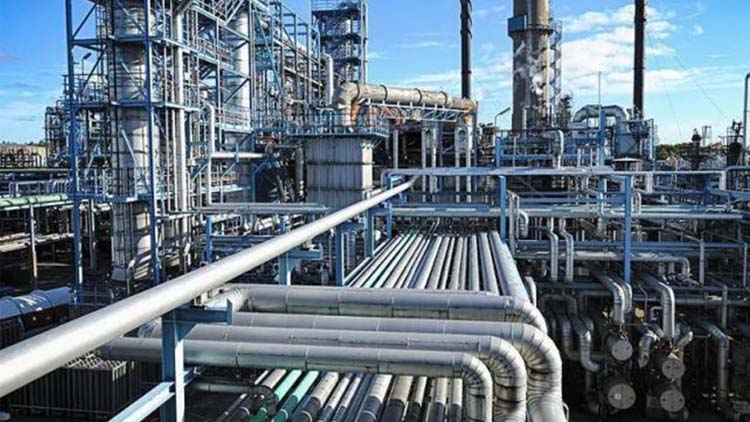
The Port Harcourt Refining Company (PHRC), which was once hailed as a symbol of Nigeria’s self-sufficiency in petroleum production, has now become the epicenter of controversy and frustration. More than a month after it was shut down for maintenance, the refinery remains inactive, defying assurances from the Nigerian National Petroleum Company Limited (NNPCL) that it would resume operations within 30 days.
This prolonged silence has sparked outrage from petroleum marketers, fuel consumers, and economic analysts, especially as diesel prices continue to surge, and the refinery’s multi-billion-dollar rehabilitation is now under probe by the Economic and Financial Crimes Commission (EFCC).
 blob:https://www.image2url.com/6b1201f1-93ee-44f9-bbeb-45816585e575
Tinubu Govt, National Assembly Under Fire Over Fresh Extension Of 2024 Capital Budget
Broken Promises and Lingering Maintenance
On May 24, 2025, Olufemi Soneye, then Chief Corporate Communications Officer of NNPCL, issued an official statement confirming the temporary shutdown of the Port Harcourt refinery for maintenance. At the time, the shutdown was expected to last just a month. However, nearly two months later, the facility has yet to resume production.
Efforts by journalists to obtain updates from NNPCL have been met with silence, as the company currently lacks an official spokesperson. Calls and emails to contacts listed on its website went unanswered, deepening concerns over transparency and accountability.
The timing of this new shutdown is particularly troubling, as the refinery was only recently declared operational by former NNPCL Group CEO Mele Kyari in November 2024. That announcement followed years of inactivity, massive public spending on rehabilitation, and numerous failed restart dates between December 2023 and September 2024.
According to NNPCL at the time, the old 60,000 barrels-per-day refinery had been revamped and was functioning at 70 percent capacity, producing large volumes of diesel and pour fuel oil. Yet, just six months later, the plant is dormant again—its costly turnaround maintenance yielding little lasting impact.
EFCC Investigates $7.2 Billion Refinery Rehabilitation Scandal
The shutdown has coincided with a sweeping investigation by the EFCC into alleged financial misconduct in the disbursement of funds meant for refinery repairs. Former NNPCL Chief Financial Officer Umar Isa was arrested on Monday in connection with a $7.2 billion fraud probe involving the rehabilitation of the Port Harcourt, Warri, and Kaduna refineries.
EFCC insiders revealed that Isa and several former refinery managing directors are under investigation for alleged abuse of office, embezzlement, and collusion with contractors. Among those reportedly under scrutiny are former PHRC MDs Ahmed Adamu Dikko and Ibrahim Monday Onoja, as well as the current MD of Warri Refinery, Tunde Bakare.
These developments have cast serious doubt on the integrity of NNPCL’s multi-billion-dollar refinery rehabilitation programme. Despite billions spent—$1.5 billion on Port Harcourt, $740 million on Kaduna, and $657 million on Warri—none of the facilities are currently in full operation.
Marketers Demand Accountability Amid Diesel Price Spike
The shutdown and alleged corruption are not the only problems causing unrest. Independent petroleum marketers in Port Harcourt have expressed anger over sudden, sharp increases in diesel prices at the refinery.
Within just one week, the refinery reportedly raised its diesel price from ₦930 to ₦980, and then again to ₦1,130 per litre. Marketers allege that they were asked to pay the difference even after making earlier payments at lower prices, prompting protests outside the refinery premises on Tuesday.
“You must honour the ₦980/litre rate. We cannot keep absorbing the cost of arbitrary changes,” one protester demanded.
The marketers, members of the Independent Petroleum Marketers Association of Nigeria (IPMAN), insisted that NNPCL and its private partner Oando must either load their trucks based on previous payments or refund their money.
Senior officials at the refinery urged calm, assuring the marketers that the matter had been escalated to NNPCL headquarters in Abuja for resolution.
Calls for Privatisation Intensify
The latest series of events has reignited calls from the Organised Private Sector and oil sector stakeholders for the complete privatisation of Nigeria’s state-run refineries. Critics argue that public management of these facilities has consistently failed, resulting in financial waste, operational inefficiency, and recurring scandals.
“The Port Harcourt refinery has now become a symbol of mismanagement,” said one industry observer. “Billions have been sunk, promises made and broken, and the outcome is zero.”
This sentiment is shared by the Petroleum Products Retail Outlet Owners Association of Nigeria (PETROAN), which has questioned the rationale behind the maintenance exercise, arguing that the facility lacks a functioning Premium Motor Spirit (PMS) blending unit. According to the group, any refinery operation without this unit is incomplete and cannot meet local fuel needs.
A Legacy of Missed Opportunities
The Port Harcourt refinery, commissioned in 1965, has long been a critical asset in Nigeria’s energy landscape. But in recent decades, it has been more a liability than a lifeline, plagued by extended shutdowns, mismanagement, and rehabilitation efforts that yield little to no sustainable output.
With the latest maintenance delay now stretching into its second month, many Nigerians are asking: was the refinery ever truly operational? Or was the November 2024 reopening just another political announcement lacking substance?
Until NNPCL provides clarity, and the EFCC completes its investigations, the future of the Port Harcourt refinery—and public confidence in the government’s handling of Nigeria’s energy infrastructure—remains uncertain.




















Leave a Comment
Your email address will not be published. Required fields are marked with *