
Presidency, ADC Clash Over Shettima’s Comments on Borno Crisis and Rivers State Emergency A political standoff erupted on Friday between the presidency and the African Democratic Congress (ADC) following Vice President Kashim Shettima’s remarks at the launch of a book by former Attorney General of the Federation Mohammed Bello Adoke (SAN) in Abuja. Shettima’s comments,
Presidency, ADC Clash Over Shettima’s Comments on Borno Crisis and Rivers State Emergency
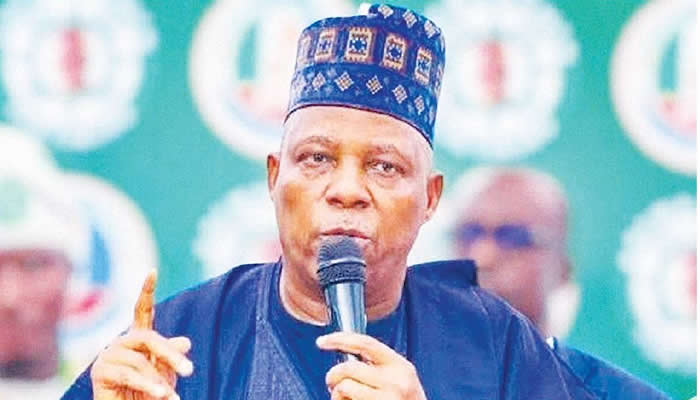
A political standoff erupted on Friday between the presidency and the African Democratic Congress (ADC) following Vice President Kashim Shettima’s remarks at the launch of a book by former Attorney General of the Federation Mohammed Bello Adoke (SAN) in Abuja. Shettima’s comments, which revisited his time as Borno State Governor under former President Goodluck Jonathan, have ignited a storm of interpretations—some suggesting criticism of President Bola Tinubu’s recent actions in Rivers State.
At the heart of the controversy is Shettima’s recounting of how Jonathan reportedly considered declaring a state of emergency in Borno and removing him from office amid the Boko Haram insurgency but was dissuaded by Adoke and others. Some political observers interpreted this as a veiled jab at President Tinubu, who in March 2025 suspended Rivers State Governor Siminalayi Fubara under a similar state of emergency directive.
 blob:https://www.image2url.com/6b1201f1-93ee-44f9-bbeb-45816585e575
Edo Governor Okpebholo To Launch Commission Of Inquiry Into Obaseki’s Administration
Presidency Dismisses Alleged Criticism of Tinubu
Reacting swiftly, the Presidency, through a statement by Stanley Nkwocha, Senior Special Assistant on Media and Communications to the Vice President, denied any insinuation that Shettima was criticizing President Tinubu. According to the statement, Shettima’s remarks were taken “grossly out of context” by online media and individuals seeking to “twist history to promote a false narrative.”
Nkwocha clarified that the Vice President’s statements were not aimed at President Tinubu or the Rivers State emergency but were intended as a tribute to Adoke’s professionalism during a tumultuous period in Nigeria’s governance.
“Vice President Shettima was simply reflecting on historical events involving his tenure as Governor of Borno during the Boko Haram insurgency. His remarks were part of a broader discourse on constitutionalism and governance,” the statement read.
The Vice President’s office insisted that the context of the Boko Haram crisis in the North-East cannot be compared to the current political unrest in Rivers State, which it described as a matter of democratic stability, not national sovereignty.
“In Rivers, President Tinubu acted constitutionally to restore peace, consulting widely and working within the law. It is fundamentally different from the armed insurrection that threatened Nigeria’s territorial integrity during the Boko Haram insurgency,” Nkwocha emphasized.
The presidency further asserted that Shettima remains fully aligned with President Tinubu and supports all actions taken in Rivers without hesitation or disagreement.
ADC Rejects Presidency’s Clarification, Accuses Tinubu of Power Abuse
In a contrasting stance, the African Democratic Congress (ADC) issued a strongly worded statement dismissing the Presidency’s explanation. According to ADC’s National Publicity Secretary, Bolaji Abdullahi, Shettima’s words were clear and truthful—and rightly reminded Nigerians of the limits of presidential authority.
“The Vice President’s account was not historical trivia—it was a constitutional lesson,” Abdullahi stated. “It reaffirmed that no president, including Tinubu, has the legal authority to remove a sitting governor.”
The ADC condemned President Tinubu’s invocation of Section 305 of the Constitution to suspend Governor Fubara, describing it as a blatant overreach and an affront to democratic norms. The party argued that such executive actions, if left unchallenged, would erode Nigeria’s federal structure and embolden future presidents to trample on the rule of law.
“In his book launch remarks, Vice President Shettima cited former Speaker Aminu Tambuwal’s brave stand against removing him as Borno Governor. That precedent should have guided President Tinubu’s decisions,” the ADC declared.
Abdullahi added that while former President Jonathan refrained from unconstitutional actions, President Tinubu had chosen to “manipulate the law to suit narrow political objectives.”
The ADC called on President Tinubu to apologise for what it described as the unlawful removal of an elected governor and warned that continued “executive recklessness” would endanger Nigeria’s democracy.
Rivers Crisis Sparks National Debate on Executive Power
The backdrop to this controversy is the intensifying political unrest in Rivers State, which began with impeachment moves against Governor Fubara by a faction of the State House of Assembly. The crisis escalated into violent confrontations and destruction of the Assembly complex, prompting federal intervention.
On March 18, 2025, President Tinubu declared a state of emergency in Rivers under Section 305 and appointed retired Naval Chief, Vice Admiral Ibok Ekwe Ibas, as sole administrator. The decision was later approved by both chambers of the National Assembly, despite widespread criticism from civil society and the opposition.
While the presidency views the move as necessary to restore order, the ADC and several legal analysts argue that the Constitution does not grant the president power to suspend a democratically elected governor, even under emergency conditions.
As the debate rages on, Vice President Shettima’s comments—whether seen as historical context or subtle criticism—have opened up broader national discourse about the balance of power, constitutional restraint, and the future of democratic governance in Nigeria.


















Leave a Comment
Your email address will not be published. Required fields are marked with *