
Presidency Defends Tinubu’s Saint Lucia Trip Amid Peter Obi’s Criticism ABUJA – The presidency has pushed back against criticism from Peter Obi, the Labour Party (LP) presidential candidate in the 2023 elections, following his comments on President Bola Tinubu’s state visit to Saint Lucia. Obi, in his public statement, denounced what he described as the
Presidency Defends Tinubu’s Saint Lucia Trip Amid Peter Obi’s Criticism
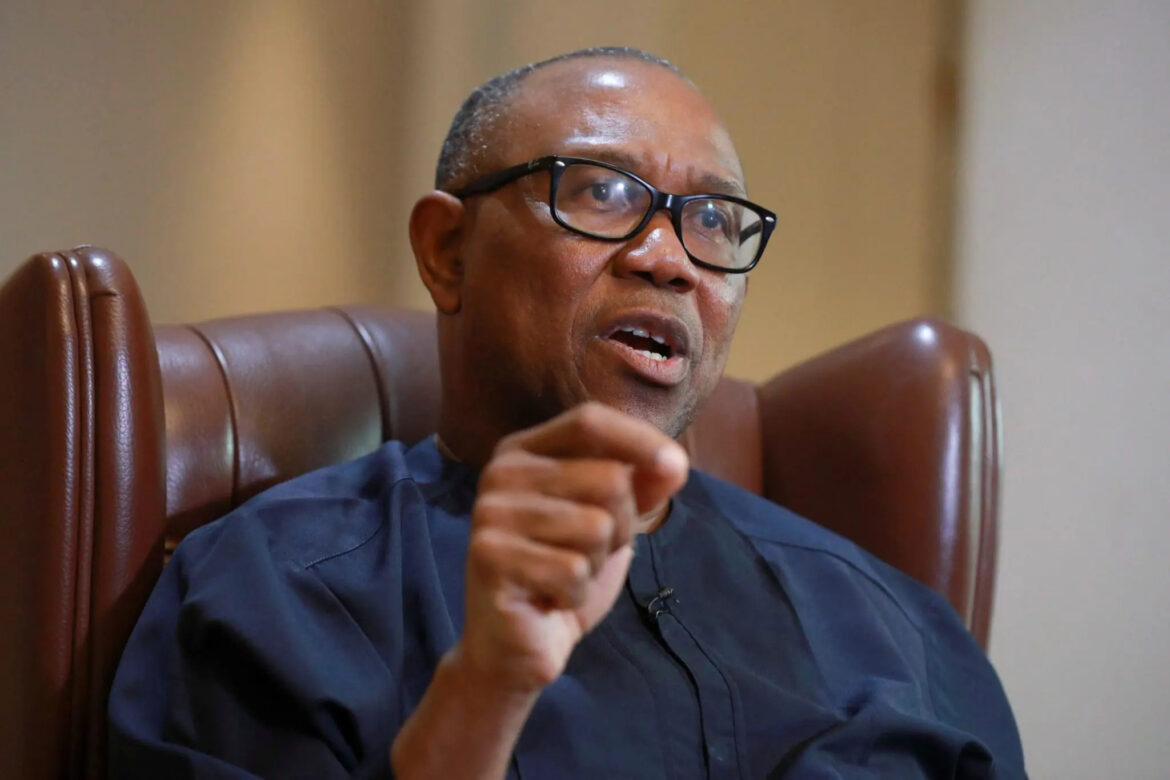
ABUJA – The presidency has pushed back against criticism from Peter Obi, the Labour Party (LP) presidential candidate in the 2023 elections, following his comments on President Bola Tinubu’s state visit to Saint Lucia. Obi, in his public statement, denounced what he described as the Tinubu administration’s excessive reliance on foreign trips, especially amid worsening economic conditions at home.
Reacting to Obi’s critique, the Special Adviser to the President on Information and Strategy, Bayo Onanuga, issued a detailed statement defending the president’s journey, framing it as a strategic diplomatic initiative that extends beyond optics. According to Onanuga, the visit to Saint Lucia was rooted in shared ancestry, historical relevance, and a forward-looking economic agenda.
 blob:https://www.image2url.com/6b1201f1-93ee-44f9-bbeb-45816585e575
“In the wake of some Nigerians’ misguided, mischievous, and uninformed comments regarding President Bola Tinubu’s historic state visit to Saint Lucia, it is necessary to clarify the purpose of the visit,” Onanuga said.
He emphasized that the engagement was not merely ceremonial but rather a calculated move to strengthen ties between Nigeria and the Caribbean, particularly with nations that share ancestral and cultural connections with Africa.
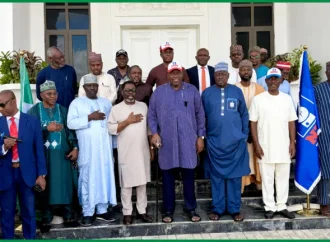
PDP BoT Meets Ahead Of Landmark 100th NEC As Wabara Rallies Stakeholders
Rekindling Ancestral Bonds, Promoting Economic Diplomacy
From the viewpoint of the Saint Lucian government, President Tinubu’s visit marks a significant step in renewing cultural bonds that date back to the 19th century, when migrants from present-day Nigeria settled in the Caribbean island. These migrants carried with them various cultural, spiritual, and religious traditions, many of which remain embedded in Saint Lucian society today.
The presidency highlighted that Saint Lucia is home to a large population of African ancestry and stands as a vital player in regional politics. As the headquarters of the Organisation of Eastern Caribbean States (OECS) and a gateway to the 15-member Caribbean Community (CARICOM), Saint Lucia holds strategic diplomatic and economic importance.
“CARICOM member states collectively command a GDP exceeding $130 billion,” Onanuga noted. “In an era of global uncertainty, deepening cooperation between the Global South, particularly between continental Africa and the Caribbean, has become imperative.”
The presidency emphasized that Nigeria’s foreign policy now prioritizes robust South-South cooperation, enhancing its influence among developing nations that share similar historical and geopolitical experiences. Tinubu’s visit to Saint Lucia, therefore, is part of a broader effort to forge stronger intercontinental partnerships in trade, education, tourism, and cultural exchange.
Historical Ties Underscore Shared Heritage
To underscore the depth of the Nigeria-Saint Lucia relationship, Onanuga cited the legacy of Sir Darnley Alexander, a Saint Lucian-born jurist who rose to become Chief Justice of Nigeria. His legal journey began in Nigeria in 1957, when he was recruited by the Western Regional Government under Chief Obafemi Awolowo. Over the decades, he ascended through various legal positions, culminating in his appointment as Chief Justice in 1975.
Sir Darnley, who passed away in 1989, was a symbol of the enduring people-to-people connections that exist between Nigeria and Saint Lucia. Born in Castries, the island nation’s capital, he held numerous honors including QC, CBE, GCON, and SAN.
“His legacy is a testament to the historical and institutional ties between our two nations,” Onanuga stated. “This visit builds upon those foundations and opens new avenues for bilateral cooperation.”
Peter Obi’s Critique Sparks Policy Debate
Peter Obi’s criticism of the president’s frequent international travel sparked renewed debate about the Tinubu administration’s domestic focus amid economic hardship. Obi suggested that such diplomatic efforts appear misplaced when Nigerians are grappling with inflation, unemployment, and currency instability.
However, the presidency argues that such criticisms overlook the strategic objectives behind these foreign engagements. According to government insiders, the current administration views international diplomacy as essential to economic revitalization, especially in attracting investments, diversifying partnerships, and amplifying Nigeria’s voice on the global stage.
Despite Obi’s concerns, Onanuga maintained that Tinubu’s foreign trips—including this recent visit to Saint Lucia—reflect a shift toward purposeful diplomacy, aiming to position Nigeria as a bridge between Africa and its diasporic communities.
Looking Ahead: Bridging Continents and Cultures
As Tinubu continues his diplomatic engagements, his administration appears intent on leveraging shared history to foster political and economic ties. The emphasis on reconnecting with Caribbean nations is part of a broader strategy to invigorate Africa’s global standing through cultural diplomacy and historical solidarity.
Observers suggest that while domestic challenges are pressing, Nigeria’s re-engagement with Caribbean nations could yield long-term benefits in areas such as tourism, education, and trade. For now, the presidency stands firm that these international visits serve national interests, not just ceremonial functions.
In the words of Onanuga, “President Tinubu’s visit to Saint Lucia is about legacy, leadership, and strategic outreach—paving new paths for cooperation between Africa and its diaspora.”















Leave a Comment
Your email address will not be published. Required fields are marked with *