
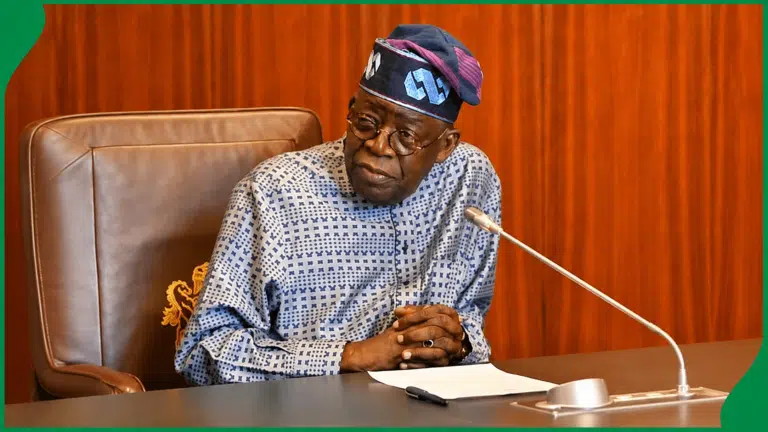
President Bola Tinubu has said Nigerians should begin to experience measurable reductions in transportation costs from October 1, 2026, as the Federal Government intensifies efforts to expand affordable Compressed Natural Gas (CNG) and electric-powered transport services. Tinubu disclosed the plan in a statement issued on Saturday, September 19, by his Special Adviser on Information and
President Bola Tinubu has said Nigerians should begin to experience measurable reductions in transportation costs from October 1, 2026, as the Federal Government intensifies efforts to expand affordable Compressed Natural Gas (CNG) and electric-powered transport services.
Tinubu disclosed the plan in a statement issued on Saturday, September 19, by his Special Adviser on Information and Strategy, Bayo Onanuga.
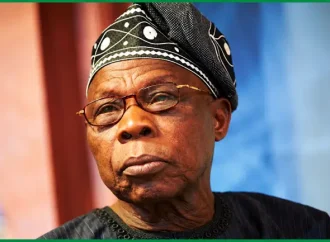
₦250 Million Was Offered To Me For Obasanjo’s Third-Term Bid – Aliyu
 blob:https://www.image2url.com/6b1201f1-93ee-44f9-bbeb-45816585e575
The President said the initiative followed his August 27 meeting with the governors of Nigeria’s 36 states, where they agreed to pursue measures aimed at easing transport costs and the pressure of rising living expenses.
He said an implementation committee under the National Affordable CNG Transit Programme had been established through the Nigeria Governors’ Forum to coordinate efforts with state governments and other stakeholders.
Tinubu Sets October 1 Target for Affordable Transportation
According to the President, the committee, the Presidential Initiative on CNG and Electric Vehicles (PI-CNG & EV), state governments and other partners are identifying priority transport corridors and determining the interventions required to reduce fares.
Tinubu said the work had become more urgent amid disruptions in global energy supplies, which have placed pressure on petrol and diesel prices and, consequently, transportation costs.
“From October 1, more Nigerians should begin to see measurable reductions in transportation costs,” the President said, restating the objective agreed upon with the governors.
He urged state governments to work with transport unions and commercial operators, support vehicle conversions and fleet deployment, and facilitate the infrastructure needed to expand cheaper transport options.
Tinubu also called on the states to ensure that savings from lower-cost energy are passed on to commuters through reduced fares.
President Cites Existing Fare Reductions in States
To illustrate the potential impact of the programme, Tinubu highlighted transport services in several states where CNG-powered and electric vehicles are already operating.
In Borno, he said, CNG and electric public transport services charge between ₦50 and ₦100 on routes where commercial operators reportedly charge between ₦300 and ₦600.
He also cited Kaduna, where 100 CNG-powered buses provide free transportation on major routes. According to Tinubu, the buses carried about 3.2 million passengers in their first year and saved commuters more than ₦3.5 billion.
In Oyo State, he said the deployment of CNG buses to Pacesetter Transport reduced the Lagos–Ibadan fare from about ₦8,000 to ₦3,200 during the initial rollout.
Tinubu added that alternative-energy transit services in Adamawa had reduced fares by as much as 50 per cent, from ₦8,000 to ₦4,000.
In Enugu, the deployment of 100 CNG buses reportedly brought the Enugu–Nsukka fare down from ₦2,500 to ₦1,500. Meanwhile, government-supported buses in Plateau State carry about 13,000 commuters daily at ₦200, compared with commercial fares above ₦500, he said.
Abuja, Niger Routes Also Record Lower Fares
Tinubu pointed to reduced fares on selected Abuja commuter routes through a partnership with the National Union of Road Transport Workers (NURTW).
He said passengers using CNG-converted commercial vehicles on the affected routes were receiving a 40 per cent fare reduction.
The President listed the Area 1–Gwagwalada fare as having dropped from ₦1,500 to ₦900, while the Nyanya fare reportedly fell from ₦700 to ₦420. On the Wuse route, he said, fares reduced from ₦400 to ₦240.
Tinubu also cited the Suleja–Abuja route in Niger State, where passengers were reportedly paying ₦550 instead of about ₦800.
In Abia State, he said, 40 electric buses had been deployed, with fares subsidised by 50 per cent.
“These are not projections. Nigerians are already experiencing these savings,” Tinubu said, while urging other states to expand similar services.
FG Expands CNG Infrastructure, Rejects Return to Petrol Subsidy
The President said the Federal Government had spent the past three years developing a CNG transportation ecosystem, with more than 120,000 vehicles converted, over 400 certified conversion centres and more than 90 CNG refuelling stations nationwide.
He also cited developments in Edo, Kano, Delta, Kwara, Lagos and Akwa Ibom as part of the broader expansion of alternative-energy transport.
Tinubu said Edo had 50 CNG buses in active service, while Kano had converted more than 1,000 commercial vehicles. Delta, Kwara and Lagos were expanding CNG-supported transport, while Akwa Ibom had received 50 CNG buses ahead of commercial operations, he added.
The President said the Federal Government would continue supporting CNG infrastructure, vehicle-conversion capacity and participation by states, transport operators, manufacturers and private investors.
He also rejected calls to restore the petrol subsidy regime, arguing that it had exposed the economy to international oil-price movements and consumed substantial public funds.
While the October 1 target signals the government’s intention to broaden access to lower-cost transport, the statement does not specify a uniform fare reduction that will apply nationwide. The extent of relief commuters experience will depend on the routes, services and interventions implemented by states and transport operators.
Tinubu urged governors to sustain preparations ahead of the deadline, stressing that cheaper energy must translate into lower fares for Nigerians.
















Leave a Comment
Your email address will not be published. Required fields are marked with *