
Tensions Flare at APC North-East Summit Over 2027 Tinubu Endorsement A political summit hosted by the All Progressives Congress (APC) on Sunday in Gombe State ended in controversy, revealing growing tensions within the party’s North-East geopolitical zone. The event, designed as a gathering of party stakeholders and delegates from Adamawa, Bauchi, Borno, Gombe, Taraba, and
Tensions Flare at APC North-East Summit Over 2027 Tinubu Endorsement
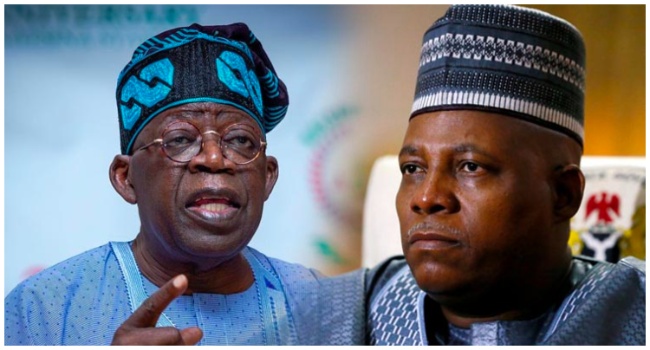
A political summit hosted by the All Progressives Congress (APC) on Sunday in Gombe State ended in controversy, revealing growing tensions within the party’s North-East geopolitical zone. The event, designed as a gathering of party stakeholders and delegates from Adamawa, Bauchi, Borno, Gombe, Taraba, and Yobe states, was meant to consolidate support for the ruling party ahead of the 2027 general elections. Instead, it exposed a critical fault line over President Bola Tinubu’s second-term ambition and the perceived sidelining of Vice President Kashim Shettima.
Tensions Rise In Osun As APC, PDP Clash Over Council Control After Court Ruling
 blob:https://www.image2url.com/6b1201f1-93ee-44f9-bbeb-45816585e575
Prominent governors from the region—including Mai Mala Buni (Yobe), Babagana Zulum (Borno), and Inuwa Yahaya (Gombe)—used the platform to commend Tinubu’s leadership, with glowing praise for his administration’s responsiveness and political inclusivity. Notably, the governors expressed gratitude to the president for supporting the North’s eight-year presidency under Muhammadu Buhari, emphasizing that it was time for the region to reciprocate by backing Tinubu in 2027.
Tinubu Endorsed by Governors, But Shettima Omission Sparks Uproar
The summit took a dramatic turn when the APC’s North-East Vice Chairman, Mustapha Salihu, ended his speech by declaring Tinubu as the sole candidate for the 2027 elections. Salihu’s statement, made without any reference to Vice President Shettima—himself a native of Borno—immediately drew outrage from several party delegates.
Some participants perceived the omission as a slight to Shettima, interpreting it as a deliberate snub in his own political region. Loud protests erupted from parts of the crowd, with angry voices demanding recognition for the vice president’s role and calling for a joint endorsement of the Tinubu-Shettima ticket.
Borno State Governor Babagana Zulum attempted to douse the rising tempers with a calming speech, urging unity and party loyalty. However, his intervention failed to de-escalate the situation, and the tension intensified, prompting security operatives to step in and restore order at the summit venue.
Ganduje Steps In: Reaffirms Support for Both Tinubu and Shettima
In an effort to reclaim control and prevent further fallout, APC National Chairman Abdullahi Ganduje addressed the delegates following the disruption. He acknowledged the importance of both President Tinubu and Vice President Shettima in the administration, giving separate praise to each leader.
Ganduje’s remarks were aimed at reassuring northern stakeholders that Shettima remains a valued member of the APC hierarchy. His intervention appeared to ease tensions, as the mood in the summit gradually returned to normalcy. Still, the underlying concerns about Shettima’s political visibility and recognition within the party remain unresolved.
Previous Endorsement Also Ignored Shettima
The discontent at the Gombe summit echoes reactions to a similar development on May 22, 2025, when all 22 APC governors publicly endorsed Tinubu for re-election. That declaration, too, failed to mention Shettima, sparking quiet dissent from some quarters, particularly in the North-East.
Critics argue that repeated exclusion of the vice president’s name in key endorsements risks sending a dangerous message about intra-party dynamics and power-sharing arrangements ahead of 2027. Given that Shettima hails from the same region that hosted the summit, the absence of his name hit a raw nerve.
Senator Ndume Breaks Ranks, Warns Against Complacency
In a move that further complicated the summit’s outcome, Senator Ali Ndume (Borno South) publicly dissociated himself from the endorsement of Tinubu’s second-term bid. Ndume, a known political ally of Shettima, questioned the wisdom of early endorsements, warning that they may not translate to electoral victory.
“I pity Tinubu,” Ndume remarked. “Former President Goodluck Jonathan got endorsements from 22 governors in 2015, yet he lost to Muhammadu Buhari. Endorsements don’t always guarantee success.”
Ndume’s comments have been interpreted as both a critique of premature political declarations and a subtle protest against the marginalization of Shettima in internal party dealings. His remarks also highlighted the risk of ignoring grassroots sentiments in favour of elite consensus.
Implications for 2027: Fractures or Realignments?
The controversy surrounding Tinubu’s endorsement without clear reference to Shettima has raised questions about the APC’s internal cohesion ahead of the next general elections. While the party has publicly emphasized unity, the summit incident illustrates that tensions still exist over leadership recognition, power-sharing, and regional representation.
Political analysts say that such missteps, if not addressed, could lead to fractures within the North-East bloc, which was a stronghold for the APC in both 2015 and 2019. The region’s perception of being taken for granted could trigger voter apathy or even defection to opposition parties if leaders like Shettima are not visibly included in key political conversations.
As Nigeria inches closer to the 2027 polls, the APC will need to engage in more inclusive political messaging to ensure that all power centers within the party feel acknowledged and valued.
The Gombe summit may have ended with security intervention and a pacifying speech from Ganduje, but its aftermath leaves no doubt: the road to 2027 will be paved not just with endorsements, but with the politics of inclusion, recognition, and internal negotiation.

















Leave a Comment
Your email address will not be published. Required fields are marked with *