
Tinubu May Drop Shettima in 2027, Says President Struggles to Work With Deputies Dr. Sam Amadi, Director of the Abuja School of Social and Political Thought, has sparked a fresh wave of political speculation following his statement that President Bola Ahmed Tinubu may not retain Vice President Kashim Shettima as his running mate in the
Tinubu May Drop Shettima in 2027, Says President Struggles to Work With Deputies
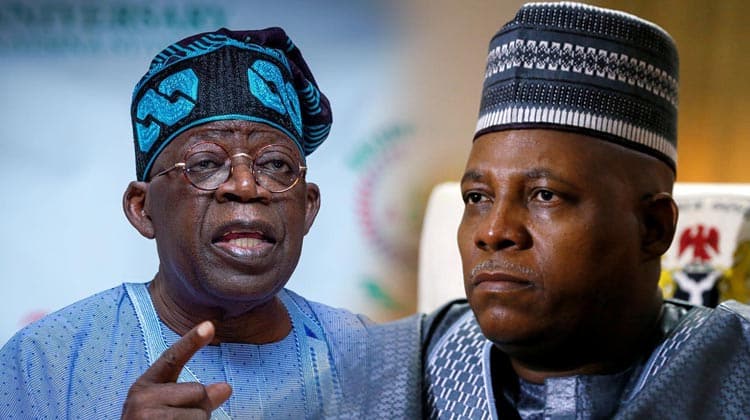
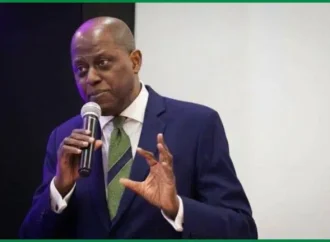
Dr. Sam Amadi, Director of the Abuja School of Social and Political Thought, has sparked a fresh wave of political speculation following his statement that President Bola Ahmed Tinubu may not retain Vice President Kashim Shettima as his running mate in the 2027 general election. According to Amadi, Tinubu’s political history and his apparent discomfort working closely with deputies might signal a potential shakeup in the presidential ticket of the ruling All Progressives Congress (APC).
Amadi made the remarks during an interview on Arise TV over the weekend, where he dissected the internal dynamics of the APC and the notable absence of Shettima’s name from recent endorsements for Tinubu’s re-election.
 blob:https://www.image2url.com/6b1201f1-93ee-44f9-bbeb-45816585e575
Nigerian Military Retires 542 Senior Officers After 35 Years Of Meritorious Service
The discussion follows the chaos that erupted during the APC Northeast stakeholders’ meeting held in Gombe State, where President Tinubu was officially endorsed for a second term in 2027. However, conspicuously missing from the announcement was any mention of Vice President Shettima, who hails from the region and would typically be expected to feature in such a significant declaration.
For Amadi, this omission was not accidental. “The omission [of Vice President Shettima’s name at the APC Northeast summit] is an indication of a certain language control arising from the reality of politics,” he explained. According to him, the political maneuver suggests the beginning of a recalibration within the party ahead of the 2027 elections.
Amadi further argued that endorsements of incumbents usually follow a well-rehearsed format, typically reaffirming the entire ticket. The failure to include Shettima in the endorsement, therefore, may not just be a procedural oversight but a calculated political message.
A Pattern of Replacing Deputies
To strengthen his argument, Amadi pointed to Tinubu’s well-documented history during his time as governor of Lagos State from 1999 to 2007. “President Tinubu has clearly shown that he finds it difficult to work with deputies. As governor of Lagos, he had the distinction of having three deputies, each of whom was thrown out in a very chaotic and unpalatable process, and their careers got largely derailed,” he recalled.
Indeed, Tinubu’s tenure in Lagos was marked by multiple leadership changes at the deputy governor level—an unusual occurrence in Nigerian state politics. This historical precedent, Amadi believes, could play out on a national scale, especially as Tinubu consolidates power and prepares for another presidential run.
With the stakes higher at the national level, Amadi stressed that political calculations around 2027 would not be based merely on past alliances or regional loyalties but on perceived electoral value and control over the party machinery.
APC’s Internal Dynamics and the Battle for 2027
The APC is currently grappling with internal fissures, ranging from factional rivalries to shifting political loyalties. Amadi believes the omission of Shettima from Tinubu’s 2027 endorsement could be a symptom of deeper discontent or a strategic repositioning ahead of the next election cycle.
While some party insiders may argue that the endorsement was solely about Tinubu and not necessarily about confirming a running mate, Amadi insists that the “language of endorsement” in Nigerian politics is conventionally inclusive. A failure to mention the Vice President, particularly in his own region, cannot be easily dismissed.
The Northeast, a region Shettima represents, is critical to APC’s electoral strategy, having delivered substantial votes in previous elections. Sidestepping his name at a regional gathering could suggest that his influence is waning or that other political options are being quietly explored.
The Harsh Reality of Politics
Amadi concluded his remarks with a broader observation about the nature of political partnerships in Nigeria. “We are dealing with something bigger than Lagos,” he said. “When you are at the level of picking a candidate, you can only choose one candidate. But again, conventionally, the language and communication of endorsement is very clear.”
He noted that political survival often trumps loyalty in Nigerian politics, and alliances can be temporary or transactional. The Tinubu-Shettima ticket, which was strategically engineered in 2023 to balance religious and regional interests, may no longer be viewed as the winning formula for 2027.
As the APC prepares for its next national convention and begins the groundwork for the 2027 election, the dynamics between President Tinubu and Vice President Shettima will be closely monitored. Whether Shettima remains on the ticket or is replaced in favor of another politically expedient choice will reveal much about the power play within Nigeria’s ruling party.
For now, Amadi’s comments have opened the door to a conversation that many within the APC may prefer to keep behind closed doors: Who really stands beside Tinubu in 2027?



















Leave a Comment
Your email address will not be published. Required fields are marked with *