
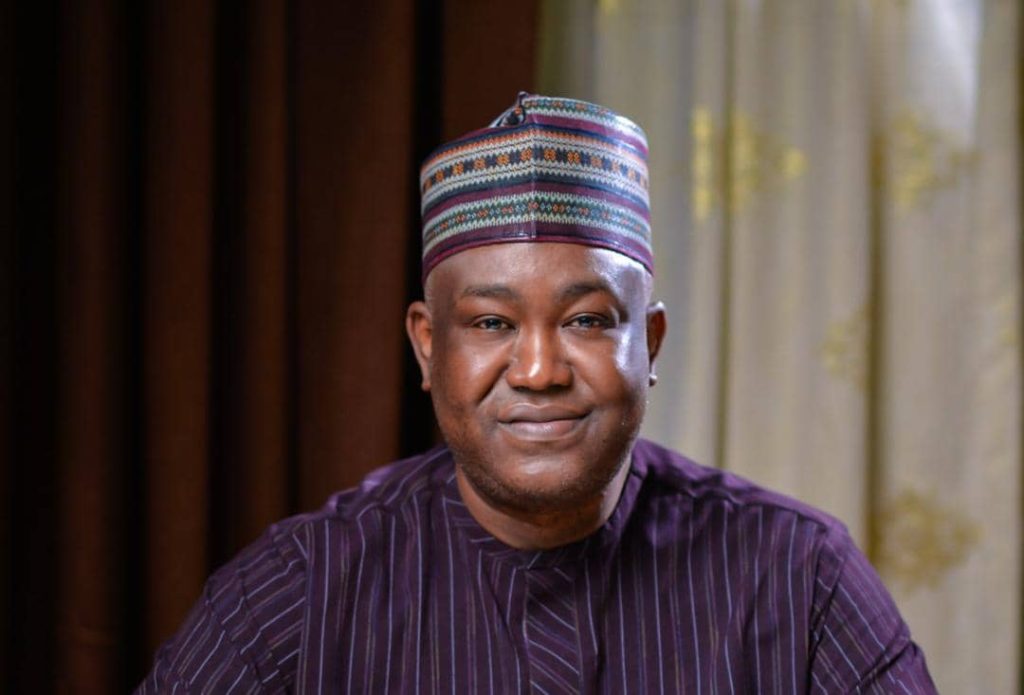
A new wave of political tension has emerged in Nigeria following bold remarks by Gbenga Olawepo-Hashim, a prominent member of the Peoples Democratic Party (PDP). Speaking during a televised interview, he challenged the electoral strength of the ruling All Progressives Congress (APC), claiming it would struggle to secure even 20 percent of votes in
A new wave of political tension has emerged in Nigeria following bold remarks by Gbenga Olawepo-Hashim, a prominent member of the Peoples Democratic Party (PDP). Speaking during a televised interview, he challenged the electoral strength of the ruling All Progressives Congress (APC), claiming it would struggle to secure even 20 percent of votes in a genuinely transparent election.
The remarks, delivered on Channels Television’s widely followed political program, have sparked renewed debate over Nigeria’s democratic integrity and party competitiveness ahead of the 2027 general elections.
 blob:https://www.image2url.com/6b1201f1-93ee-44f9-bbeb-45816585e575
Olawepo-Hashim did not mince words as he referenced President Bola Tinubu, asserting that while the president is often praised as a strategic leader, he is fully aware of the APC’s alleged electoral limitations under fair conditions.
He argued that if the ruling party were truly confident in its popularity, it would embrace full transparency in elections, including seamless electronic transmission of results. According to him, any hesitation raises questions about the party’s actual support base among Nigerians.
Tensions Rise as Transparency Takes Center Stage
The PDP chieftain emphasized that claims about the opposition party’s decline are exaggerated. Despite internal disputes and recent defections, he maintained that the PDP remains Nigeria’s most competitive political force.
He questioned the logic behind what he described as attempts to weaken the opposition, stating that if the PDP were truly irrelevant, the ruling party would have no reason to resist electoral openness.
Olawepo-Hashim further alleged that underlying fears within the APC may be driving its political strategies. He pointed to internal disagreements within the ruling party, suggesting that unresolved conflicts could pose a serious challenge as the next election cycle approaches.
Beyond party politics, he highlighted a broader issue within Nigeria’s political landscape—elite opportunism. According to him, many defections are motivated not by ideology or public interest but by access to power and resources.
He noted that while political leaders may switch allegiances, grassroots supporters often remain loyal to their original parties. This, he argued, reflects a disconnect between Nigeria’s political elite and the general population.
The PDP leader also issued a warning about the dangers of weakening opposition parties in a democratic system. He stressed that a healthy democracy depends on strong competition and accountability, cautioning against any narrative that celebrates the collapse of multiparty politics.
Internally, he acknowledged that the PDP faces its own challenges but expressed optimism about its recovery. He called for unity through a joint National Executive Committee (NEC) meeting and a national convention to resolve disputes and reposition the party.
Additionally, he pointed to ongoing digital registration efforts within the PDP as evidence of renewed grassroots engagement, signaling that the party is far from losing relevance.
As political discourse intensifies, Olawepo-Hashim’s comments underscore the growing importance of electoral credibility and party cohesion in shaping Nigeria’s democratic future. With 2027 on the horizon, both ruling and opposition parties appear set for a high-stakes contest that could redefine the nation’s political landscape.





















Leave a Comment
Your email address will not be published. Required fields are marked with *