
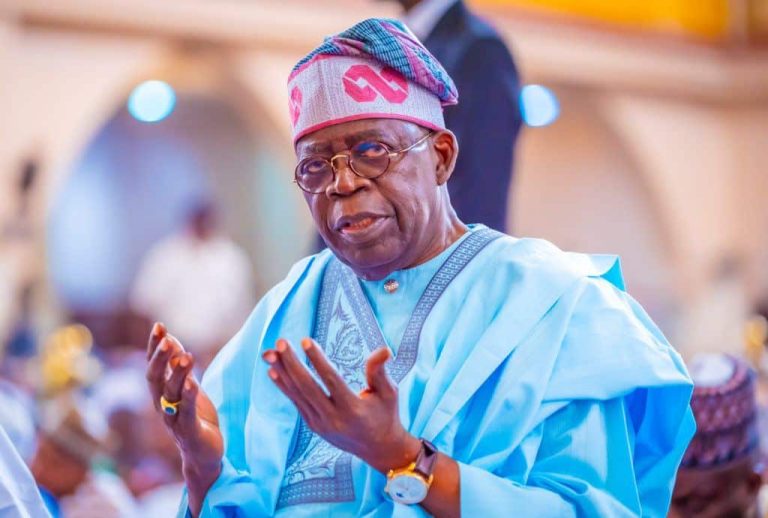
President Bola Tinubu has revealed that Nigeria was spending as much as ₦18.4 billion every day on petrol subsidies before his administration removed the policy. The President made the disclosure on Friday during his nationwide broadcast marking the third anniversary of his administration. NELFUND Denies Suspending Students’ Upkeep Allowance According to Tinubu, the fuel subsidy
President Bola Tinubu has revealed that Nigeria was spending as much as ₦18.4 billion every day on petrol subsidies before his administration removed the policy.
The President made the disclosure on Friday during his nationwide broadcast marking the third anniversary of his administration.
NELFUND Denies Suspending Students’ Upkeep Allowance
According to Tinubu, the fuel subsidy system had become financially unsustainable and was placing enormous pressure on the nation’s economy.
 blob:https://www.image2url.com/6b1201f1-93ee-44f9-bbeb-45816585e575
He stated that Nigeria spent more than ₦4 trillion on petrol subsidies in 2022 alone, arguing that the funds could have been redirected toward critical sectors such as infrastructure, healthcare, education, and housing.
“At the height of the subsidy regime, Nigeria was spending as much as ₦18.4 billion daily to sustain petrol subsidies,” the President said during the address.
Tinubu maintained that difficult economic reforms were necessary to stabilise the economy and prevent deeper financial challenges.
The President also criticised the former multiple exchange-rate regime, describing it as a system that encouraged arbitrage, rent-seeking, and speculative activities.
According to him, Nigeria lost more than ₦8 trillion within three years under the old foreign exchange arrangement.
Tinubu argued that the previous system created distortions within the economy and benefited only a limited group of individuals while harming broader economic stability.
 The President stated that his administration inherited serious economic challenges that required urgent and decisive action.
He acknowledged that some of the reforms introduced by his government were difficult but insisted they were necessary for long-term national recovery.
“The easy choices would have been politically convenient. But leadership demands courage, especially when the right decisions are difficult,” Tinubu stated.
The removal of fuel subsidy remains one of the most debated economic decisions of Tinubu’s administration since assuming office.
Supporters of the policy argue that subsidy removal was essential to reduce wasteful spending and free up funds for development projects.
Critics, however, continue to point to the rising cost of living, transportation costs, and inflation that followed the removal of the subsidy regime.
The government has repeatedly defended the reforms, insisting that temporary economic hardship is necessary to achieve long-term stability and growth.
As Nigerians continue to grapple with economic pressures, discussions around subsidy removal, inflation, exchange rates, and government spending remain central to national discourse.
Economic analysts say the success or failure of the reforms will largely depend on how effectively the government translates savings into visible improvements in infrastructure, social services, and economic opportunities.
Tinubu’s latest remarks are expected to further fuel conversations about the direction of Nigeria’s economic policies as the administration enters its fourth year in office.












Leave a Comment
Your email address will not be published. Required fields are marked with *