
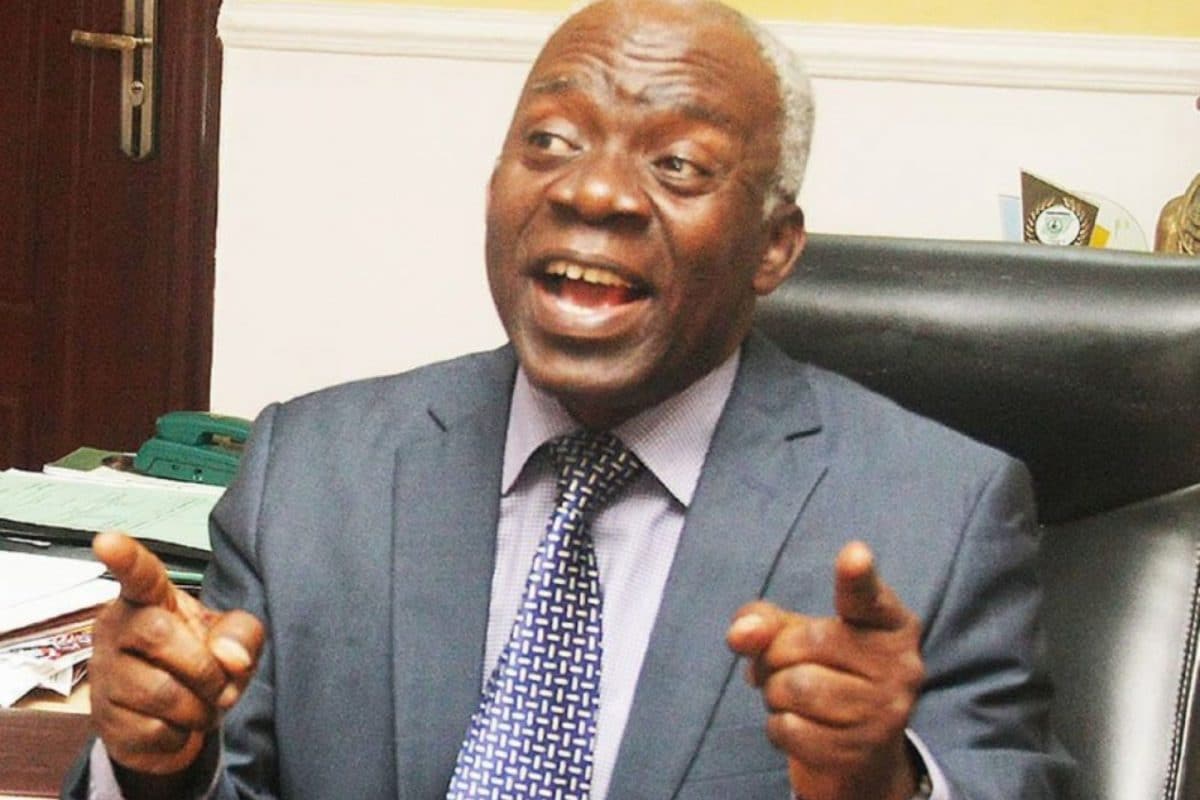
Human rights lawyer and Senior Advocate of Nigeria (SAN), Femi Falana, has challenged the Federal Government to explain how Nigerians are benefiting from the funds saved following the removal of the petrol subsidy. Falana made the call during an interview on Channels Television’s Sunday Politics, arguing that despite increased revenue available to the Federal, state
Human rights lawyer and Senior Advocate of Nigeria (SAN), Femi Falana, has challenged the Federal Government to explain how Nigerians are benefiting from the funds saved following the removal of the petrol subsidy.
Falana made the call during an interview on Channels Television’s Sunday Politics, arguing that despite increased revenue available to the Federal, state and local governments, many Nigerians are yet to feel any meaningful improvement in their living conditions.
‘That’s Not Me’ – Adeleke Speaks On Delivering Osun For Tinubu In 2027 Elections
 blob:https://www.image2url.com/6b1201f1-93ee-44f9-bbeb-45816585e575
The lawyer cited the example of a local government in Ekiti State, which he said received about ₦5.4 billion between January and May 2026, yet residents were still appealing to the Federal Government to repair a major road leading to Afe Babalola University.
“Everybody there is asking the Abuja people to come and fix the road, whereas between January and May this year, that local government has taken about N5.4 billion. So you can’t fix a road with less than 500 million naira?” Falana asked.
He said the situation demonstrated the need for Nigerians to demand explanations from all three tiers of government over how increased allocations are being utilised.
‘Where Are the Benefits of Subsidy Removal?’
Falana recalled that President Bola Ahmed Tinubu removed the fuel subsidy shortly after assuming office in May 2023, with the Federal Government arguing that the policy would free up resources for development and provide more funds to states and local governments.
However, Falana said Nigerians should not be repeatedly asked to endure economic hardship without seeing tangible benefits from the policy.
“We must begin to ask questions of the local government, the state government, and the Federal Government. If you say we are making more money, we don’t want to go back to the era of the fuel subsidy scam. Where are the benefits?” he said.
The human rights lawyer argued that the continued hardship facing Nigerians makes it difficult to convince citizens that the removal of the subsidy has produced sufficient benefits.
“It’s a fallacy being told to wait and wait and wait. People are dying,” he added.
Falana Questions $10bn Fuel Import Allocation
Falana also argued that about $10 billion previously earmarked annually for fuel imports should have translated into significant savings following the removal of the subsidy.
According to him, a substantial portion of the additional government revenue is now being absorbed by debt servicing, limiting the extent to which Nigerians can directly benefit from the policy.
“The money earmarked for fuel importation by the government, $10 billion per annum, ought to have been saved, but the bulk of this money goes for servicing of debt. That’s where the problem lies,” Falana said.
He therefore urged Nigerians to intensify demands for transparency and accountability from government at every level.
“State governments are getting more money. The Federal Government is getting more money. Local governments are getting more money on paper. It is the duty of the Nigerian people now to demand accountability.”
Falana’s comments come amid continuing debate over the economic impact of fuel subsidy removal, increased government revenues and whether the additional resources are translating into improved infrastructure and living standards for Nigerians.














Leave a Comment
Your email address will not be published. Required fields are marked with *