

APC Not Building a One-Party State, Says National Secretary Ajibola Basiru Amid growing concerns about political dominance and democratic balance in Nigeria, the National Secretary of the All Progressives Congress (APC), Ajibola Basiru, has firmly rejected accusations that the ruling party is steering the country toward a one-party system. Speaking during an interview on Channels
APC Not Building a One-Party State, Says National Secretary Ajibola Basiru
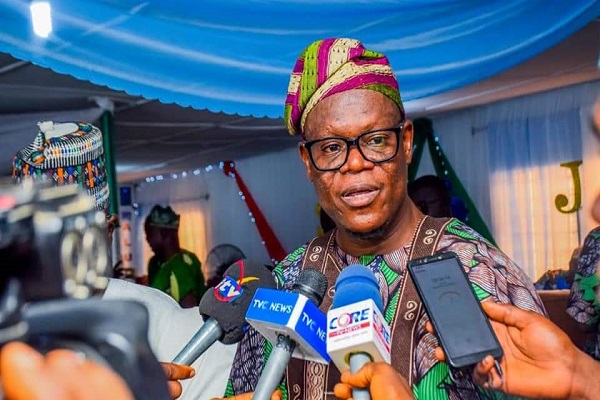
Amid growing concerns about political dominance and democratic balance in Nigeria, the National Secretary of the All Progressives Congress (APC), Ajibola Basiru, has firmly rejected accusations that the ruling party is steering the country toward a one-party system. Speaking during an interview on Channels Television’s Politics Today on Wednesday, April 23, 2025, Basiru dismissed claims that the APC is using state machinery to suppress opposition and consolidate unchecked political control.
His comments come in the wake of a wave of defections from the opposition Peoples Democratic Party (PDP), including high-profile names such as former Vice Presidential candidate Ifeanyi Okowa, Delta State Governor Sheriff Oborevwori, and his deputy, Monday Onyeme—all of whom recently joined the APC along with commissioners and political stakeholders from Delta.
 blob:https://www.image2url.com/6b1201f1-93ee-44f9-bbeb-45816585e575
Nyesom Wike Declares Vindication As Okowa, Oborevwori Back President Tinubu
“Not Our Making”: APC Denies Orchestrating One-Party Nigeria
Responding to the rising narrative that Nigeria is sliding into one-party rule under the APC, Basiru offered a spirited defense. “How can we turn Nigeria into a one-party state? The country is not our making,” he said, arguing that political dominance comes from strategic planning, not coercion.
He turned the spotlight on the opposition, stating that their weakness is self-inflicted. “The problem is we don’t have serious people in the opposition,” Basiru declared. “You can’t expect the ruling party to do the job of the opposition.”
To illustrate his point, he challenged journalists and citizens to visit the headquarters of other political parties to observe their lack of activity, contrasting it with the APC’s ongoing nationwide efforts to strengthen its grassroots structures.
“One of the cardinal policies of our party under Ganduje is to build a functionally efficient structure in every ward, local government, and state. And that’s what we are doing,” he said, referencing the APC National Chairman, Abdullahi Ganduje.
Delta Defections Signal Strength, Not Suppression
Basiru also dismissed claims that recent defections were engineered through intimidation. Instead, he cited the APC’s appeal and organizational structure as the key drivers. “Before these recent moves, over 15 lawmakers from Labour, PDP, SDP, and NNPP had joined us. Are any of them facing EFCC or ICPC charges?” he asked rhetorically.
The defection of Honourable Wale Oke from Oriade/Obokun and the mass exodus of Delta political figures—including the daughter of former governor James Ibori—are, in Basiru’s view, a testament to APC’s rising credibility and influence.
“The noise is loud because the opposition knows how strategic Delta is. The Delta Unity Group’s move to join us is a game changer,” he stated, crediting President Bola Tinubu, the Progressive Governors’ Forum, and the party’s national leadership for expanding APC’s reach.
Echoing a famous quote by Amílcar Cabral, Basiru said: “Tell no lie, claim no easy victory.” He emphasized that APC’s growth stems from genuine ideological appeal, not state pressure. “President Tinubu will not coerce anyone. He is a democrat to the heart.”
As the political terrain evolves, the APC continues to strengthen its position—while the debate over democratic integrity and the role of opposition parties intensifies.





















Leave a Comment
Your email address will not be published. Required fields are marked with *