
FBI, DEA Seek 90-Day Extension in FOIA Case Involving President Tinubu's Alleged 1990s Drug Case The Federal Bureau of Investigation (FBI) and the Drug Enforcement Administration (DEA) have requested a 90-day extension from a United States District Court to produce investigative documents tied to a decades-old drug case allegedly involving Nigerian President Bola Ahmed Tinubu.
FBI, DEA Seek 90-Day Extension in FOIA Case Involving President Tinubu’s Alleged 1990s Drug Case
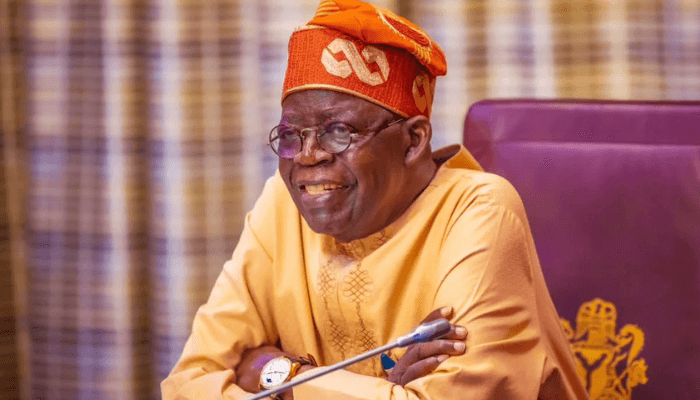
The Federal Bureau of Investigation (FBI) and the Drug Enforcement Administration (DEA) have requested a 90-day extension from a United States District Court to produce investigative documents tied to a decades-old drug case allegedly involving Nigerian President Bola Ahmed Tinubu. The case, reignited by American transparency activist Aaron Greenspan, has drawn international attention due to its sensitive political implications and the legal standoff between federal agencies and an individual invoking the Freedom of Information Act (FOIA).
In a Joint Status Report filed on May 1, 2025, with the U.S. District Court for the District of Columbia, both agencies stated that they had begun their search for relevant documents but required additional time—specifically, three more months—to complete the process. This filing comes weeks after Judge Beryl Howell issued an April 8 order mandating the agencies to process FOIA requests submitted by Greenspan. The original deadline for document production was set for May 2, 2025.
 blob:https://www.image2url.com/6b1201f1-93ee-44f9-bbeb-45816585e575
UK-Nigeria Nursing Community Mourns Death Of Nnena Miriam
Extension Request Sparks Legal Tensions in FOIA Drug Case
Greenspan, the plaintiff and founder of legal transparency platform PlainSite, immediately opposed the 90-day timeline, instead proposing a much shorter deadline of 14 days. He criticized the agencies for what he described as an unjustified delay and insisted that unredacted versions of already identified documents should be made available within the week. According to the court filings, he claimed that the agencies had not provided a “valid rationale” for why their search efforts required a full 90 days.
“This is a years-long delay that has already cost the public timely access to crucial information,” Greenspan stated through the filing. “Given that numerous responsive documents have already been located, the proposed extension is unreasonable and unwarranted.”
The FOIA requests, filed between 2022 and 2023, seek documents pertaining to an alleged drug trafficking ring based in Chicago in the early 1990s. Four individuals are reportedly linked to the case: President Bola Tinubu, Lee Andrew Edwards, Mueez Abegboyega Akande, and Abiodun Agbele. Greenspan has argued that transparency into these historical events is necessary for public accountability, particularly given Tinubu’s current position as the democratically elected President of Nigeria.
The case took a significant turn when the FBI and DEA previously issued “Glomar responses,” essentially refusing to confirm or deny the existence of the requested records. Judge Howell, however, ruled that such a stance was inappropriate given the public interest and the plaintiff’s legal right to access the information under FOIA. This prompted the court’s April order for the agencies to initiate a search and begin processing non-exempt and reasonably segregable portions of any related records.
Agencies Say Time Is Needed, Greenspan Cries Foul
In their defense, the FBI and DEA maintained that the breadth and complexity of the document search required a thorough review to avoid releasing exempt or sensitive information. According to their joint report, they are committed to fulfilling their FOIA obligations but need time to identify, segregate, and review materials before releasing them in accordance with federal law.
“The FBI and DEA have initiated their searches for responsive, non-exempt, reasonably segregable portions of records requested by the plaintiff and anticipate completing their searches in ninety days,” the report noted.
However, Greenspan countered that this process could be expedited. He pointed to previously identified documents as evidence that progress had already been made, suggesting that the agencies were intentionally dragging the process.
As tensions mount, the plaintiff also filed for reimbursement of $440.22 in costs incurred during the legal pursuit. This includes the $402 federal filing fee and $38.22 in certified mailing expenses. While modest, this cost claim signals Greenspan’s intention to pursue every legal remedy available to ensure compliance and transparency from the agencies.
Timeline Dispute: July vs. May Status Report
One of the key sticking points in the status report is the proposed timeline for the next court update. The defendants (FBI and DEA) recommended that the next joint status report be filed by July 31, 2025, which aligns with their proposed 90-day extension. Greenspan, on the other hand, insisted that a follow-up report should be due much earlier—by May 31, 2025—to maintain pressure on the agencies and ensure that the case proceeds without undue delay.
“The plaintiff proposes that the court-imposed reporting schedule be accelerated to reflect the urgency and public importance of this case,” Greenspan’s lawyers argued in the filing.
The report was co-signed by two lawyers representing the defendants—Edwards Martin Jr. and Jared Litman—alongside Greenspan, reflecting both sides’ acknowledgment of the dispute but lack of consensus on how to resolve it.
Political and International Implications
This legal battle has triggered widespread speculation in both the United States and Nigeria, particularly because it involves a sitting president. President Tinubu has consistently denied any wrongdoing or links to criminal activity during his time in the U.S., and Nigerian authorities have dismissed past allegations as politically motivated or unfounded.
However, the fact that the case has reached the U.S. court system and that major federal agencies are now actively searching their archives for potentially sensitive records has reignited calls for clarity, particularly from opposition parties and civil society groups in Nigeria.
If the FOIA requests yield substantive documents linking President Tinubu to the alleged drug ring, it could create a significant political crisis, not only in Nigeria but also in terms of U.S.-Nigeria diplomatic relations. Conversely, if the agencies ultimately find no relevant information or produce heavily redacted, inconclusive records, it may bolster Tinubu’s longstanding position that the accusations are baseless.
As of now, the ball is in the court of Judge Beryl Howell, who will have to weigh both the logistical constraints of federal agencies and the urgency of public interest in determining the next course of action. Whether she grants the 90-day extension or imposes a tighter deadline will likely influence how quickly—if at all—this contentious chapter in Nigerian-American legal history will unfold.
In the meantime, both the FBI and DEA remain under pressure to meet their obligations without appearing to protect powerful individuals at the expense of public transparency. Greenspan, for his part, has vowed to continue pressing the agencies until every document is accounted for, reviewed, and released according to the law.



















Leave a Comment
Your email address will not be published. Required fields are marked with *