
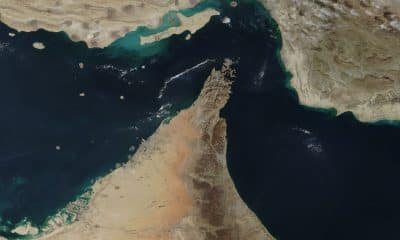
Tensions in the Middle East have escalated sharply after Iran announced the closure of the strategically vital Strait of Hormuz, a move that has triggered global concern over energy supplies and regional stability. The development followed fresh military strikes by Israel in Lebanon, reportedly targeting areas in the capital, Beirut. The attacks came despite
Tensions in the Middle East have escalated sharply after Iran announced the closure of the strategically vital Strait of Hormuz, a move that has triggered global concern over energy supplies and regional stability.
The development followed fresh military strikes by Israel in Lebanon, reportedly targeting areas in the capital, Beirut. The attacks came despite a recently agreed two-week pause in hostilities involving Iran, Israel, and the United States.
 blob:https://www.image2url.com/6b1201f1-93ee-44f9-bbeb-45816585e575
According to reports from the Associated Press, the temporary ceasefire was intended to halt over a month of intense clashes. However, renewed violence and disagreements over the terms have quickly undermined the fragile agreement.
INEC Chairman, Amupitan Speaks Amid Call For His Removal
Iran justified its decision to shut the Strait of Hormuz as a direct response to Israeli strikes in Lebanon, particularly those that hit densely populated civilian areas. The attacks have been described as among the deadliest in recent weeks, with at least 112 people reportedly killed and hundreds more injured.
The violence has further deepened the humanitarian crisis, with more than one million people displaced across Lebanon over the past month. The escalation has also drawn in Hezbollah, intensifying fears of a broader regional conflict.
The closure of the Strait of Hormuz carries significant global implications. The narrow waterway is one of the world’s most critical النفط transit routes, handling a substantial portion of international oil shipments. Any disruption to its operations can trigger spikes in global oil prices and threaten supply chains worldwide.
In response, the United States has called on Iran to immediately reopen the passage. American officials emphasized that the ceasefire agreement included provisions ensuring unrestricted maritime movement through the strait, without additional charges or conditions.
However, Iran has pushed back against these claims, stating that it may impose fees on vessels passing through the waterway. This position has been firmly rejected by U.S. authorities, further complicating diplomatic efforts to stabilize the situation.
The disagreement underscores deeper mistrust between the parties and raises questions about the viability of the ceasefire. Analysts warn that continued escalation could not only derail peace efforts but also have far-reaching economic consequences beyond the region.
Global markets are already reacting nervously, with energy stakeholders closely monitoring developments. A prolonged closure of the Strait of Hormuz could disrupt millions of barrels of oil per day, placing additional pressure on economies still recovering from previous shocks.
As diplomatic channels remain strained, the international community is urging restraint from all sides. The coming days are expected to be critical in determining whether the ceasefire can be salvaged or if the region is heading toward a wider confrontation.
For now, the shutdown of one of the world’s most vital (oil) corridors stands as a stark reminder of how quickly geopolitical tensions can escalate—and how deeply interconnected global stability has become.





















Leave a Comment
Your email address will not be published. Required fields are marked with *