
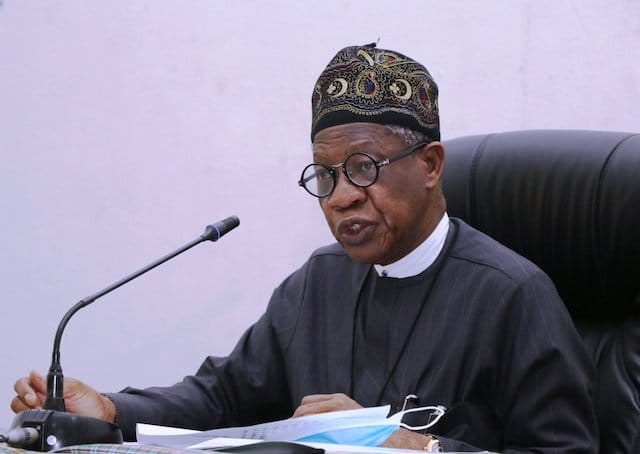
Former Minister of Information and Culture, Lai Mohammed, has criticized international media coverage of the #EndSARS protests, accusing CNN of amplifying misinformation during the crisis. Speaking at a high-level forum at the London School of Economics and Political Science (LSE), Mohammed described the 2020 protests as a movement that began with legitimate grievances but
Former Minister of Information and Culture, Lai Mohammed, has criticized international media coverage of the #EndSARS protests, accusing CNN of amplifying misinformation during the crisis.
Speaking at a high-level forum at the London School of Economics and Political Science (LSE), Mohammed described the 2020 protests as a movement that began with legitimate grievances but was later overtaken by actors with ulterior motives.
 blob:https://www.image2url.com/6b1201f1-93ee-44f9-bbeb-45816585e575
He argued that the situation escalated due to the rapid spread of fake news and disinformation across both traditional and digital platforms. According to him, unverified reports—especially following the deployment of troops to the Lekki Toll Gate in Lagos—intensified tensions and shaped global perceptions.
I Begged Shell – Obasanjo Speaks On Port Harcourt, Warri, Kaduna Refineries
Mohammed specifically accused CNN of relying on unverified and, in some cases, manipulated content in its reporting of the protests. He said such coverage contributed to a distorted international narrative that did not accurately reflect events on the ground.
“The problem was not just a communication gap between the government and citizens,” he stated. “It was the combination of fake news, disinformation, and unchecked violence.”
The former minister used the platform to reflect on broader communication challenges faced during his tenure. He cited the government’s response to the COVID-19 pandemic as a contrasting example, noting that consistent messaging and daily briefings helped build public trust and achieve high approval ratings.
He also highlighted efforts to counter insurgency narratives, including organizing a media tour of the North-East for journalists to witness progress in areas previously affected by Boko Haram activities. According to him, this initiative helped dispel misinformation and restore confidence in the military’s operations.
Addressing the controversial suspension of Twitter during his time in office, Mohammed defended the decision as a necessary measure. He said it followed repeated attempts to engage the platform over content that allegedly incited division and unrest.
In addition, he pointed to the introduction of nationwide town hall meetings as a key innovation in government communication. These forums, he explained, allowed for direct engagement with citizens across Nigeria’s six geopolitical zones, fostering inclusivity and real-time feedback.
Mohammed concluded by revealing that upon assuming office, he encountered a lack of structured communication strategy. This, he said, led to the development of a more proactive framework that integrated both digital and traditional media to ensure effective two-way communication.
His remarks have reignited discussions about the role of media, the impact of misinformation, and the balance between regulation and free expression in times of national crisis.










Leave a Comment
Your email address will not be published. Required fields are marked with *