
2027 Presidency: North Can’t Decide Alone, Says Yakassai as Atiku's Coalition Gains Momentum As the political temperature begins to rise ahead of the 2027 general elections, an anti-Tinubu coalition led by former Vice President Atiku Abubakar is gradually taking shape, particularly gaining traction in Northern Nigeria. However, elder statesman Alhaji Tanko Yakassai has cautioned that
2027 Presidency: North Can’t Decide Alone, Says Yakassai as Atiku’s Coalition Gains Momentum

As the political temperature begins to rise ahead of the 2027 general elections, an anti-Tinubu coalition led by former Vice President Atiku Abubakar is gradually taking shape, particularly gaining traction in Northern Nigeria. However, elder statesman Alhaji Tanko Yakassai has cautioned that the North alone cannot determine who becomes Nigeria’s next president.
In a political atmosphere becoming increasingly polarised by regional alliances and defections, Yakassai emphasized the importance of national unity in electing a president, noting that no zone, North or South, can singlehandedly install a president without broader support.
 blob:https://www.image2url.com/6b1201f1-93ee-44f9-bbeb-45816585e575
North Alone Lacks the Numbers to Decide Presidency – Yakassai
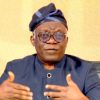
Alhaji Tanko Yakassai, a founding member of the Arewa Consultative Forum (ACF) and former Liaison Officer to late President Shehu Shagari, made it clear in an interview that the outcome of the 2027 presidential election will be shaped by both national cohesion and candidate capability.
“The presidential election is a national affair,” Yakassai stated. “The North alone cannot determine who becomes president; the South alone cannot make it. The South and North must come together with a formidable candidate to get it done.”
He further noted that Nigeria’s electoral process has become capital-intensive, requiring not only popularity but substantial financial backing. “Unfortunately, people with money in Nigeria do not like to sponsor any candidate. You must have enough money to put yourself there but don’t rely on others,” he added.
Yakassai’s comment came amid growing statements from Northern political figures, including Dr Hakeem Baba-Ahmed, a former political adviser to President Bola Tinubu. Baba-Ahmed had earlier declared that “no politician can become president without Northern support,” signalling the region’s intent to shape the 2027 contest.
ACF Distances Itself from Regional Politics
While the North remains a critical voting bloc, the Arewa Consultative Forum has distanced itself from suggestions that it will play a kingmaking role. In a recent interview, ACF’s National Publicity Secretary, Professor Tukur Mohammed Baba, described Baba-Ahmed’s remarks as a personal opinion.
“ACF as an organisation has no control over that. But we do know that no one can be president on the basis solely of regional voting alone,” he said.
He stressed that Nigeria’s constitutional requirement for broad national spread ensures that victory cannot come through regional dominance. “It is the voter, if allowed to vote without interference or electoral malfeasance, that will determine the outcome,” Baba emphasized.
Tinubu’s Camp Responds to Atiku’s Coalition Drive
The political tension further intensified following Atiku Abubakar’s declaration in March 2025 of a coalition aimed at unseating President Bola Tinubu in 2027. Speaking at a press conference at the Yar’Adua Centre in Abuja, Atiku announced the formation of what he described as a broad opposition front.
“Yes, this is the birth of the coalition of opposition ahead of 2027,” Atiku declared.
In reaction, President Tinubu’s Special Adviser on Information and Strategy, Bayo Onanuga, dismissed the coalition, claiming it had already “disintegrated.” He said the group, including former Kaduna State Governor Nasir el-Rufai and Dr Hakeem Baba-Ahmed, was fracturing from within.
“Atiku’s political future looks bleak. The coalition that he, El-Rufai, Babachir, and Baba-Ahmed are cobbling together has disintegrated,” Onanuga asserted.
Tinubu Courts the South-South, South-East Amid Northern Uncertainty
Despite controlling 15 states in the North, President Tinubu has intensified political outreach in the South-South and South-East zones. Sources close to the presidency say this move is in response to the perception that the anti-Tinubu coalition is largely a Northern initiative.
This strategic push recently led to the defection of several key Peoples Democratic Party (PDP) figures in Delta State—including Governor Sheriff Oborevwori and former Governor Ifeanyi Okowa—to the All Progressives Congress (APC).
An insider revealed: “There is this perception that the North is against him (Tinubu), and that is why he is doing everything possible to build his support base in the South.”
Efforts are also being made by the presidency to consolidate its grip on APC governors in the North, ensuring loyalty and curbing the risk of anti-party activities.
Meanwhile, the League of Northern Democrats (LND), a political advocacy group, has declared that their mission is not merely to wrest power from Tinubu but to redirect Nigeria toward development.
Speaking on Arise Television, LND convener Umar Ardo said the group’s objective is national transformation. “Our agenda is to re-fix our country… We want to be part of a coalition that can successfully challenge and displace incumbency not because of power itself, but because we need to fix Nigeria.”
When asked whether President Tinubu has failed, Ardo said: “I won’t say he has failed, but he hasn’t met expectations.” He added that with barely half of his term gone, there has yet to be a significant shift in governance or policy implementation.
Despite the defection of some political figures and criticism from the presidency, a senior aide to Atiku Abubakar confirmed the coalition remains on track. “They are still working on it,” the aide said anonymously, “and that is why they are taking their time so that it will not look like a hasty move without proper consultation.”
The strategy, according to him, is to build momentum from the grassroots rather than relying solely on governors or party elites. “The coalition managers are working on a theory that a mass movement from the bottom will create the momentum, and the governors will then come on board,” he explained.
Defections from PDP to APC in some states, he insisted, would not derail the coalition’s objectives because “the governors are not the building blocks.”
As 2027 draws closer, Nigeria’s political terrain is once again being redrawn. While regional influence remains significant, voices like Yakassai’s stress the importance of national unity and broad-based support. The success of any coalition—whether in power or opposition—will likely depend on its ability to offer a compelling vision for Nigeria’s future.










Leave a Comment
Your email address will not be published. Required fields are marked with *