
One Year After Supreme Court Ruling, LG Autonomy Stalls as FG, Governors Trade Blame Exactly one year after the Supreme Court ruled in favour of full financial autonomy for Nigeria’s 774 local government areas (LGAs), the ruling remains largely unenforced. Despite the apex court’s landmark judgment on July 11, 2024—mandating that LG allocations be paid
One Year After Supreme Court Ruling, LG Autonomy Stalls as FG, Governors Trade Blame
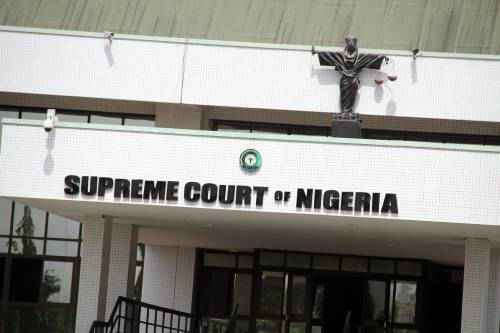
Exactly one year after the Supreme Court ruled in favour of full financial autonomy for Nigeria’s 774 local government areas (LGAs), the ruling remains largely unenforced. Despite the apex court’s landmark judgment on July 11, 2024—mandating that LG allocations be paid directly from the Federation Account—the Federal Government has continued to disburse over N4.5 trillion through state governments in defiance of the order.
The ruling was intended to end decades of constitutional violations in which state governments hijacked local allocations via the State Joint Local Government Accounts (SJLGA). Instead, it has exposed a new era of blame-shifting between state governors, the Central Bank of Nigeria (CBN), the Federal Government, and relevant labour unions.
 blob:https://www.image2url.com/6b1201f1-93ee-44f9-bbeb-45816585e575
Senate Urges FG To Halt Public Enrichment Of Power DisCos, Calls For Reform In Power Sector Funding
N4.5 Trillion Still Routed Through States
Data from the Federation Account Allocation Committee (FAAC) revealed that between July 2024 and June 2025, a total of N4.496 trillion was allocated to LGAs—representing nearly 25% of the N18.074 trillion shared among the three tiers of government. However, these funds continue to be routed through state governments, in breach of the Supreme Court’s judgment.
From July 2024’s N337 billion to June 2025’s N419 billion, the allocations have remained steady, but their disbursement method continues to undermine the court’s directive. The Central Bank’s plan to open individual accounts for each LGA has seen little implementation, with most councils failing to comply or facing obstructions from state-level authorities.
Governors, FG, and AGF Under Fire
While the Supreme Court judgment clearly directed the Federal Government to stop disbursing LG funds through state governors, compliance has stalled. Critics point fingers at both the Federal Government and the governors for the delay.
Former media aide to President Muhammadu Buhari, Bashir Ahmad, revealed that President Bola Tinubu had instructed the Secretary to the Government of the Federation (SGF), George Akume, and the Attorney General of the Federation (AGF), Lateef Fagbemi (SAN), to resolve the bottlenecks. However, local government union leaders like Muhammed Abubakar of the Association of Local Governments Employees (ALGON) say they are still waiting for updates from the Presidency.
In states like Kwara, Kano, Bauchi, and Benue, LG chairmen confirmed they are yet to open CBN accounts or receive direct federal allocations. A source in the Ministry of Local Government and Chieftaincy Affairs in Kano accused LG chairmen and NULGE officials of lacking initiative due to vested interests.
Despite this, the Nasarawa State chapter of NULGE insists its LGAs have opened accounts and are ready, yet no funds have been received directly from the FG.
Lawyers Slam Constitutional Breach
Prominent Senior Advocates of Nigeria (SANs) have decried the lack of enforcement as a grave threat to the rule of law.
Prof. Mike Ozekhome (SAN) called the situation a blatant defiance of the judiciary. “The judgment was clear, as clean as a whistle,” he said, noting that it was meant to halt state governors from deducting LG funds at source.
Femi Falana (SAN) accused the AGF of failing to act on the ruling. “The AGF warned that disobedience would amount to treason. What happened to that energy?” he asked, noting that some LGs were asked to present two years of audit reports despite never managing funds themselves.
Meanwhile, Prof. Itse Sagay (SAN) argued that the judgment, while well-intentioned, contradicts the existing constitutional provision on joint accounts, suggesting that a constitutional amendment is required for full enforcement.
Adedayo Adedeji (SAN) blamed both the FG and states for lacking the political will to let go of financial and political control. “Until they commit to constitutional governance, this ruling will remain a paper tiger,” he said.
State-by-State Reality Check
While Adamawa State reportedly began direct LG funding before the court’s judgment under Governor Ahmadu Fintiri, many states lag behind. In Benue, chairmen say they are starved of funds despite public claims of autonomy. In Bayelsa, JAAC remains operational with support from the state government. Jigawa officials say they have achieved 95% financial autonomy but still face administrative barriers.
In contrast, in states like Bauchi and Gombe, implementation is either stalled or non-existent, while in Nasarawa, accounts are ready, but no funds have arrived. Across the country, one sentiment remains consistent: full autonomy is far from reality.
A Judgment Ignored
One year later, the Supreme Court judgment on local government autonomy has been effectively sidestepped by both federal and state authorities. N4.5 trillion in council funds has bypassed constitutional mandates, leaving LGs with neither funds nor autonomy. While the judiciary has spoken, it appears political actors are still deciding whether to listen.












Leave a Comment
Your email address will not be published. Required fields are marked with *