
Sule Lamido Blasts Buhari’s Political Legacy, Accuses Him of Dividing Nigeria Former Governor of Jigawa State, Alhaji Sule Lamido, has delivered a scathing critique of former President Muhammadu Buhari, accusing him of promoting a divisive, fear-driven style of politics that severely weakened Nigeria’s democratic values. In his newly released autobiography titled Being True to Myself,
Sule Lamido Blasts Buhari’s Political Legacy, Accuses Him of Dividing Nigeria
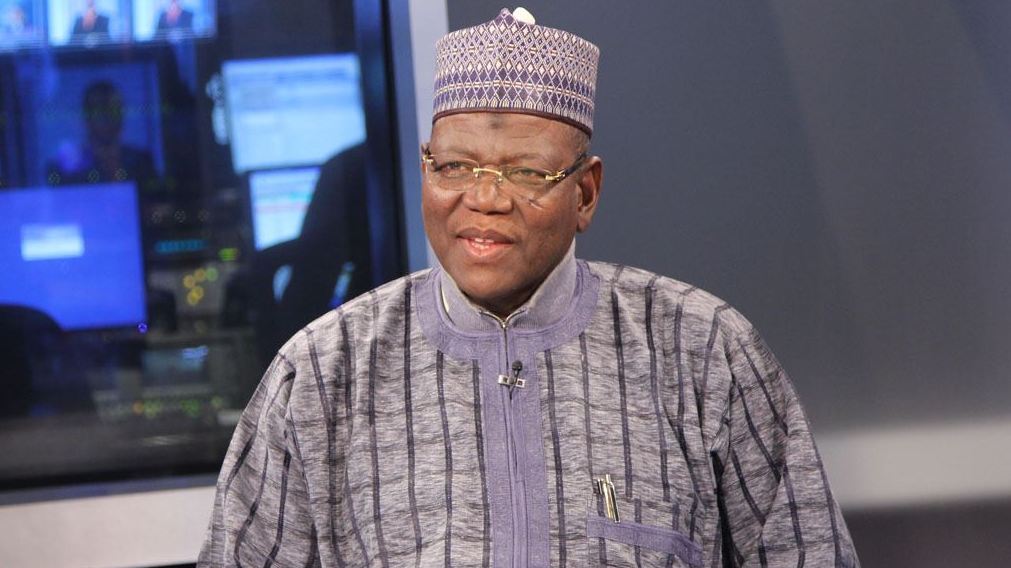
Former Governor of Jigawa State, Alhaji Sule Lamido, has delivered a scathing critique of former President Muhammadu Buhari, accusing him of promoting a divisive, fear-driven style of politics that severely weakened Nigeria’s democratic values. In his newly released autobiography titled Being True to Myself, launched on May 13, 2025, Lamido dedicates a significant portion of Chapter 15 (pages 380–381) to assessing Buhari’s controversial return to politics ahead of the 2011 general elections.
Lamido, a seasoned politician and elder statesman within Nigeria’s political landscape, did not mince words as he revisited his 2011 re-election campaign, describing it as a confident and secure period based on achievements and popular support. However, he claimed that Buhari’s re-emergence dramatically altered the political environment in ways that left lasting scars on Nigeria’s democratic ethos.
 blob:https://www.image2url.com/6b1201f1-93ee-44f9-bbeb-45816585e575
Former Environment Minister Mohammed Abdullahi Resigns From APC Amid Gubernatorial Speculations
A Campaign of Confidence and Clarity
Reflecting on the 2011 elections, Lamido described his campaign for a second term as a process he entered with confidence. “My team and I considered the campaigning in 2011 for a second term as no more than a formality,” he wrote. “We knew what was there before us and what we had done in the past four years… the people of Jigawa appreciated what we had done.”
Lamido suggested that prior to Buhari’s return, Nigerian politics was characterized by a culture of mutual respect and civility. He recalled a period where ideological competition was more focused on service delivery than identity-based rivalry.
Buhari’s Return and the Rise of Divisiveness
According to Lamido, Buhari’s re-entry into the political arena marked a significant turning point—one that undermined unity and replaced constructive dialogue with hostility. “His decision to engage in politics had brought a very dangerous setback to the practice of politics in Nigeria,” Lamido declared. He accused the former president of injecting “hatred and intolerance” into the political process.
Lamido argued that instead of acting like a unifying national figure and elder statesman, Buhari’s political actions intensified ethnic, religious, and regional sentiments. “Perhaps due to his character and military background,” Lamido wrote, “he had failed to appreciate that he was a former Head of State and… a national symbol.”
He lamented that Buhari participated in public discourse and political agitation in ways that compromised his former status as a national leader, stating: “There were certain actions or public discussions that he must never involve himself in… Unfortunately, in his pursuit of wild politics, he seemed to have missed that.”
Fear as a Political Tool
One of the most damning allegations in Lamido’s account is the claim that Buhari employed fear and intimidation as tools of political control. Lamido asserted that many political actors submitted to Buhari’s influence not out of admiration, but because of fear.
“Buhari seemed to have relied on sheer force of fear and intimidation to make everyone submit to him,” he wrote. “For fear of one’s personal standing in society, political interests, political future, or even the interests of one’s family.”
Lamido further described how this approach not only manipulated politicians but also fractured personal and community relationships. He claimed that Buhari’s presence in the political space was divisive even at the family level. “His political influence was able to alter the relationship in a family and cause divisions between a father and his son, cause hatred between two brothers within the same family,” Lamido stated.
Redefining Patriotism and Silencing Dissent
The former Jigawa governor concluded his reflection with a powerful condemnation of what he termed “a toxic political culture” that Buhari allegedly cultivated. He claimed that under Buhari’s influence, national loyalty was distorted to mean unwavering support for him.
“One was either in support of him or one did not love Nigeria,” Lamido declared. “That was the new phenomenon in Nigerian politics.”
This binary framing of loyalty, Lamido argued, was detrimental to democratic pluralism and contributed to a political climate where dissent was equated with treason.
Lamido’s memoir presents a stark narrative that challenges the mainstream legacy of Muhammadu Buhari. While Buhari’s supporters often highlight his anti-corruption efforts and infrastructure development, Lamido’s account paints a contrasting picture of a leader whose political return brought about deep societal fractures.
As Nigeria continues to grapple with the balance between strong leadership and democratic tolerance, Lamido’s reflections offer a sobering reminder of how political styles can shape not just governance but the national soul.



















Leave a Comment
Your email address will not be published. Required fields are marked with *