
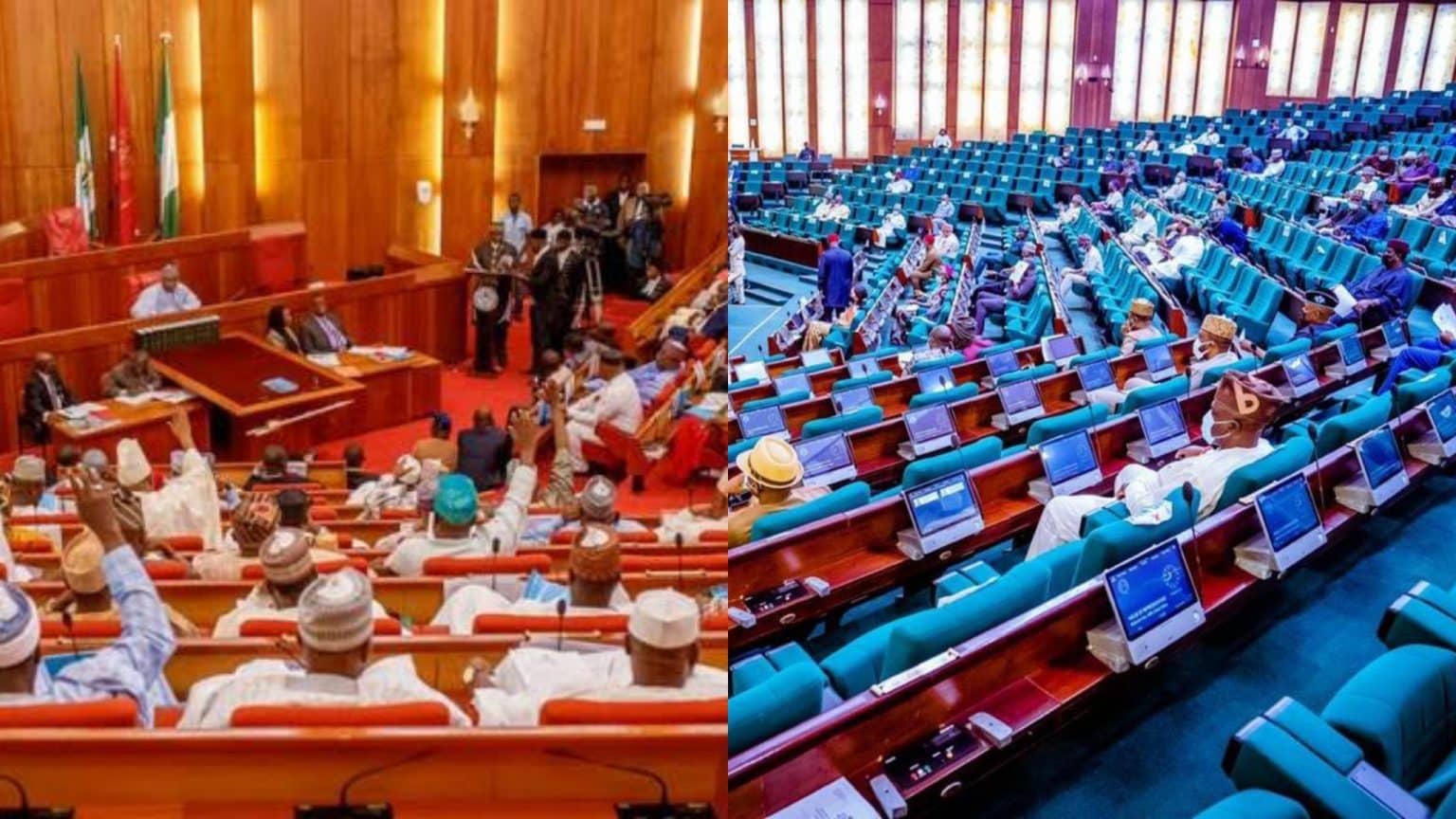
A political storm is brewing following a stark warning from strategist Baba Yusuf, who says Nigeria’s worsening insecurity could pave the way for bandits to infiltrate the nation’s highest legislative bodies—the Senate and the House of Representatives. Speaking during an interview on Arise News, Yusuf painted a troubling picture of a country grappling with
A political storm is brewing following a stark warning from strategist Baba Yusuf, who says Nigeria’s worsening insecurity could pave the way for bandits to infiltrate the nation’s highest legislative bodies—the Senate and the House of Representatives.
Speaking during an interview on Arise News, Yusuf painted a troubling picture of a country grappling with escalating violence, weak enforcement, and what he described as a dangerous normalization of criminal influence in parts of the North.
 blob:https://www.image2url.com/6b1201f1-93ee-44f9-bbeb-45816585e575
According to him, communities are increasingly turning to bandits for mediation and protection, while in some cases, citizens are allegedly paying them levies—an alarming trend he says signals a breakdown of state authority.
Sowore Reveals Category Of People He Can Never Fight
Yusuf argued that the trajectory of insecurity in Nigeria has reached a critical point, with armed groups expanding into areas previously considered relatively safe. He cited the spread of attacks into states such as Niger, Kwara, Benue, and Plateau as evidence of a deepening crisis.
Referencing recent remarks by Bola Tinubu during a visit to Plateau State, Yusuf expressed disappointment that assurances of improved security were followed almost immediately by fresh attacks. For him, this reflects a growing boldness among criminal groups.
“They are daring the state. They are taunting us,” he said, emphasizing that the situation has moved beyond isolated incidents to a systemic challenge.
He further alleged that bandits now operate with alarming confidence—appearing openly on social media, issuing advance notices of attacks, and sometimes disguising themselves in military uniforms. In some instances, he claimed, they engage in negotiations with authorities and face little to no consequences.
A key part of Yusuf’s critique was directed at Nigeria’s political class. He accused both the ruling party and opposition of failing to treat insecurity as a national emergency, instead using it as a tool for political point-scoring.
According to him, while citizens and security personnel continue to suffer losses, political actors remain more focused on narratives than solutions. He described the situation as an “existential issue” that requires unified, non-partisan action.
“The ruling party downplays it, while the opposition exploits it,” Yusuf noted, warning that such an approach only deepens public frustration and weakens confidence in governance.
Perhaps the most striking part of Yusuf’s remarks was his prediction that, if left unchecked, the growing influence of bandits could eventually extend into formal political structures.
He warned that as communities increasingly rely on these groups for dispute resolution and security, their legitimacy—however informal—could grow. This, he suggested, might open the door for such actors or their affiliates to transition into political power.
“Very soon, bandits will be in the Senate and the House of Representatives,” he cautioned, framing it as a consequence of continued state failure and public desperation.
Yusuf stressed that the situation demands urgent and coordinated action across all levels of government. Without decisive intervention, he warned, Nigeria risks further erosion of institutional authority and public trust.
As insecurity remains a dominant national concern, his comments add to the growing chorus of voices calling for a comprehensive and unified response to restore order and confidence across the country.






















Leave a Comment
Your email address will not be published. Required fields are marked with *