
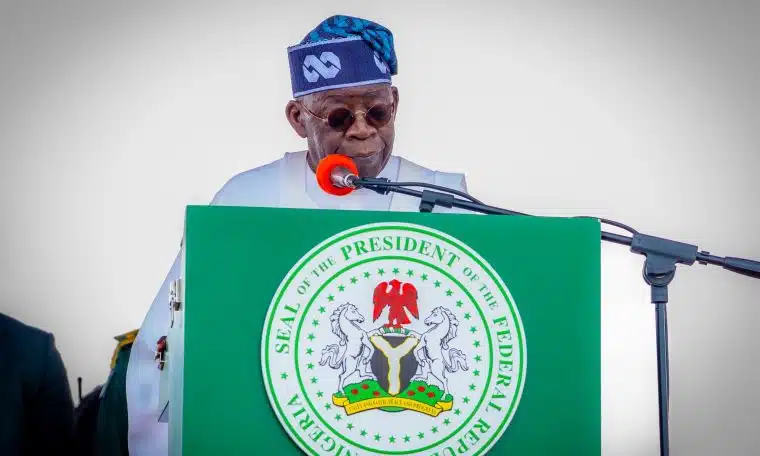
The Federal Government has dismissed claims that President Bola Tinubu’s administration borrowed ₦80 trillion within three years, insisting that the widely circulated figure misrepresents Nigeria’s actual debt position. The clarification was made on Monday by the Minister of Finance and Coordinating Minister of the Economy, Taiwo Oyedele, during a briefing before the Senate Committee on
The Federal Government has dismissed claims that President Bola Tinubu’s administration borrowed ₦80 trillion within three years, insisting that the widely circulated figure misrepresents Nigeria’s actual debt position.
The clarification was made on Monday by the Minister of Finance and Coordinating Minister of the Economy, Taiwo Oyedele, during a briefing before the Senate Committee on Finance, where he explained that a significant portion of the increase in Nigeria’s public debt resulted from accounting adjustments rather than fresh borrowing.
The minister’s explanation followed concerns raised by lawmakers over reports suggesting that the Tinubu administration had added about ₦80 trillion to the ₦75 trillion debt inherited from the previous administration.
 blob:https://www.image2url.com/6b1201f1-93ee-44f9-bbeb-45816585e575
President Tinubu Appoints Ayo Fayose As REA Chairman, Names 26 Officials To Key Federal Agencies
FG Explains Why Nigeria’s Public Debt Increased
According to Oyedele, many analysts have compared Nigeria’s debt stock at the beginning of the Tinubu administration with the current figure without considering the economic reforms that affected debt valuation.
He explained that the sharp depreciation of the naira required the government to revalue all foreign currency-denominated loans in naira terms, significantly increasing the recorded public debt.
Oyedele disclosed that this accounting adjustment alone added more than ₦40 trillion to Nigeria’s official debt profile without the government borrowing a single additional dollar.
He also pointed to the ₦33 trillion Ways and Means advances obtained under the administration of former President Muhammadu Buhari, noting that the National Assembly approved the securitisation of those obligations.
According to him, bringing the existing liabilities onto the government’s official debt books contributed substantially to the increase in the reported debt stock.
“When this administration came into office, public debt was around ₦75 trillion. Many people simply compare that figure with today’s debt stock and conclude that this government has borrowed massively,” Oyedele said.
“Following the reforms and depreciation of the naira, the foreign currency component of our debt had to be revalued. That accounting adjustment alone added over ₦40 trillion.”
Tinubu Administration Says New Borrowing Is Limited
The finance minister maintained that the current administration’s actual borrowing is far lower than public perception.
He explained that much of the government’s domestic borrowing involves refinancing existing debts that have matured instead of accumulating new liabilities.
According to Oyedele, refinancing enables the government to replace old obligations with new debt instruments without increasing its overall borrowing burden.
He stressed that the Tinubu administration remains committed to responsible debt management and sustainable fiscal policies.
The minister added that every loan obtained by the government is targeted at financing infrastructure projects and other productive investments capable of generating long-term economic value rather than funding recurrent expenditure.
Senators Raise Concerns Over Budget Implementation
Despite the government’s explanation, members of the Senate Committee on Finance expressed concerns about the implementation of the capital component of the 2026 budget.
Senate Chief Whip Mohammed Monguno and Senator Adamu Aliero criticised the slow pace of capital project execution, warning that delays could undermine economic growth and reduce the impact of government spending.
The lawmakers urged the executive to improve budget implementation to ensure that approved projects are completed on schedule.
Senate Backs Budget Reforms
Chairman of the Senate Committee on Finance, Senator Sani Musa, defended the government’s efforts after a closed-door meeting with the minister and members of the economic management team.
According to Musa, discussions focused on improving budget implementation and aligning government expenditure with available revenue.
He disclosed that both the executive and legislature are considering reforms, including adopting a performance-based and priority-driven budgeting system to replace the current envelope budgeting model.
The senator also revealed that government plans include returning to the previous contractor payment system to improve project delivery nationwide.
Musa expressed optimism that the proposed reforms would strengthen fiscal discipline, enhance transparency and deliver better value for public spending across the country.












Leave a Comment
Your email address will not be published. Required fields are marked with *