
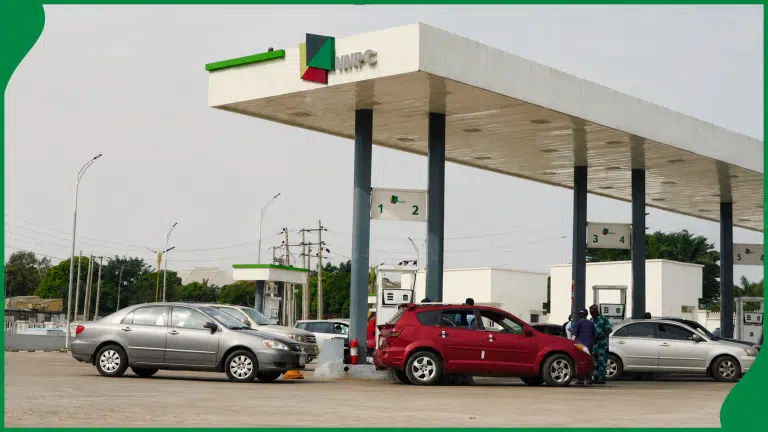
The price of Premium Motor Spirit, popularly known as petrol, has undergone a dramatic transformation in Nigeria since the country returned to democratic government in 1999. At the beginning of the Fourth Republic, Nigerians bought a litre of petrol for about ₦20. More than two decades later, motorists have paid above ₦1,000 per litre, with
At the beginning of the Fourth Republic, Nigerians bought a litre of petrol for about ₦20. More than two decades later, motorists have paid above ₦1,000 per litre, with prices rising beyond ₦1,500 in parts of 2026 before declining again.
Petrol pricing has remained one of Nigeria’s most politically sensitive economic issues because of its direct impact on transportation, food prices, electricity generation, manufacturing and the general cost of living.
 blob:https://www.image2url.com/6b1201f1-93ee-44f9-bbeb-45816585e575
2027: ‘APC Governors Accuse Wike Of Attempting To Sabotage Tinubu’
Successive administrations have increased, reduced or regulated petrol prices through subsidy programmes, while the market changed substantially following the removal of petrol subsidy by President Bola Tinubu in May 2023.
Unlike the earlier years when the Federal Government largely determined a uniform pump price, Nigeria now operates a more market-driven system. Consequently, motorists may pay different prices depending on their state, filling station and supplier.
Below is a look at how the price of one litre of petrol has changed in Nigeria from 1999 to 2026.
1999: Petrol Sold For About ₦20 Per Litre
Nigeria entered the Fourth Republic with petrol selling at approximately ₦20 per litre.
Before the return to civilian government, the administration of General Abdulsalami Abubakar had increased the price from ₦11 to ₦25 in December 1998.
Following widespread opposition, the government reduced the price to ₦20 in January 1999.
It was around this price level that former President Olusegun Obasanjo began his civilian administration on May 29, 1999. Historical reviews of Nigeria’s petroleum pricing system similarly put the petrol price at about ₦20 per litre during this period.
2000: Obasanjo Raises Petrol To ₦30, Later ₦22
One of the first major petrol-price battles of the new democratic era occurred in June 2000.
The Obasanjo administration increased petrol from ₦20 to ₦30 per litre on June 1. The increase sparked protests and opposition from organised labour.
The government subsequently reduced the price, first to ₦25 and eventually to approximately ₦22 per litre.
Historical accounts identify ₦22 as the price that ultimately became the principal benchmark after the 2000 adjustment.
2001: Around ₦22 Per Litre
There was no major official adjustment in 2001. Petrol therefore remained at approximately ₦22 per litre for much of the year.
2002: Price Rises To ₦26
The Federal Government moved the petrol price from ₦22 to ₦26 per litre.
The adjustment was part of the Obasanjo administration’s gradual attempt to reduce the amount the government spent subsidising petroleum products.
2003: Petrol Climbs To Around ₦40–₦42
Following another adjustment, petrol moved from ₦26 to approximately ₦40–₦42 per litre.
Historical accounts differ slightly on the exact benchmark, with some recording ₦40 and others ₦42, reflecting adjustments and prevailing prices during the period.
The increase came shortly after Obasanjo began his second term.
2004: ₦50, Then ₦65 Per Litre
The government implemented further increases in 2004.
Petrol first rose to approximately ₦50 per litre before another adjustment took it to about ₦65.
The changes meant that within about five years of the return to democracy, the official price had more than tripled from the approximately ₦20 Nigerians paid in 1999.
2005–2006: Around ₦65 Per Litre
Petrol remained around ₦65 per litre through much of 2005 and 2006. Research using historical petroleum-product pricing data also places PMS at around ₦65 during the period.
Actual prices could be higher during scarcity, particularly from roadside and black-market sellers.
2007: ₦75, Then Reduced To ₦65
Shortly before leaving office in May 2007, the Obasanjo administration increased petrol from ₦65 to ₦75 per litre.
The decision generated another round of protests. After assuming office, President Umaru Musa Yar’Adua reversed the increase and brought petrol back to ₦65 per litre.
The Guardian later described Yar’Adua’s reduction from ₦75 to ₦65 as the first major petrol-price reduction by a Nigerian civilian administration during the Fourth Republic.
2008–2010: ₦65 Per Litre
For the remainder of the Yar’Adua administration, the official price remained around ₦65 per litre.
There was no major petrol-price increase during his presidency.
After Yar’Adua’s death in May 2010, Goodluck Jonathan assumed office, but the ₦65 benchmark continued through 2010 and 2011.
2011: ₦65 Per Litre
Throughout much of 2011, petrol remained officially priced at approximately ₦65 per litre. However, the Jonathan administration was preparing for a major change to the petrol subsidy system.
That decision would trigger one of the largest protests of Nigeria’s Fourth Republic.
2012: Subsidy Removal Sends Petrol To ₦141
On January 1, 2012, the Jonathan administration announced the removal of petrol subsidy. The move caused the pump price to jump from ₦65 to approximately ₦141 per litre.
The increase triggered nationwide demonstrations and strikes under what became known as the Occupy Nigeria protests.
After negotiations with organised labour and mounting public pressure, the Federal Government reduced the price to ₦97 per litre in January 2012.
The ₦97 price subsequently became the official benchmark.
2013–2014: ₦97 Per Litre
Petrol remained officially priced at approximately ₦97 per litre during 2013 and 2014.
Although motorists sometimes paid much more during scarcity, the regulated pump price did not undergo another major official adjustment during those years.
2015: Jonathan Reduces Petrol To ₦87
Falling international crude-oil prices led the Jonathan administration to announce a reduction in January 2015.
Then Minister of Petroleum Resources Diezani Alison-Madueke announced that petrol would fall from ₦97 to ₦87 per litre, effective January 19.
The government said the reduction reflected changes in international petroleum-product prices.
President Muhammadu Buhari subsequently inherited the ₦87 price after taking office on May 29, 2015.
2016: Buhari Raises Petrol To ₦145
In May 2016, the Buhari administration announced another major adjustment. Petrol increased from ₦87 to a maximum of about ₦145 per litre.
The government argued that foreign-exchange shortages and difficulties faced by petroleum-product importers had made the old price unsustainable.
The ₦145 benchmark would remain broadly in place for several years.
2017: Around ₦145 Per Litre
The official pump price remained approximately ₦145 per litre in 2017.
However, fuel shortages towards the end of the year created long queues and encouraged black-market sales at much higher prices.
2018: Around ₦145 Per Litre
Petrol remained officially around ₦145 per litre through 2018, although actual average prices varied across states and during periods of scarcity.
Historical NNPC-linked figures also place the regulated benchmark in the mid-₦140 range during this period.
2019: Around ₦145 Per Litre
Motorists generally continued to purchase petrol at approximately ₦145 per litre at filling stations operating within the regulated pricing framework.
2020: COVID-19 Brings Several Price Changes
Following the collapse in global oil prices during the COVID-19 pandemic, the Federal Government reduced petrol from ₦145 to approximately ₦125 per litre in March.
The price was subsequently lowered further to roughly ₦121.50–₦123.50. As global crude prices recovered, however, petrol began rising again.
By July, the benchmark had moved to around ₦140.80, followed by further adjustments in August and September.
By the latter part of 2020, pump prices were generally around ₦160–₦165 per litre, depending on the marketer. Historical records show several adjustments during the year rather than one fixed annual price.
2021: Around ₦162–₦165 Per Litre
Petrol generally traded around ₦162 to ₦165 per litre at major filling stations during 2021.
The government continued to subsidise petrol despite discussions about full deregulation and repeated concerns about the growing financial cost of the subsidy programme.
2022: Official Price Around ₦165, Market Average Higher
The regulated benchmark remained around ₦165 per litre during much of 2022. However, scarcity meant many Nigerians paid considerably more.
The National Bureau of Statistics later reported that the average retail price actually paid by consumers in December 2022 was ₦206.19 per litre.
This distinction is important: before full deregulation, Nigeria could have an official pump price while the average price actually paid by households was higher because of shortages and regional differences.
Early 2023: Average Price Rises Above ₦250
Even before the formal removal of subsidy, fuel scarcity had pushed actual consumer prices higher. The NBS said the national average retail price in January 2023 was ₦257.12 per litre.
Official prices at major outlets could still be lower, but scarcity and regional supply problems created substantial differences across the country.
Nigeria’s petrol-pricing system then underwent its biggest change in decades.
May 2023: Tinubu Announces Petrol Subsidy Removal
During his inauguration on May 29, 2023, President Bola Tinubu declared that “fuel subsidy is gone.” Before the announcement, the official pump price at many major filling stations was around ₦184–₦195 per litre.
Within days, NNPC stations adjusted prices to more than ₦500 per litre, with Abuja recording about ₦537. The increase represented one of the biggest single petrol-price jumps in Nigeria’s history.
July 2023: Petrol Hits ₦617
In July 2023, NNPC increased its Abuja pump price from about ₦537 to ₦617 per litre. Prices varied across the country, with Lagos and other cities recording slightly different amounts.
NNPC attributed the development to market realities under the newly deregulated pricing environment.
By December 2023, the NBS said Nigerians paid an average of ₦671.86 per litre, compared with ₦206.19 in December 2022 — a year-on-year increase of 225.85 per cent.
2024: Petrol Moves From ₦668 To Above ₦1,000
Nigeria entered 2024 with petrol already more than three times its pre-subsidy-removal price. The NBS recorded a national average of ₦668.30 per litre in January 2024.
Prices continued to increase as the naira weakened and the cost of importing petroleum products rose.
The NBS average climbed to around ₦770.54 in July and ₦830.46 in August. Major increases followed in September and October.
In October 2024, NNPC raised its Lagos price from ₦858 to ₦998 per litre, while Abuja prices rose from ₦950 to approximately ₦1,030. Reuters reported that the change reflected NNPC’s move towards fully recovering the cost of petrol.
Across Nigeria, the NBS national average climbed further, eventually reaching approximately ₦1,189.12 per litre in December 2024.
The year therefore marked the first time national average petrol prices remained firmly above ₦1,000 per litre.
2025: Petrol Prices Remain Above ₦1,000 For Much Of The Year
The deregulated market produced both increases and reductions during 2025. According to NBS data, the nationwide average generally remained above ₦1,000 per litre for much of the year.
The national average stood around ₦1,037.66 in June before falling to ₦1,024.99 in July, ₦988.25 in August and ₦970.59 in September.
It later rose to ₦1,052.31 in October and ₦1,061.35 in November before closing December at approximately ₦1,048.63 per litre.
The NBS data put the approximate annual average for 2025 at ₦1,104.88 per litre. However, competition from the Dangote Refinery produced lower prices at some filling stations towards the end of the year.
For instance, some MRS stations supplied with Dangote petrol sold the product for ₦739 per litre in December 2025, attracting long queues of motorists seeking cheaper fuel.
This illustrates the new reality of Nigeria’s deregulated market: there is no longer necessarily one nationwide pump price.
January–February 2026: Around ₦1,035–₦1,051 Nationally
According to the NBS, the average retail price of petrol stood at ₦1,034.76 per litre in January 2026.
It increased slightly to ₦1,051.47 in February. The February figure was nevertheless 15.60 per cent lower than the ₦1,245.80 average recorded in February 2025.
March 2026: Petrol Jumps To ₦1,288.54
International energy-market pressures and higher supply costs triggered another major increase in March 2026. The national average price climbed to approximately ₦1,288.54 per litre.
Reuters reported during the period that Nigerian petrol prices had reached record levels despite increased domestic refining capacity, as global energy-market developments pushed costs higher.
April 2026: ₦1,532.93 Per Litre
The upward movement accelerated in April. NBS data put the national average at approximately ₦1,532.93 per litre.
This represented an increase of almost ₦500 per litre compared with January.
May 2026: National Average Hits ₦1,596.25
The average price climbed further to ₦1,596.25 per litre in May 2026, according to the National Bureau of Statistics.
This was 4.13 per cent higher than the ₦1,532.93 recorded in April.
The figure represented one of the highest national monthly averages recorded since petrol subsidy removal.
June–August 2026: Prices Begin To Fall Again
Prices subsequently moderated as supply conditions changed and domestic refiners adjusted their selling prices.
By June, available NBS-based figures indicated that the national average had fallen to roughly ₦1,300 per litre.
Further competition followed in August. Dangote Refinery reduced its ex-depot petrol price from ₦1,215 to ₦1,165 per litre in early August before subsequently making further adjustments.
NNPC stations in Lagos were reported selling petrol around ₦1,205 per litre, while prices in Abuja ranged around ₦1,210–₦1,300 at several major outlets during August.
Late August–September 2026: Petrol Around ₦1,200–₦1,300 At Major Outlets
Prices changed again towards the end of August. Dangote Refinery increased its gantry price from ₦1,185 to ₦1,200 per litre, effective August 26.
NNPC outlets in Abuja subsequently adjusted their retail price to around ₦1,270 per litre, up from ₦1,250.

















Leave a Comment
Your email address will not be published. Required fields are marked with *